

Hi Partner 👋
I have a question for you…
… What if you had to buy 10 stocks, but you couldn’t sell any of them over the next 10 years?
It’s such a great thought exercise everyone should do once in a while.
In the past, Pieter already made a list with 10 stocks to own forever. You can find it here.
Today, TJ is doing the same.
Let’s dive in right away.

The Community
The Compounding Quality community is an amazing place.
Thousands of investors gather every single day to discuss stock and investment ideas.
Recently, Alan asked this question:
Just imagine you receive a large lump sum of money.
It comes with one rule: you must invest it in 10 individual companies (no ETFs).
The portfolio then goes into a trust that you can’t touch or change for 20 years.
Dividends are reinvested automatically.
And if a company gets acquired, you automatically receive an equal value of shares in the company that buys it.
It’s a very interesting exercise.
Because with this structure in place…
You won’t be focused on making the most money.
You will be focused on avoiding big mistakes.
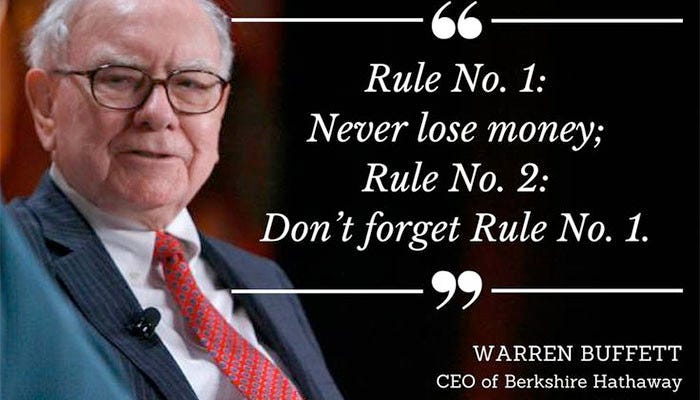
It’s all about following Warren Buffett’s most famous rule:
Now let me show you the 10 companies I would buy and ignore for 20 years!
10. W.W. Grainger ($GWW)
How does the company make money?
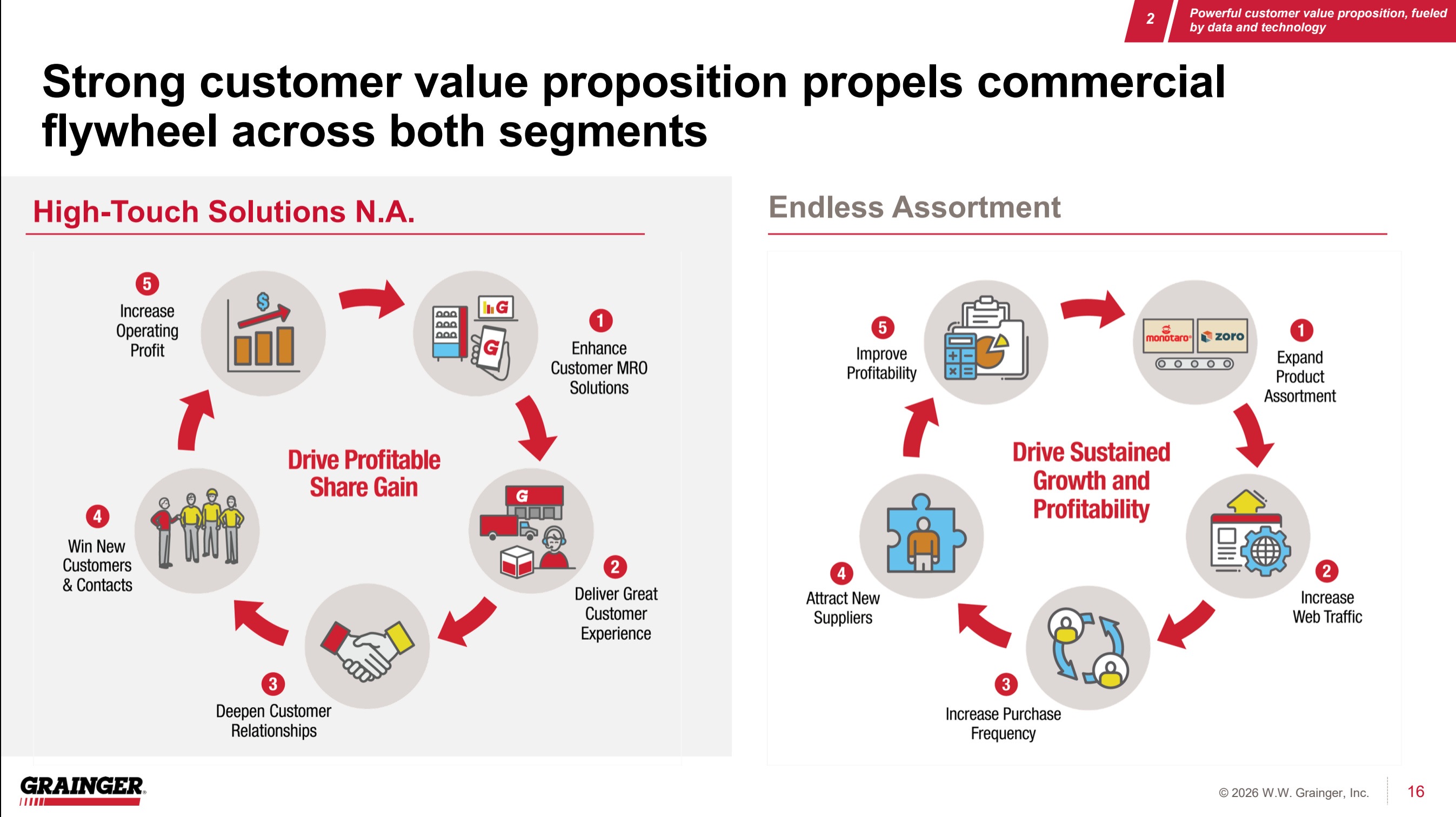
Grainger sells maintenance, repair, and operating (MRO) supplies. They sell everything from safety goggles to industrial motors.
Their products are offered to millions of businesses and institutions globally.
Why will it still be relevant 20 years from now?
Their huge size and wide distribution network keep costs low. They also carry the largest selection of products, making them a one-stop shop for complex operations.
Grainger is built deeply into B2B supply chains and corporate facility maintenance.
Physical businesses will always need tools, spare parts, and safety equipment to keep their facilities running.
9. Sherwin-Williams ($SHW)
How does the company make money?
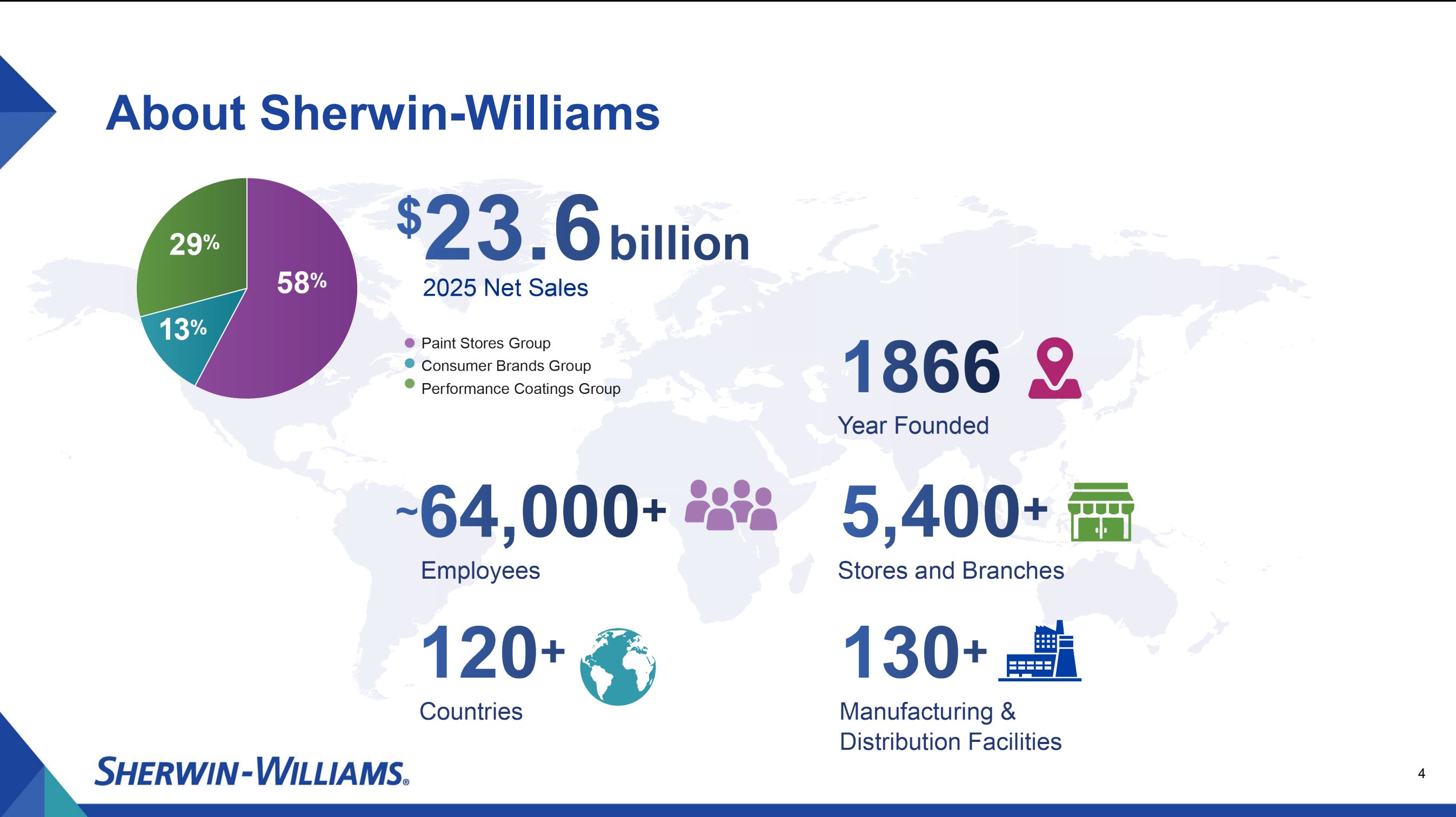
Sherwin-Williams manufactures and distributes paint, coatings, and related supplies.
They do this largely through their massive, localized network of company-owned stores tailored directly to professional contractors.
Why will it still be relevant 20 years from now?
Paint and protective coatings will always be needed to maintain the world’s infrastructure and housing.
Like Grainger, their distribution network is nearly impossible for new competitors to copy.
Time is money for professional painters and contractors, and one of Sherwin-Williams’ 5,400 stores is always nearby. This keeps pros very loyal to the company’s products.
8. Cintas ($CTS)
How does the company make money?
Cintas makes money by renting and cleaning corporate uniforms and floor mats.
Furthermore, they are restocking restroom and first-aid supplies for businesses.
Why will it still be relevant 20 years from now?
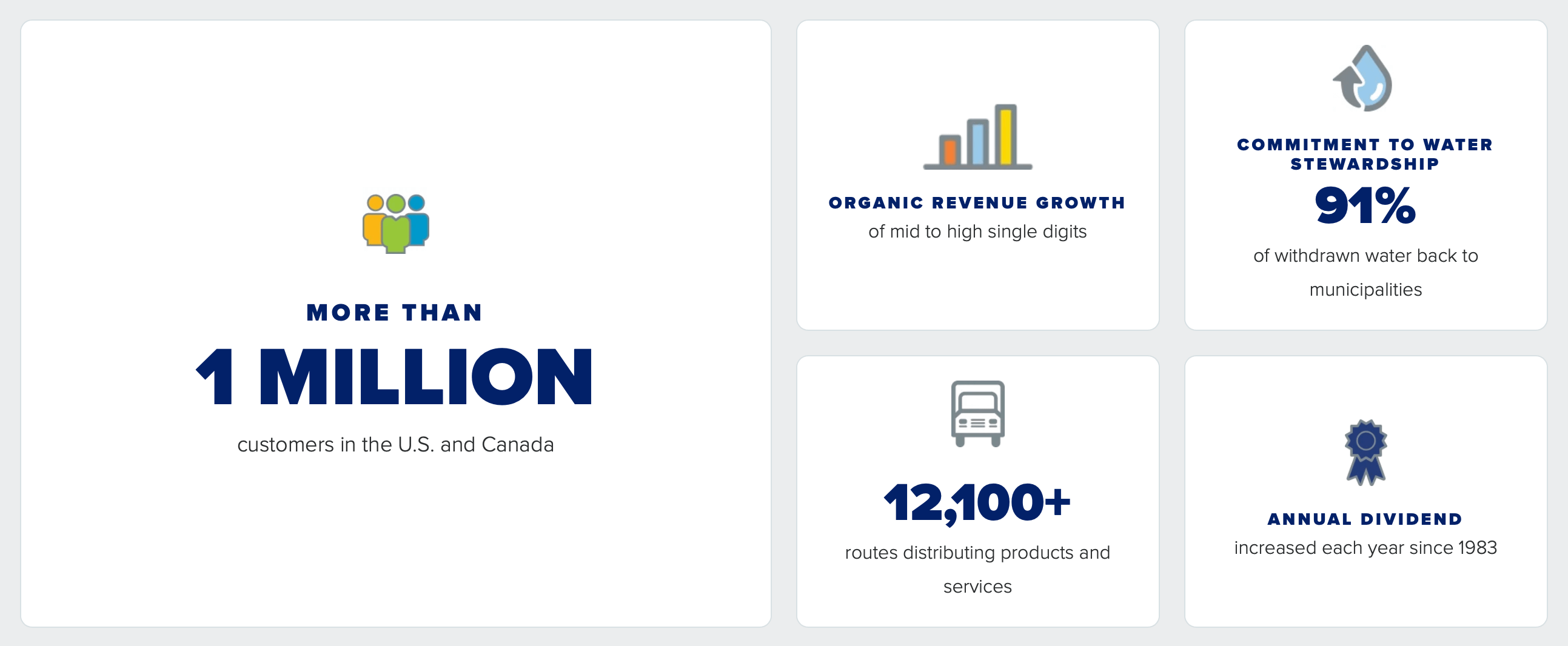
This is another business with huge local scale. Cintas runs more than 12,000 routes.
Once a company becomes a customer, it rarely leaves. Cintas makes life easy for facility managers, and its size keeps costs low.
As long as workplaces exist, they’ll need clean uniforms, safety gear, and restroom and cleaning supplies.
7. Rollins ($ROL)
How does the company make money?
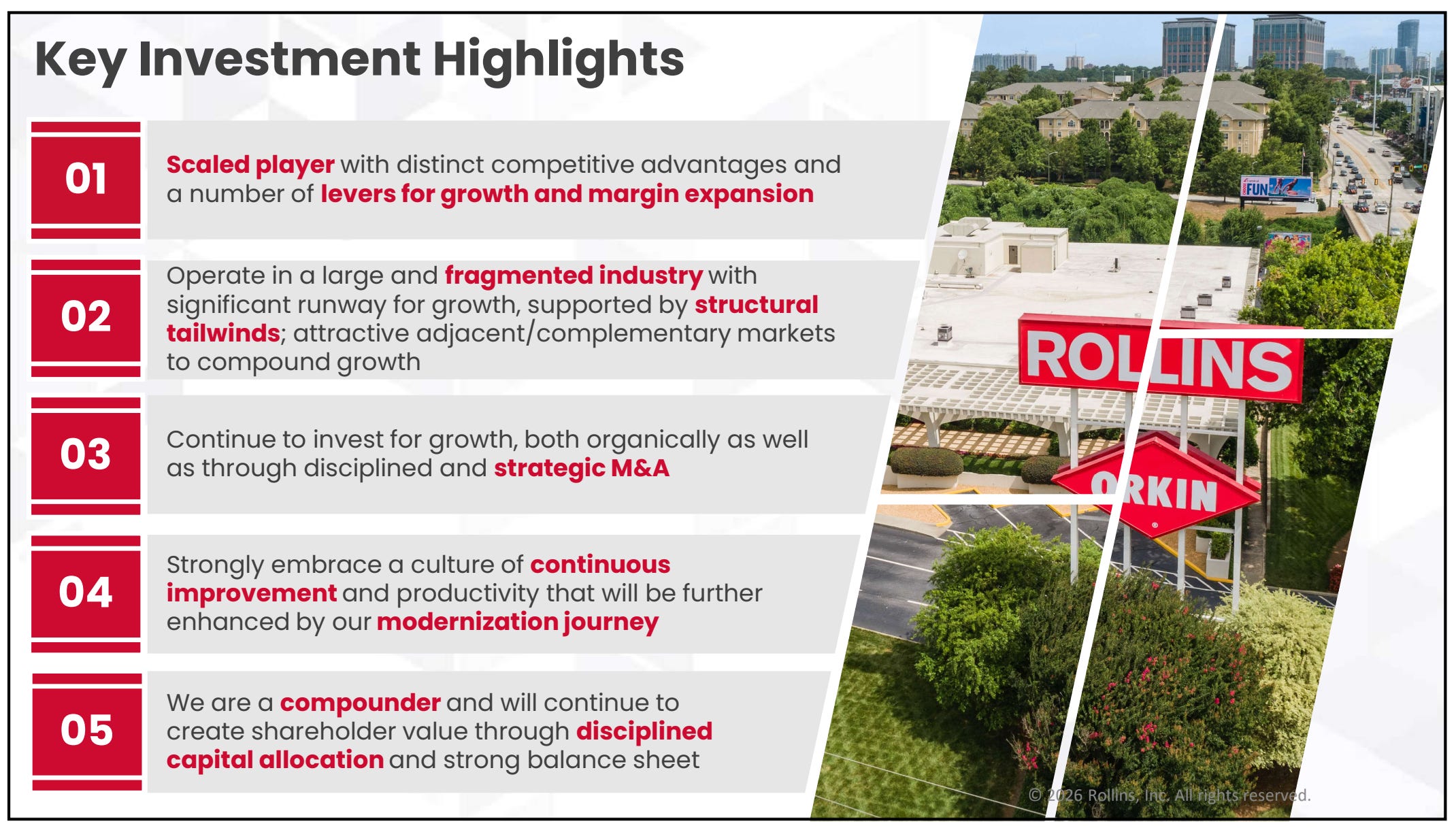
Rollins (the parent company of Orkin) provides pest control services to residential and commercial customers.
They do this through a recurring subscription model.
Why will it still be relevant 20 years from now?
Pests like termites, rodents, and insects aren’t going away. They need treatment again and again.
This business holds up in a recession. Homeowners and companies cut almost everything else before they cancel pest control.
The industry is still split among many small players. Rollins keeps buying them up, and has decades of growth ahead.
6. S&P Global ($SPGI)
How does the company make money?
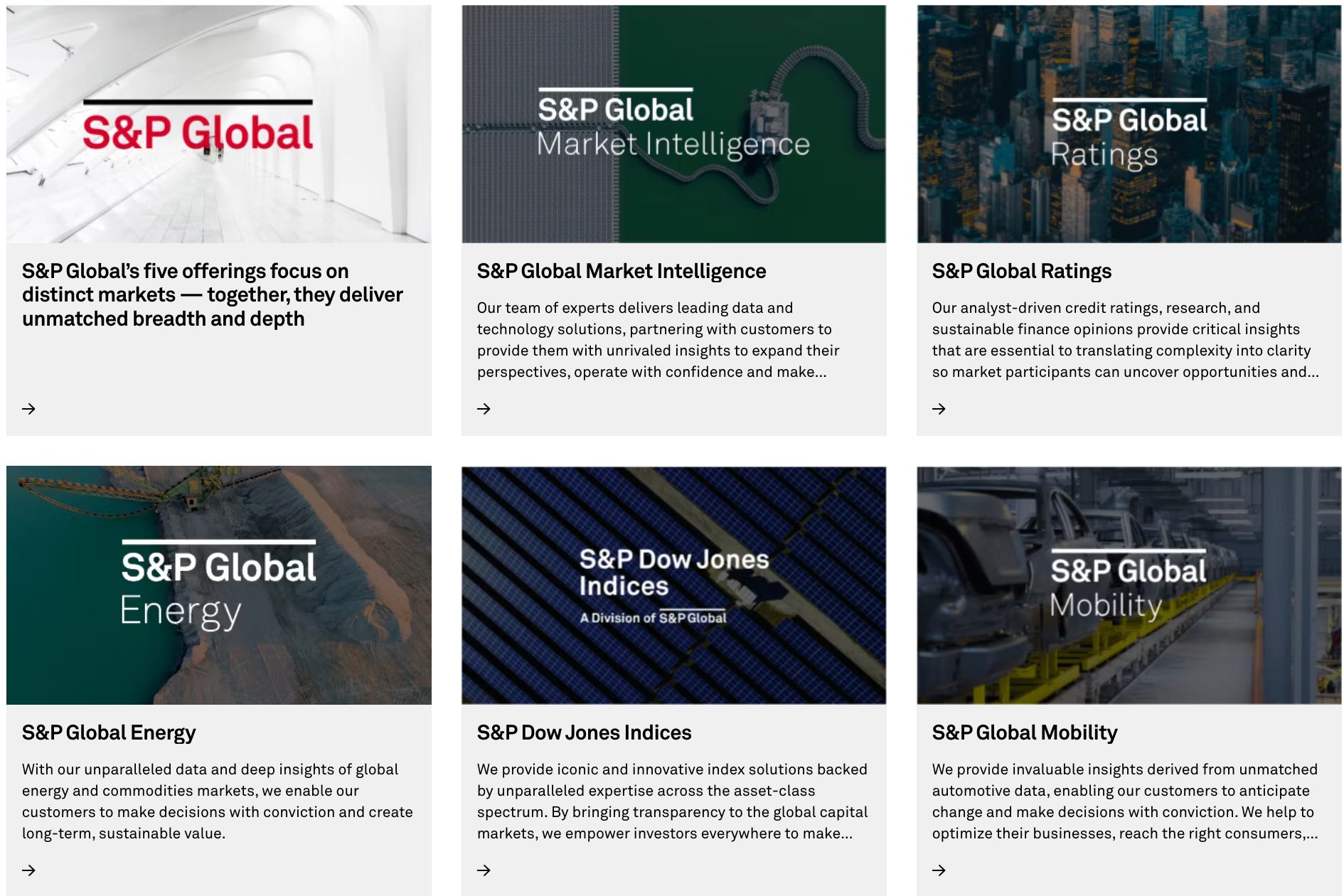
S&P Global provides credit ratings, financial benchmarks (such as the S&P 500 index), and data analytics to the global capital markets.
Why will it still be relevant 20 years from now?
The company is one of just a few big players that dominate the world market.
Companies that borrow money need credit ratings. The global financial system can’t work without them.
As long as capital markets exist, S&P Global will take a cut of financial data and transactions.
5. Mastercard ($MA)
How does the company make money?
Mastercard operates the world’s largest digital payment networks.
They earn a tiny fraction of a cent (and a percentage of the transaction) every time a card is swiped, inserted, or tapped globally.

Why will it still be relevant in 20 years from now?
Mastercard’s network feeds itself. Merchants accept it because shoppers use it, and shoppers use it because merchants accept it.
Mastercard takes no credit risk. It just runs the toll road that global payments flow through.
The world keeps moving away from cash, and that pushes more and more payments onto Mastercard’s network.
4. Brookfield Corporation ($BN)
How does the company make money?
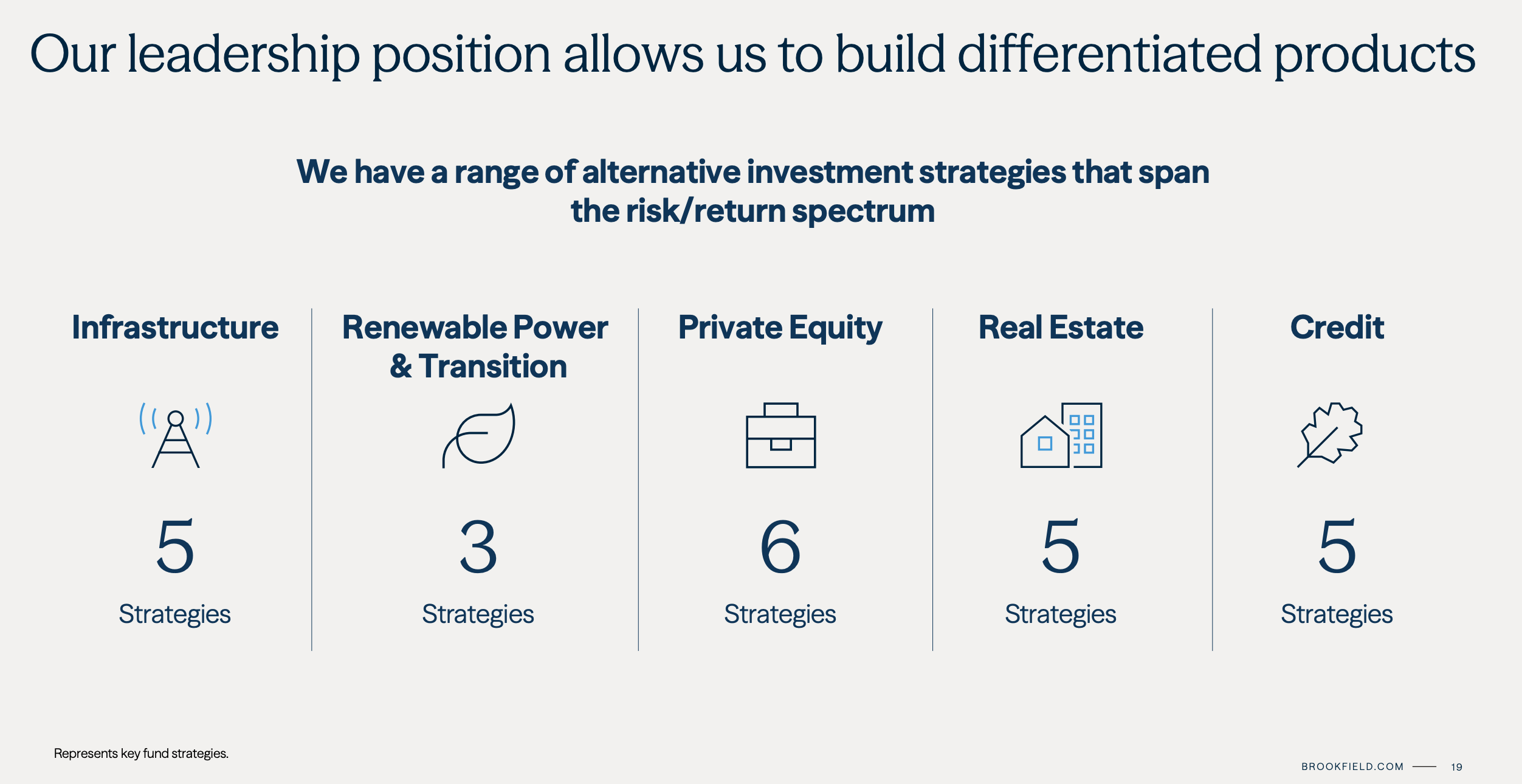
Brookfield is an alternative asset manager that owns and operates massive, cash-generating real assets across the globe.
This includes toll roads, hydroelectric dams, and premier real estate.
Why will it still be relevant 20 years from now?
They own physical assets the global economy depends on, and these can’t be replaced.
Their revenue often comes from contracts that last 20 to 50 years and rise with inflation.
The management team is excellent at putting money to work. They buy troubled assets, fix them up, and reinvest the proceeds.
Now let’s dive in the top 3.