

An interesting idea for your portfolio? Holdings.
By investing in holdings, you invest in multiple companies at the same time.
On top of that, they have proven they can outperform the market.
What are Holdings?
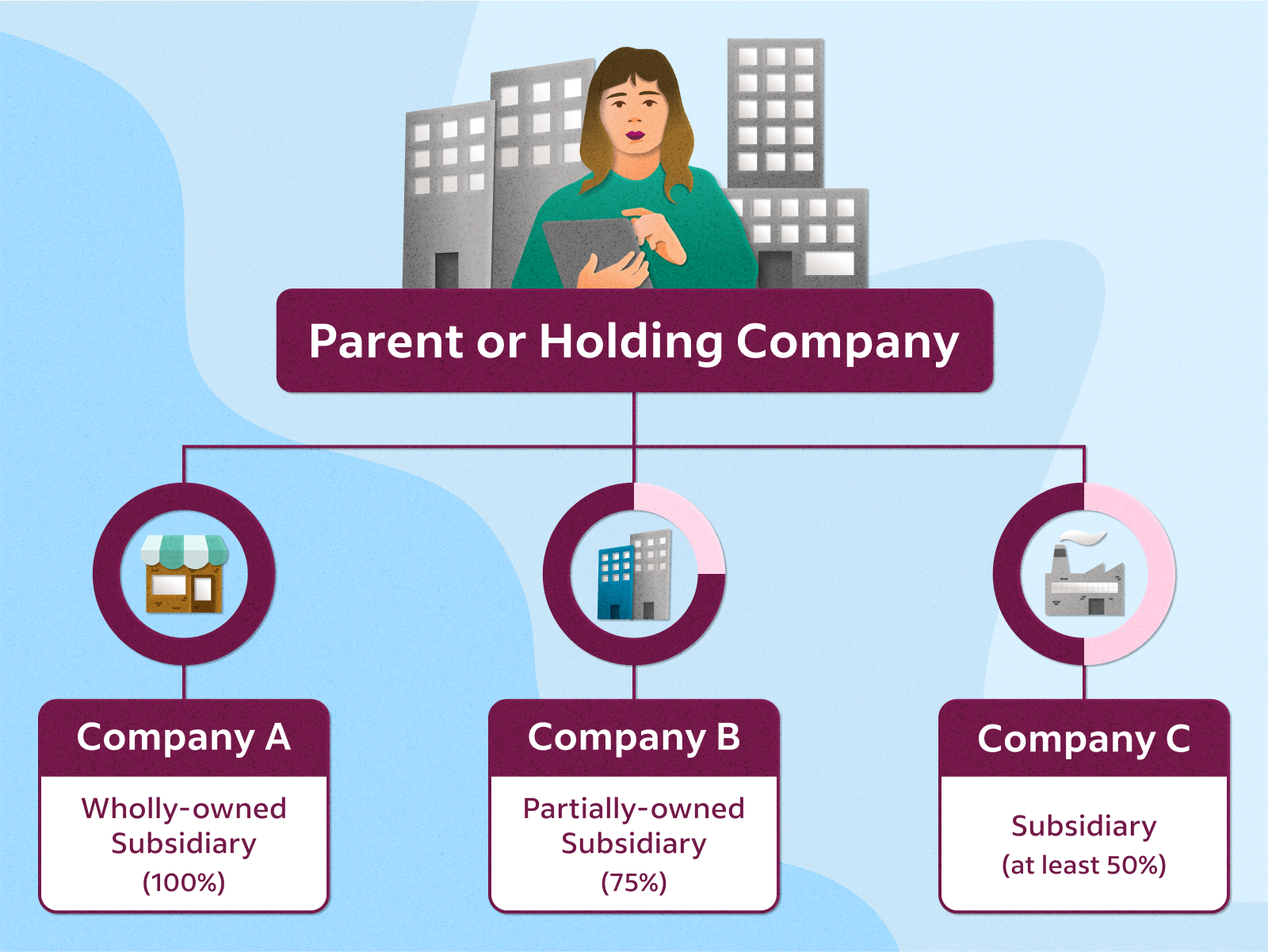
Holding companies are different from regular companies.
They don’t make goods or provide services, they own pieces of other companies.
Holding companies make money in 2 ways:
The appreciation in value of the companies they own
Dividends
The most important thing for a holding company isn’t running the business.
It’s making great capital allocation decisions (choosing which companies to invest in).
Why are Holding Companies Interesting?
Holding companies usually trade at a discount.
This means you can buy them at a cheaper price than what they are actually worth.
Brookfield Corporation is a great example.
The holding is active in different segments:
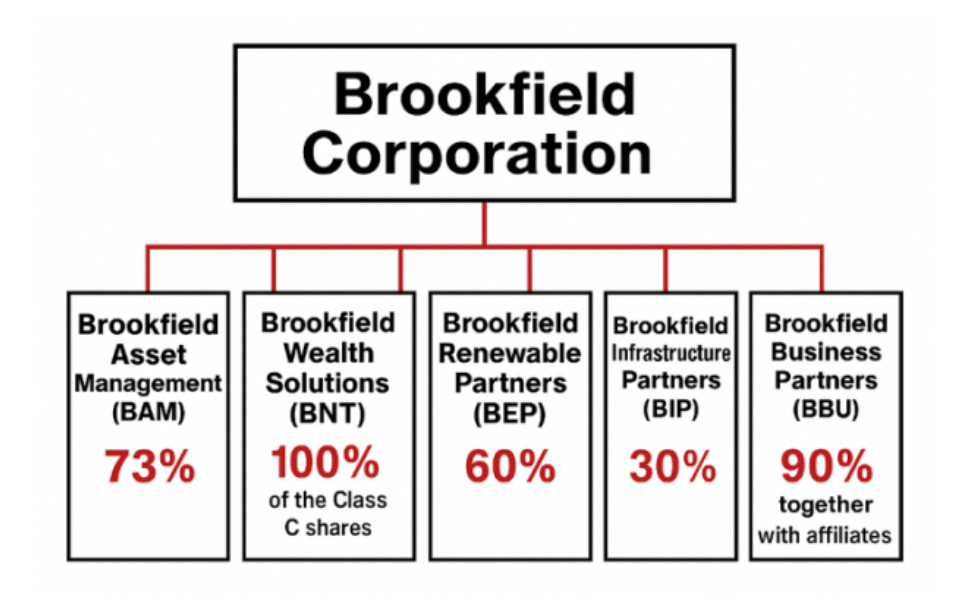
To understand Brookfield, you have to understand each one of these businesses.
That takes a lot of time and effort.
But it also creates opportunities.
Investors often ignore these companies, causing them to trade at discounts.
Brookfield Corporation currently trades at a price of $42.
Their intrinsic value? $68.
This means Brookfield Corporation trades at a 38% discount.
This is a large discount from an historical perspective.
On top of that, their track record is amazing.
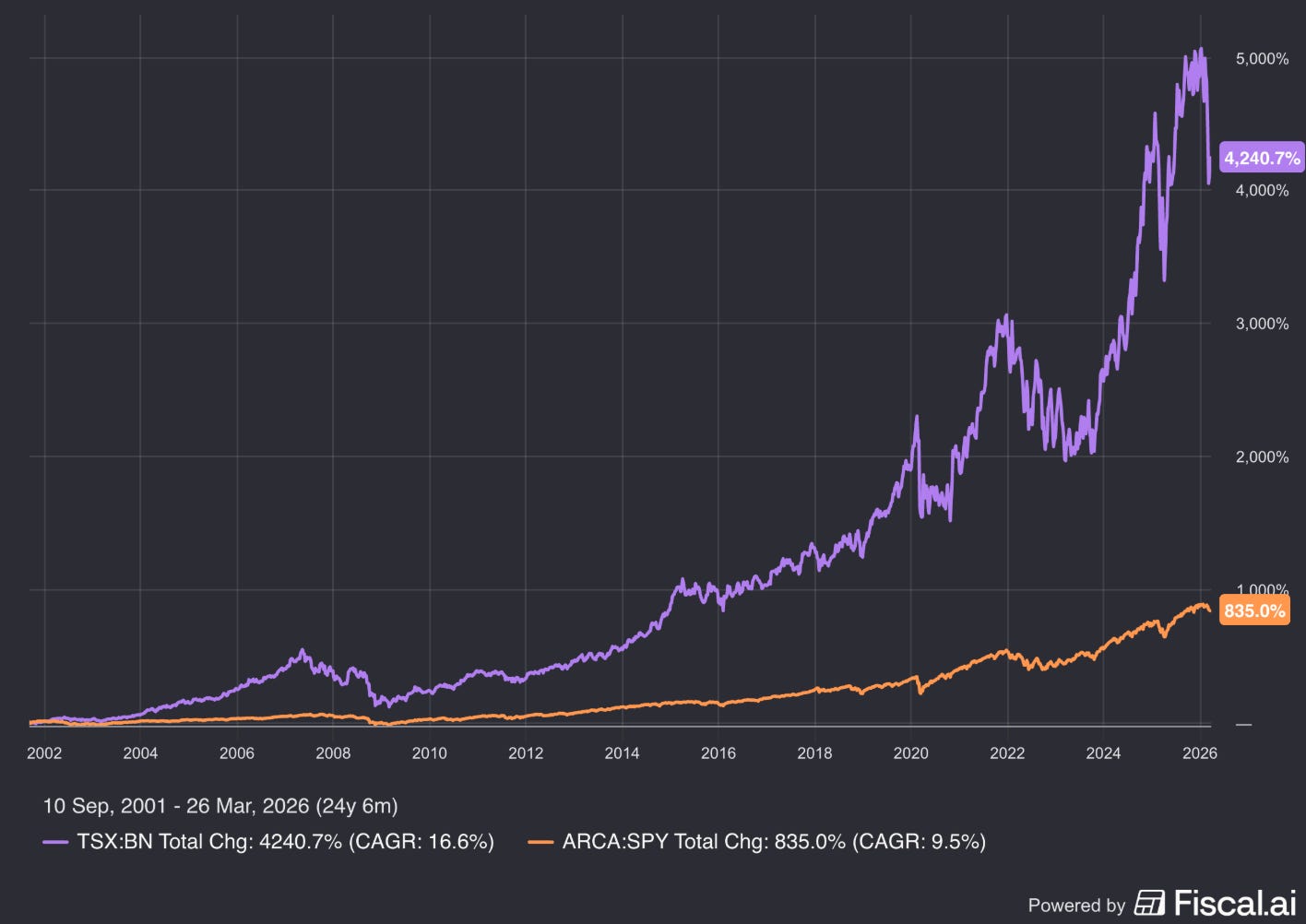
Brookfield has compounded at an impressive 16.6% per year since 2001.
They outperformed the S&P 500 by a wide margin.
You can read more about Brookfield Corporation here.
🏆13 Interesting Holding Companies
Now let’s dive into 13 holding companies you should know.
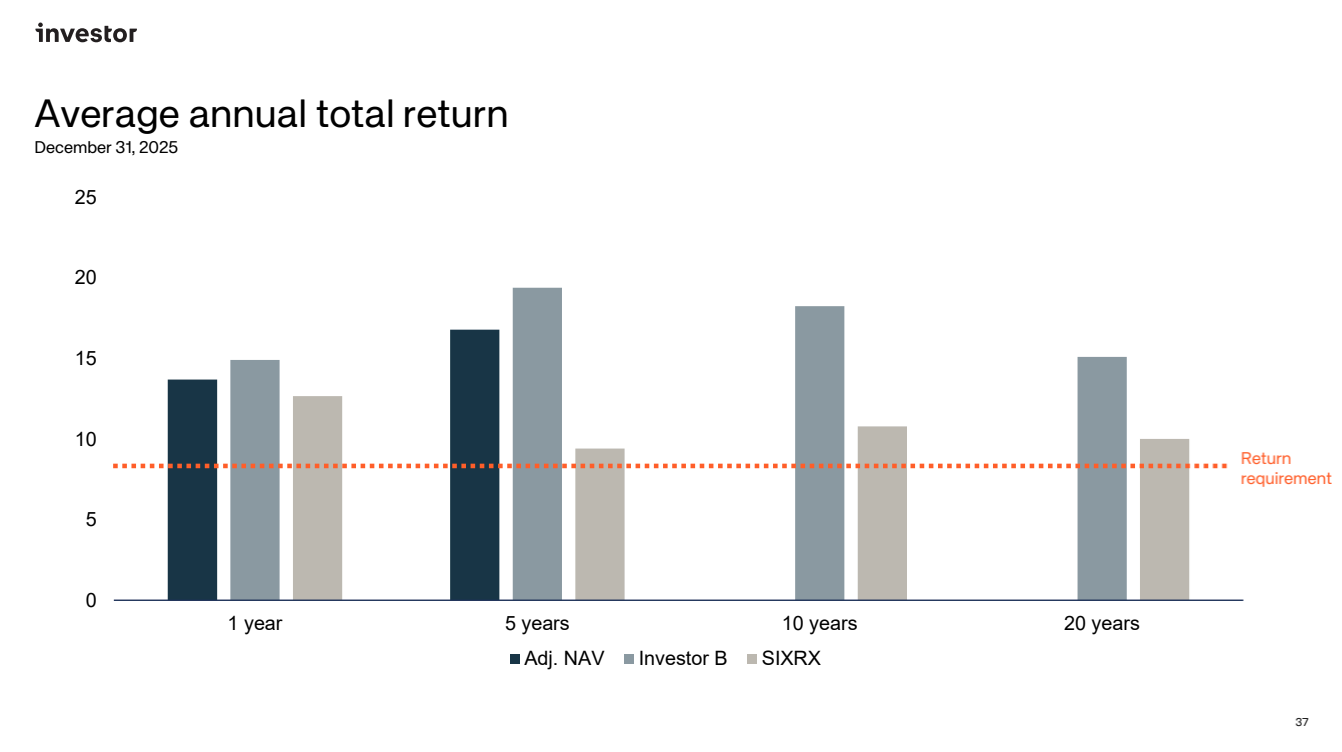
1. Investor AB ($INVE-B)
Investor AB is a Swedish holding company managed by the Wallenberg family. They have been around since 1916.
They own major Swedish companies such as Atlas Copco, ABB, and AstraZeneca.
Their Portfolio allocation by business segment looks like this:
Listed Companies (72%): Core strategic holdings like Atlas Copco, ABB, AstraZeneca, ...
Patricia Industries (19%): Wholly-owned subsidiaries like Mölnlycke
Investments in EQT (9%): EQT is a global investment firm focused on private equity, infrastructure and real assets
Since 2001, Investor AB returned 14.3% per year to shareholders.
2. Scottish Mortgage Investment Trust ($SMTL)
Scottish Mortgage is a global investment trust.
They identify and invest in exceptional public and private companies that are building the future of the global economy.
Via $SMT, you get exposure to companies you could otherwise never own.
Think about companies like SpaceX, Anthropic and ByteDance (TikTok).
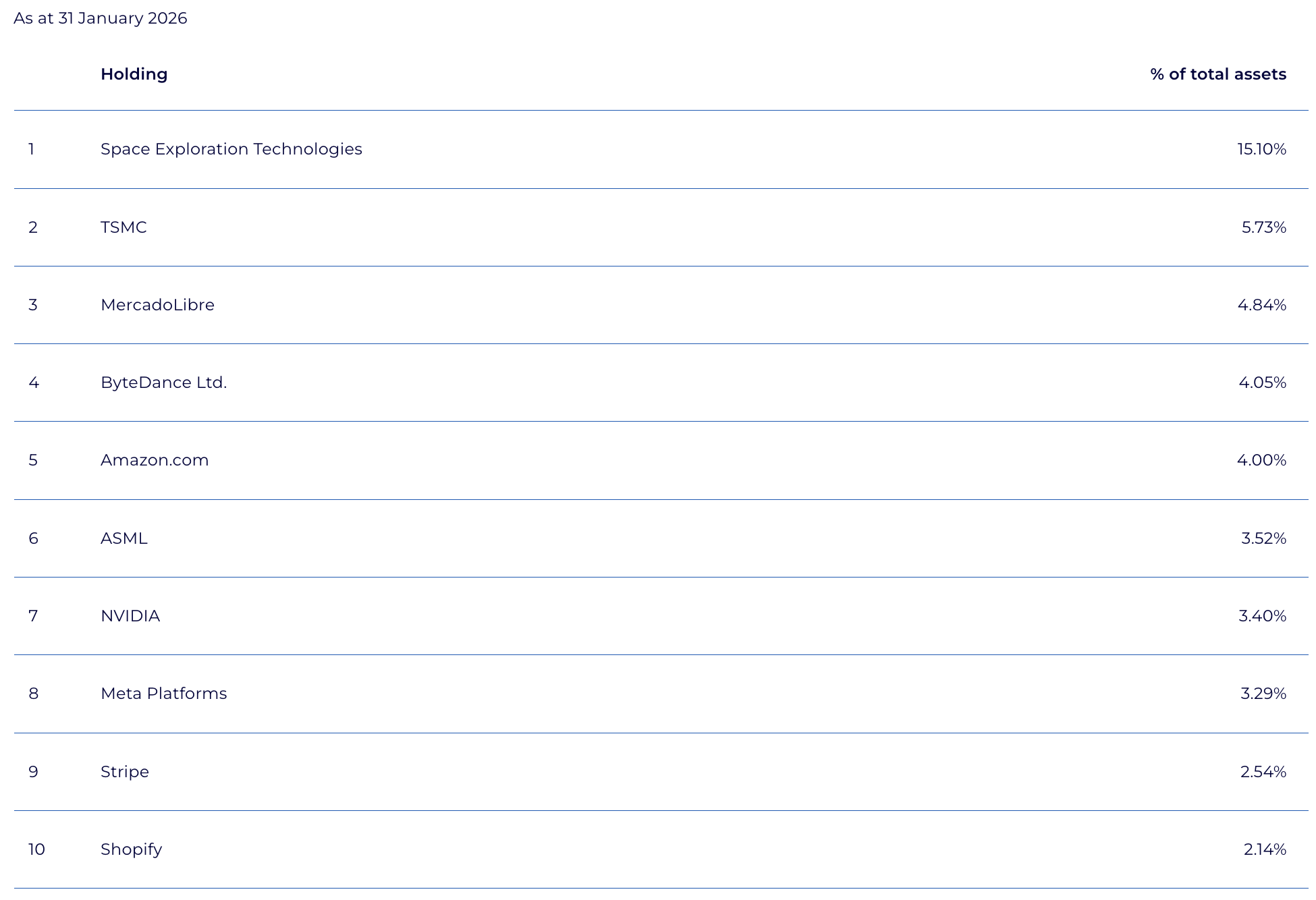
Their top 5 positions look as follows (weight in %):
Space X (15.3%)
TSMC (5.7%)
MercadoLibre (4.8%)
ByteDance (4.1%)
Amazon (4%)
Since 2001 the stock compounded by 14.4% per year.
3. MBB SE ($MBB)
MBB is a German family-owned company that invests in other family businesses.
The Freimuth family owns 71% of MBB SE through MBB Capital Group.
They focus on secular trends such as the energy transition and cybersecurity.
These themes will only become more important over the next few decades.
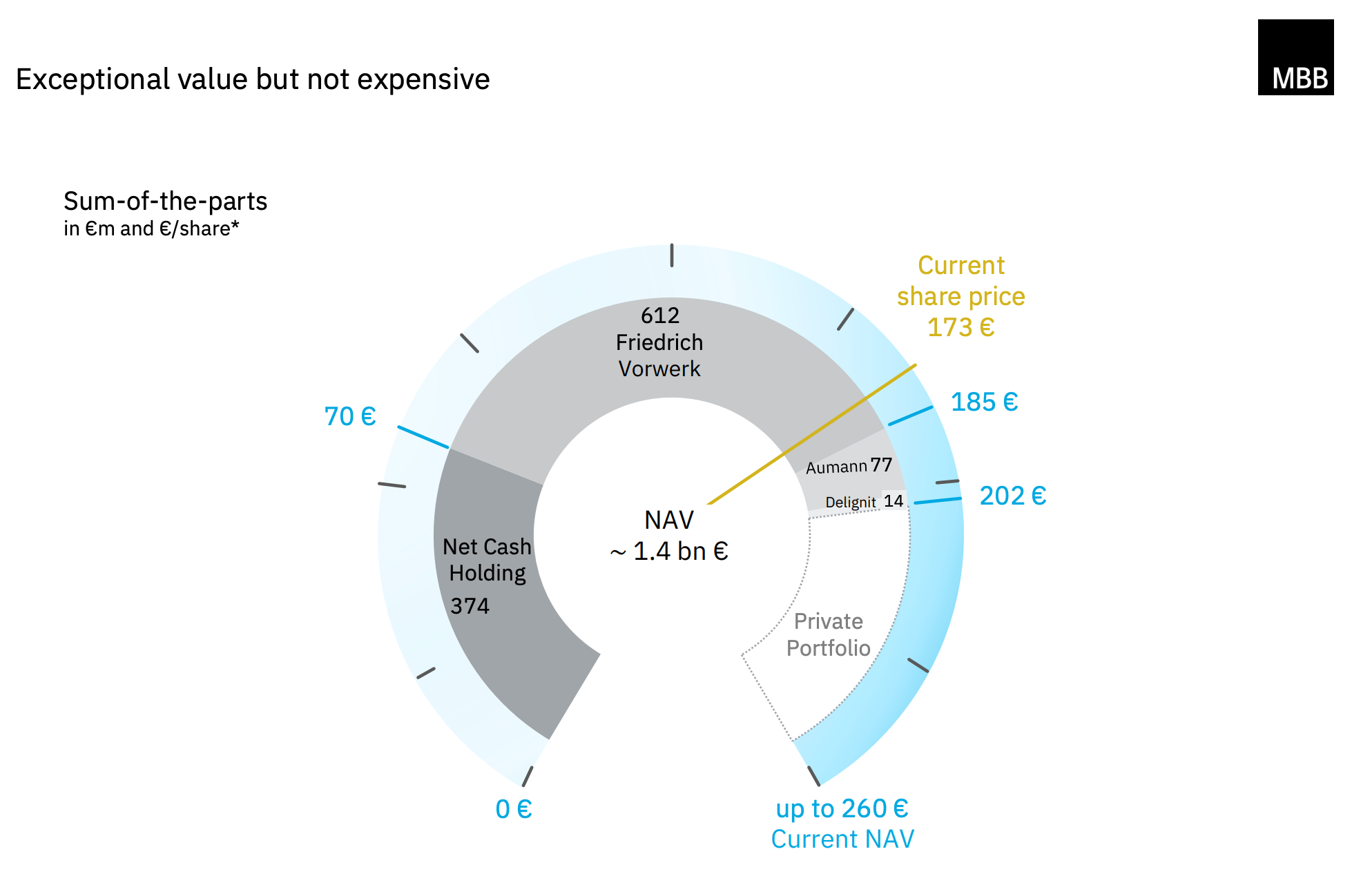
Their top 5 positions looks as follows (weight in %):
Friedrich Vorwerk (44.2%)
Cash (26.9%)
Private Equity - Unlisted Companies (22.3%)
Aumann AG (5.5%)
Delignit AG (1.1%)
Since the IPO in 2006 the stock compounded by 17.4% per year.
4. Markel Group ($MKL)
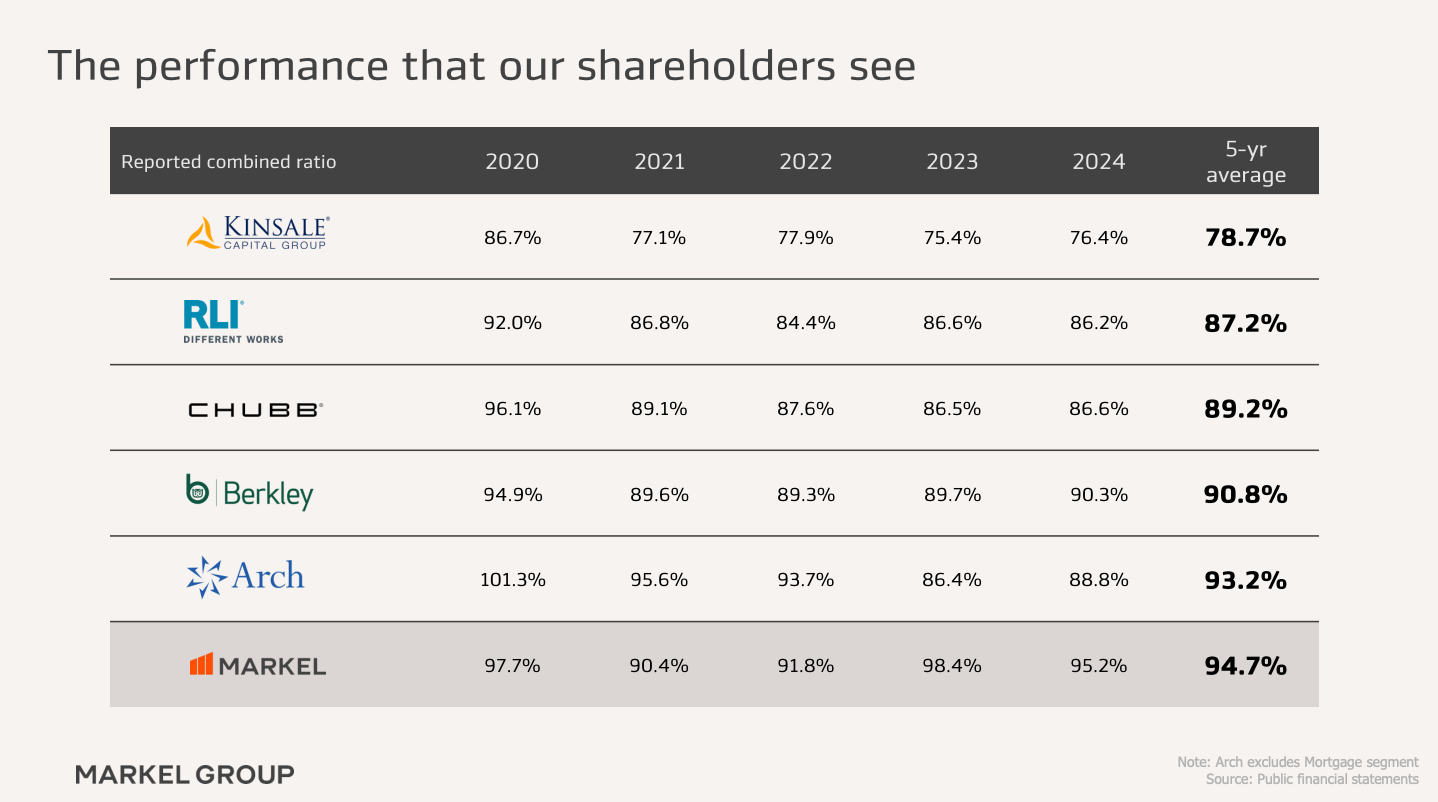
Markel is often seen as a mini Berkshire Hathaway.
It’s an insurance company led by Tom Gayner.
The interesting thing is that they can reinvest their insurance float in listed stocks as well as fully owned private businesses.
Their top 5 positions looks as follows (weight in %):
Berkshire Hathaway Inc (12.8%)
Alphabet Inc. (6.9%)
Brookfield Corporation (4.8%)
Amazon.com (3.7%)
Deere & Company (3.3%)
Since 2001 the stock compounded by 9.9% per year.
5. Ackermans & van Haaren ($ACKB)
Ackermans & van Haaren is a Belgian family‑controlled holding company.
They specialize in marine engineering, real estate, private banking, and private equity.
Their top segment positions looks as follows (weight in %):
Private Banking (33.0%)
Marine Engineering & Contracting (32.0%)
Growth Capital (18.0%)
Real Estate (10.0%)
Energy & Resources (7.0%)
Since 2001 the stock compounded by 11.4% per year.
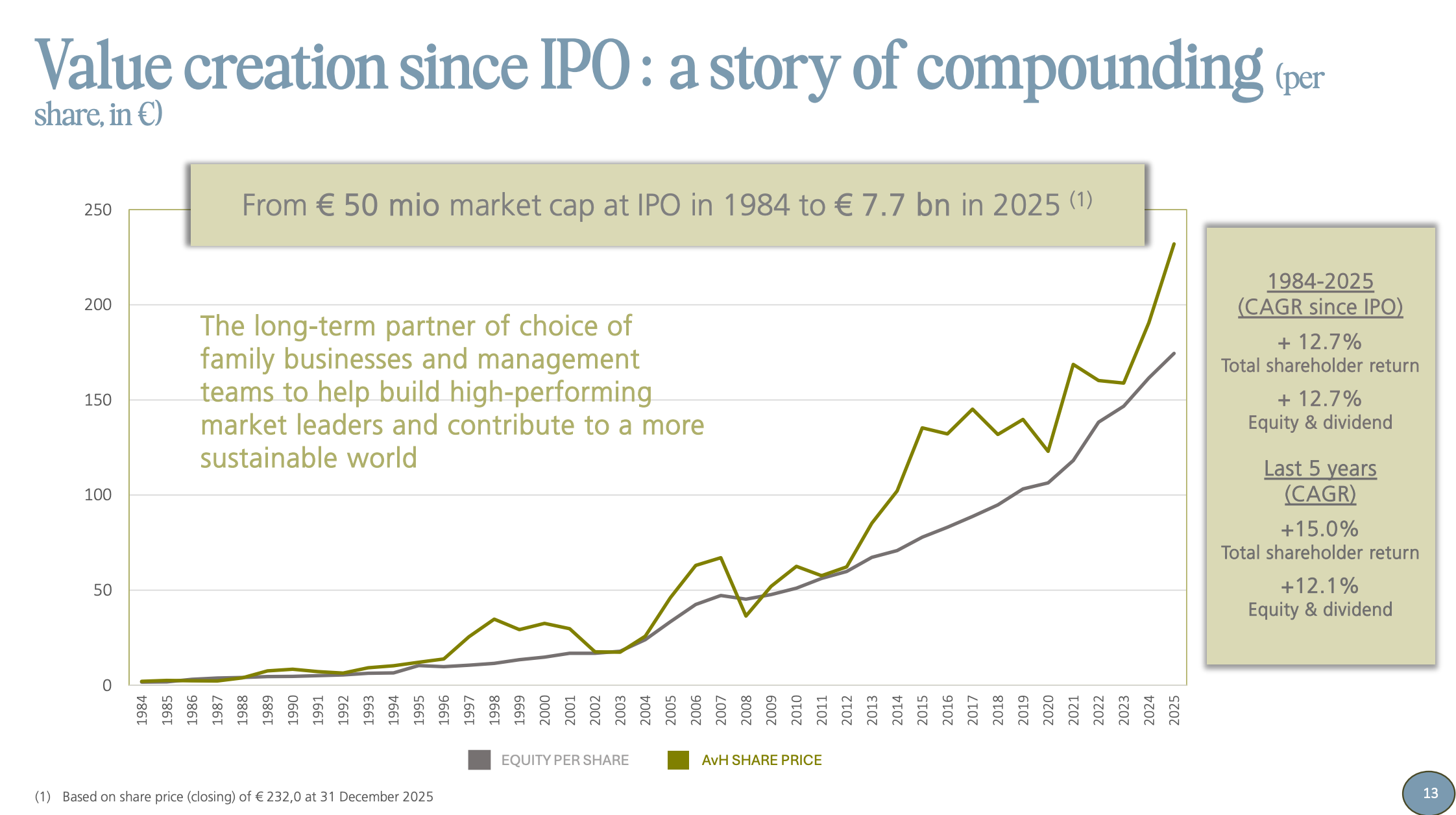
6. Sofina ($SOF)
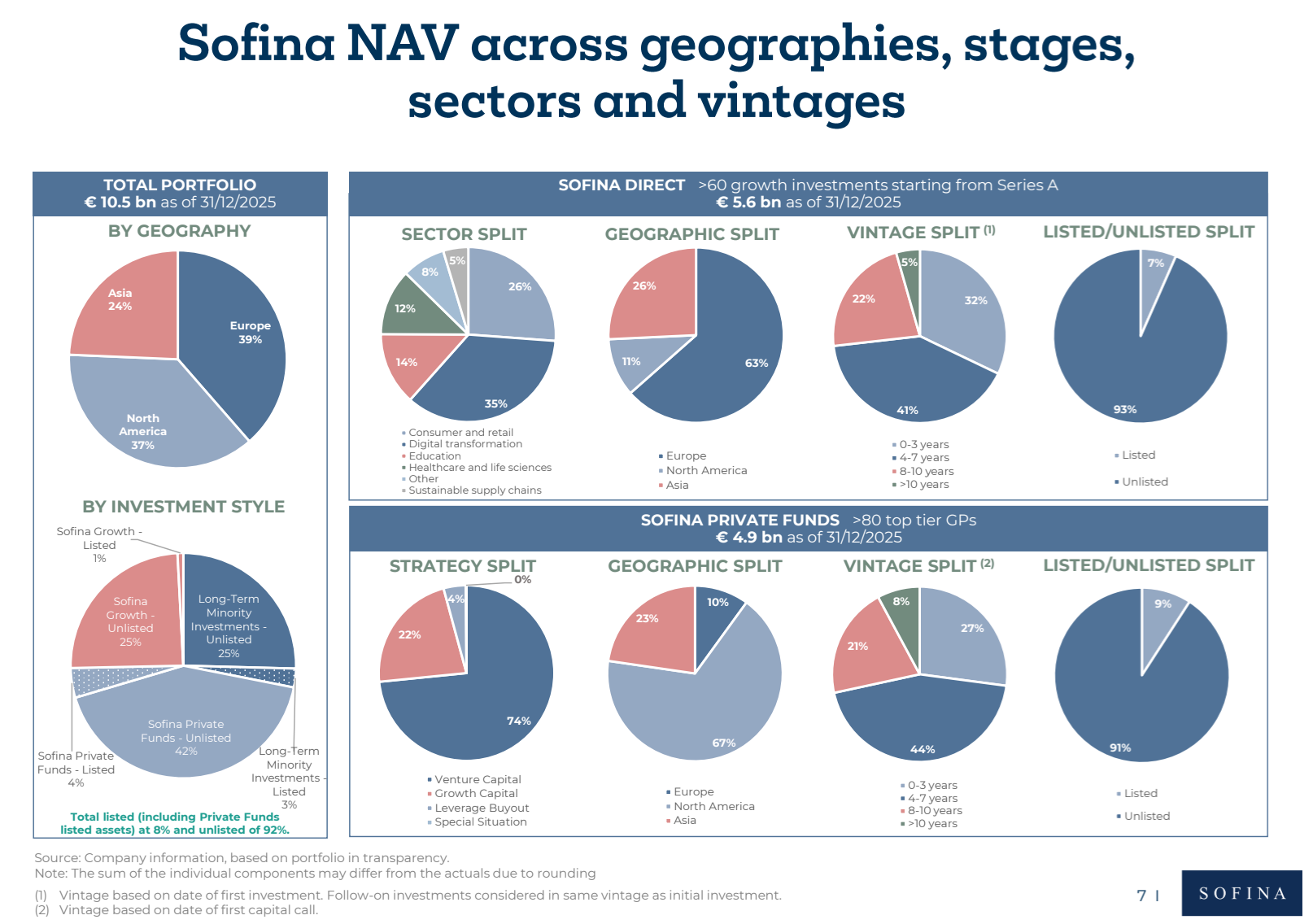
Sofina is a Belgium-based global investment company controlled by the Boël family.
It started in 1898 by financing electricity and tramway projects across Europe and Latin America.
Since 1950s it has slowly shifted towards reallocating capital into listed equities and later private investments.
Today it invests across Europe, North America, and Asia actively in essential sectors like consumer, digital, education, and healthcare.
Their top 5 direct investments looks as follows (% weight):
ByteDance (7.0%)
Cognita (6.0%)
Nuxe (3.7%)
Drylock Technologies (3.0%)
Proeduca (2%)
Since 2001 the stock compounded by 8.6% per year.
7. Brookfield Corporation ($BN)
Brookfield Corporation is a Canadian holding company and one of the world’s leading owners of essential real assets.
Through its subsidiaries, it owns and operates critical infrastructure and energy assets that power economies globally.
The CEO, Bruce Flatt, is often referred to as the Canadian Warren Buffett.
It’s a high-quality business we’re proud to own in our portfolio.
Brookfield owns stakes in the following subsidiaries (% they own):
Brookfield Asset Management (73.0%)
Brookfield Wealth Solutions (100%)
Brookfield Infrastructure Partners (60.0%)
Brookfield Renewable Partners (30.0%)
Brookfield Business Partners (90.0%)
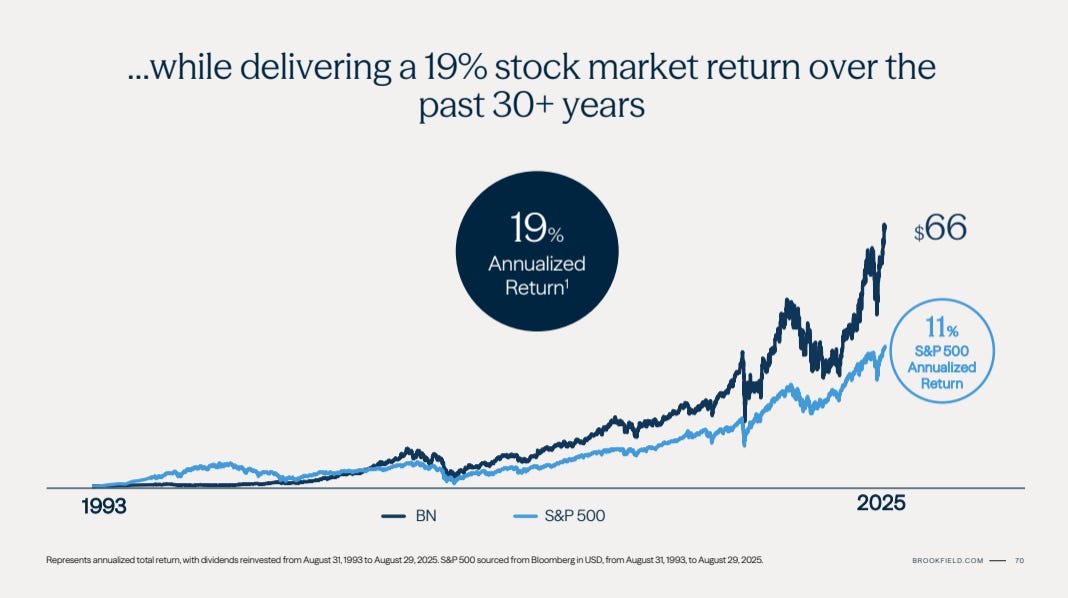
Since 1993 the stock compounded by 19.0% per year.
8. Exor ($EXO)
Exor is an Italian holding company controlled by the Agnelli family.
The Agnelli family still owns 50% of Exor.
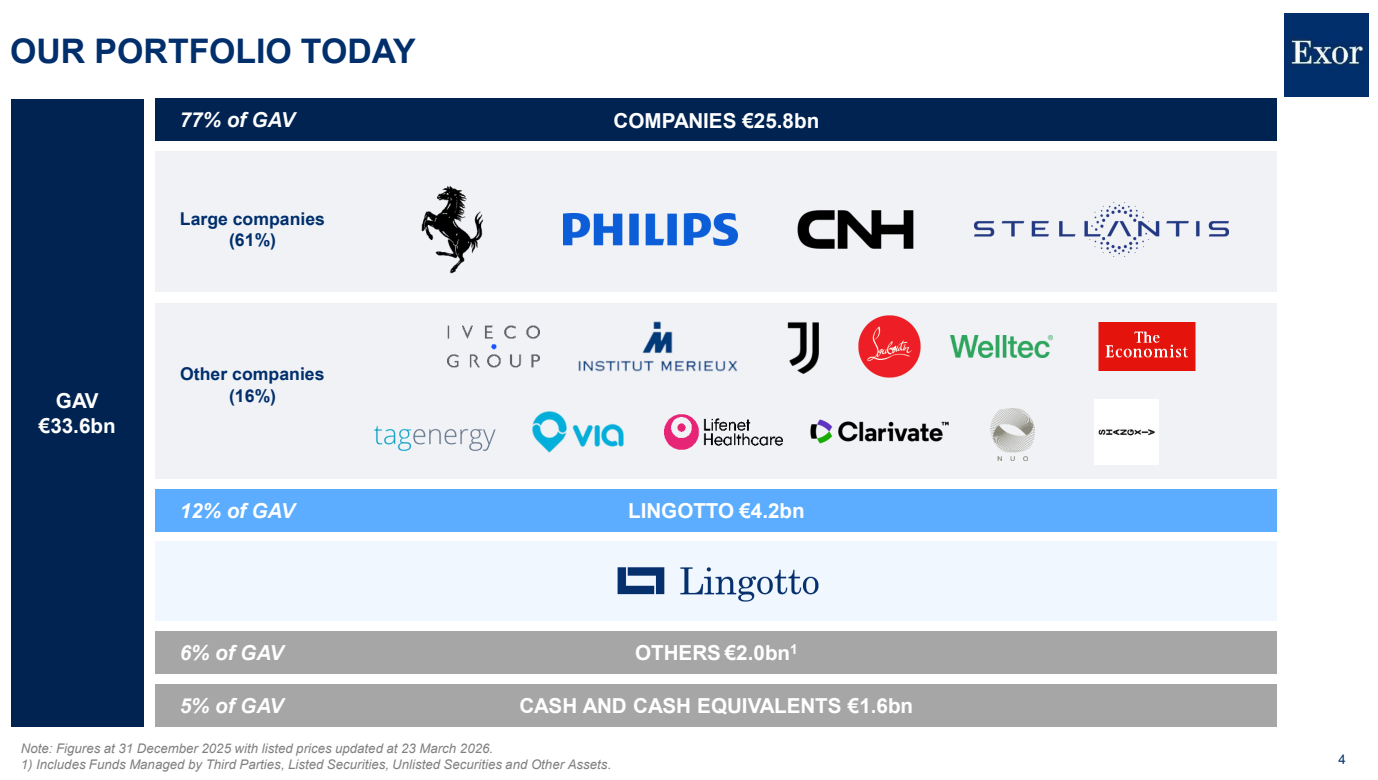
Exor invests a lot in traditional companies. Think about Ferrari, Stellantis and Philips.
Their top 5 positions looks as follows (% weight):
Ferrari (32.4%)
Stellantis (11.5%)
Philips (11.4%)
Lingotto (11.3%)
CNH (7.8%)
Since its listing in 2022, the stock compounded by 1.5% per year.
9. Constellation Software ($CSU)
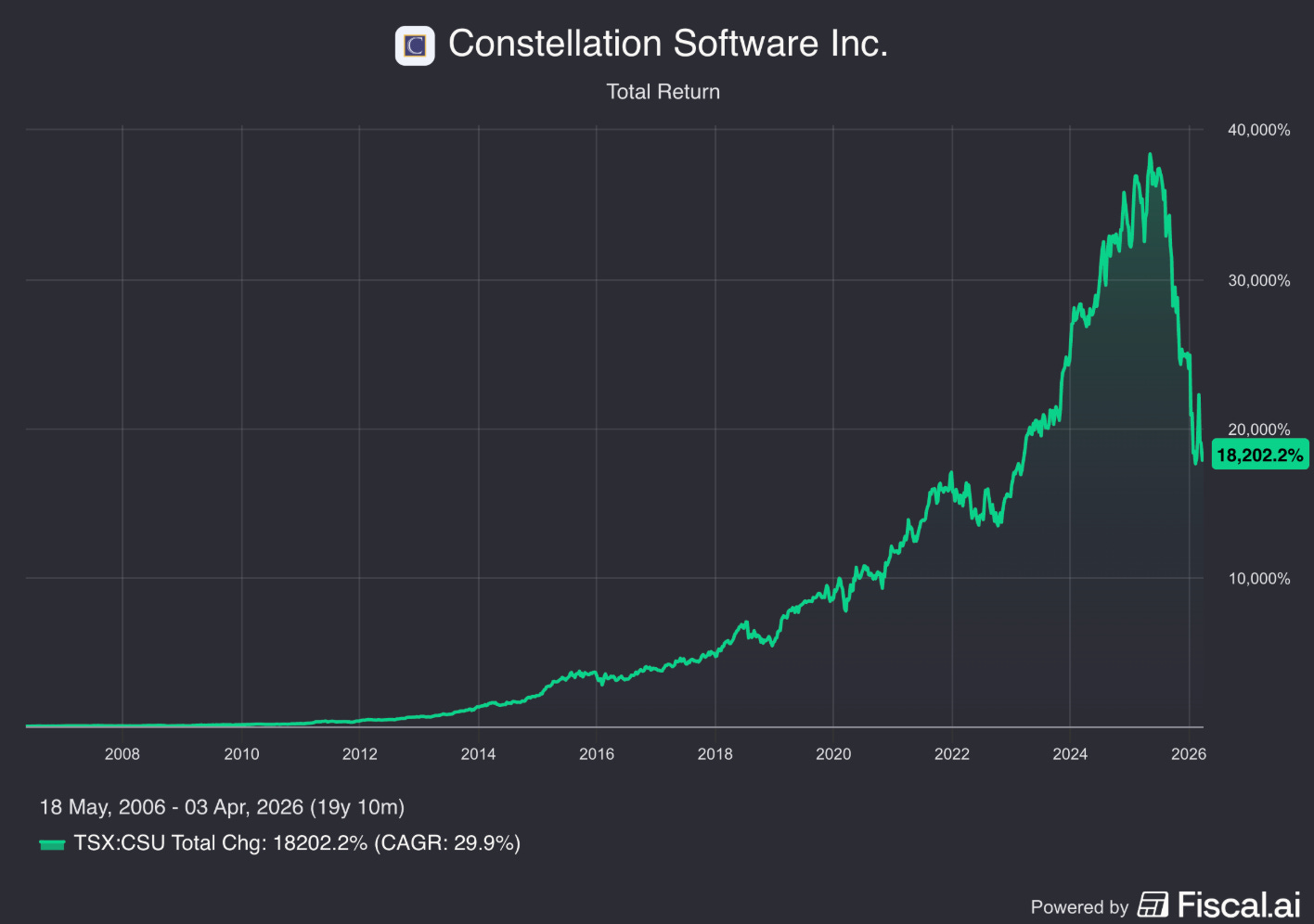
Constellation Software is the best serial acquirer in the world. The stock has consistently compounded at +30% per year.
Just 15 years after their IPO in 2006, Constellation had already joined the 100-bagger club. It’s an amazing business.
You can read the Deep Dive here.
Constellation Software is active in 6 different operating segments through its subsidiary companies. Let's take a look at them:
Harris Computer Systems ( ~30% of group revenue): The largest and oldest operating group, with 100+ software businesses across utilities, healthcare, and government
Volaris Group (~25% of group revenue): The most internationally diversified group, with 150+ businesses across 40+ verticals including agri-food, financial services, and education
Topicus.com (~15% of group revenue): Topicus was spun out of Constellation in 2021 to allow it to compete more aggressively for larger European deals using its own listed share currency
Jonas Software (~15% of group revenue): Operates 140+ companies across 40+ verticals, with a strong North American base in hospitality, construction, and fitness
Perseus Group (~10% of group revenue): Focused on real estate, pharmaceutical, government, and pulp & paper software niches
Vela Software (~5% of group revenue): The smallest of the six, primarily focused on industrial and asset-heavy sectors
Since its IPO in 2006 the stock compounded by 29.9% per year.
10. Brederode ($BREB)
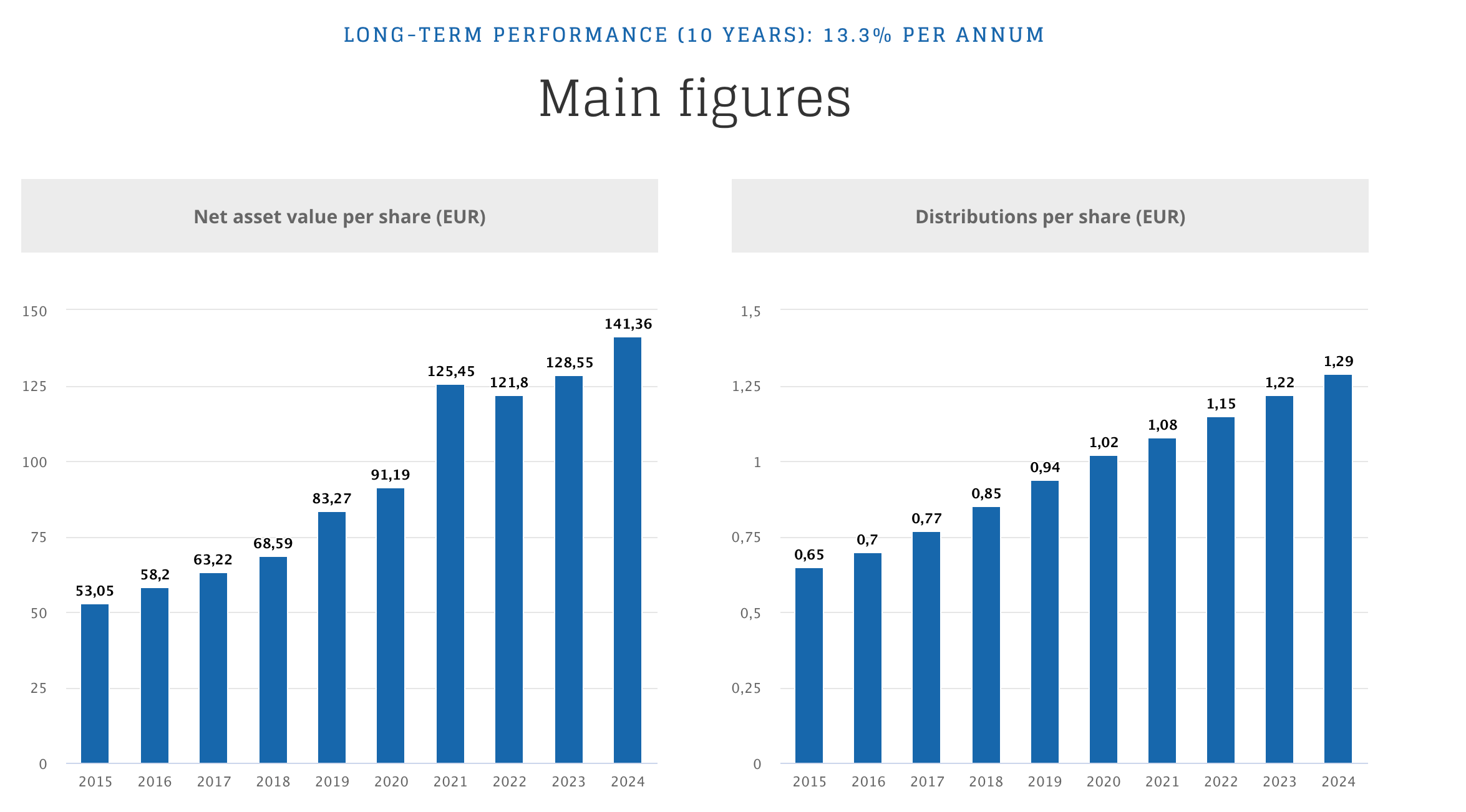
Brederode is a Belgian holding company that invests mainly in Private Equity (non-listed companies).
It is controlled by the Van der Mersch family. They still own 55.0% of Brederode.
Their portfolio consists of 62.9% Private equity funds and 37.1% Listed stocks.
Their top 5 positions looks as follows (% weight of the listed stock portfolio):
Alphabet (15.1%)
Iberdrola (11.2%)
Mastercard (9.7%)
Enel (7.8%)
Novartis (6.2%)
Since 2001 the stock compounded by 8.5% per year.
Now let’s dive in the top 3.
