

Hi Partner 👋
It’s time to wrap up serial acquirer week.
Today, it’s time for the most fun part: building a serial acquirer portfolio.
We found 12 very exciting names.
On average, these names compounded shareholder returns at +34% per year!
Let’s dive in right away.
![Pac-Man Pictures and Images: Free HD Downloads [380+]](https://substackcdn.com/image/fetch/$s_!3gVa!,f_auto,q_auto:good,fl_progressive:steep/https%3A%2F%2Fsubstack-post-media.s3.amazonaws.com%2Fpublic%2Fimages%2F6404a2a0-34ce-4a11-b6f7-38e699b75747_1920x1200.jpeg "Pac-Man Pictures and Images: Free HD Downloads [380+]")
Before we start
Before we start, it helps to structure the portfolio in 4 buckets.
Each bucket consists of 3 serial acquirers. That way, we have a portfolio of 12 names.
There are the buckets we will use:
VMS Serial Acquirers
Swedish Serial Acquirers
Industrial Serial Acquirers
Special Serial Acquirers
Bucket 1: VMS Serial Acquirers
Vertical Market Software (VMS) is software for very specific needs.
Think about software that runs libraries, golf clubs, or … chicken coops.
This model makes a lot of sense for Vertical Market Software businesses.
Why? Let’s say you have a chicken coop software company that counts eggs.
It sounds strange, but Constellation ($CSU) actually owns such a business.
Chicken coop software companies are great:
Not a single MIT student is thinking about disrupting it
Competition is very limited
It’s mission-critical
It generates strong, recurring cash flows
Yet, chicken coop software companies face one major disadvantage: there is limited runway to reinvest.
That’s exactly why it makes sense to build a serial acquirer above these businesses.
You get to own these wonderful businesses, while M&A gives you room to reinvest.
Let’s add three businesses to the portfolio that use the VMS Serial Acquirer:
Sygnity ($SGN)
Chapters Group ($CHG)
Software Circle ($SFT)
1. Sygnity ($SGN)
There are five public companies from the Constellation universe:
Constellation Software itself
Topicus
Lumine
Asseco Poland
Sygnity
Out of these five, Sygnity had the best H1 2026 results:
H1 2026 revenue growth of +47%
H1 2026 EBITDA growth of +74%
Despite these impressive results, the valuation remains very cheap at a Forward EV/EBITDA below 12x.
The reason for this low valuation?
The low public float plays a big role.
Topicus alone already owns 72.7%. The public float is probably around 10%.
This makes it impossible for larger investors to open a position.
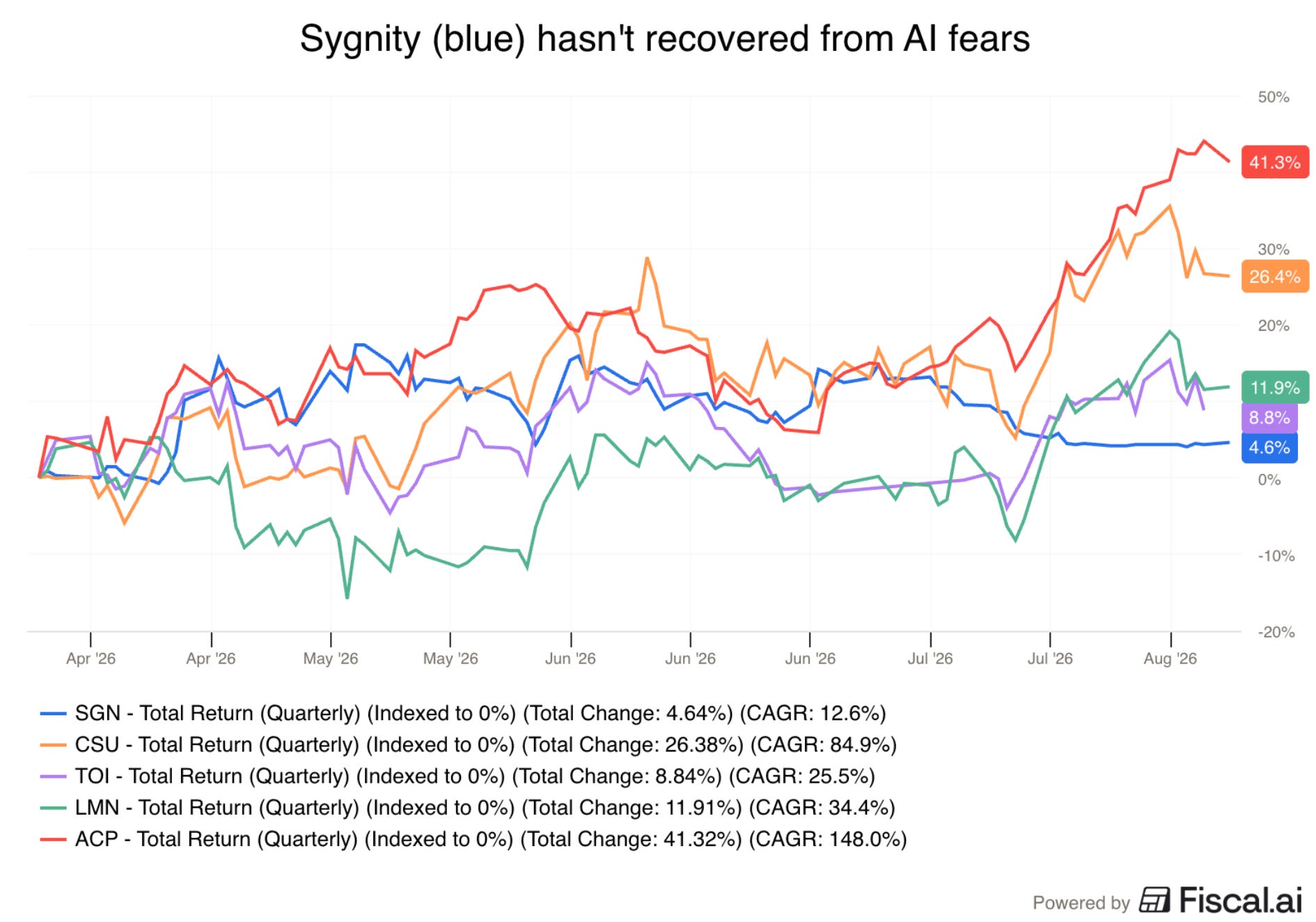
Sygnity is also the only company in the Constellation universe that hasn’t recovered from AI fears yet:
Implementation of the Topicus playbook
It’s worth taking a closer look at what Topicus has done at Sygnity.
You often see Constellation and Topicus being described as “capital allocation machines”.
In my opinion, this sells them short.
They are not only exceptional capital allocators but also highly talented operators.
The Sygnity transformation proves this.
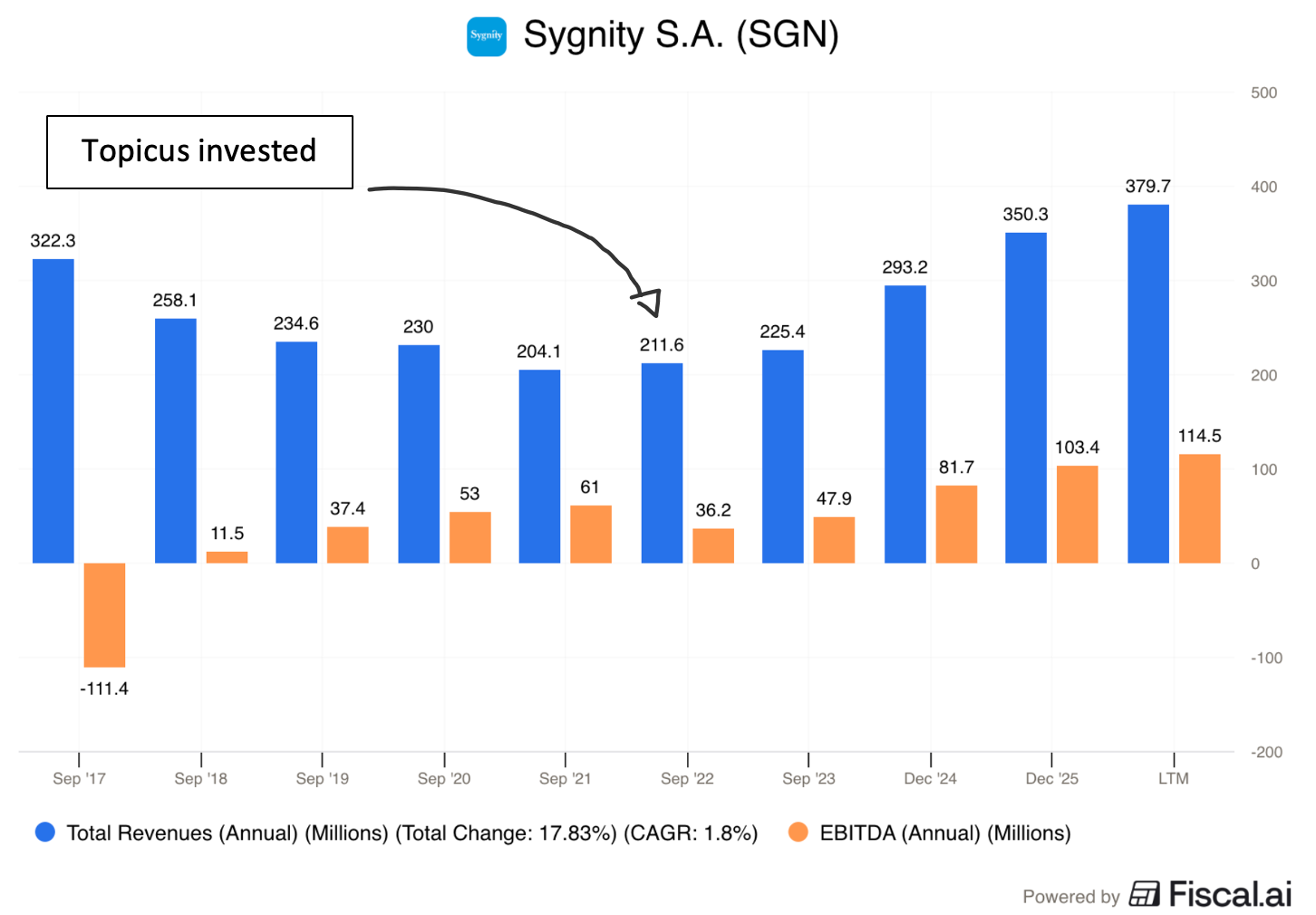
Just look at this visual below.
Topicus transformed a melting ice cube into a business compounding at +15%:
How did Topicus do this?
VMS is typically mission-critical but costs less than 1% of customers’ total revenues.
This gives these companies significant pricing power.
Second, Topicus gave Sygnity access to its database of potential acquisition targets.
This has already helped Sygnity close four VMS acquisitions since February 2024.
Finally, Topicus installed its ROIC-based incentive structure and brought in a Topicus-like CEO: Maciej Różycki.
He previously spent over six years at Total Specific Solutions (TSS) as a portfolio manager.
We are very happy to own Sygnity through Topicus.
2. Chapters Group ($CHG)
What happens when you give a large cash pile to a young, ambitious Buffett disciple?
A 15-bagger in 8 years.
At least, that’s what the history of Chapters ($CHG) suggests.
Chapters’ CEO Jan Mohr was 11 years old (!) when he read his first Buffett biography.
At the age of 25, he was already running his own equity fund.
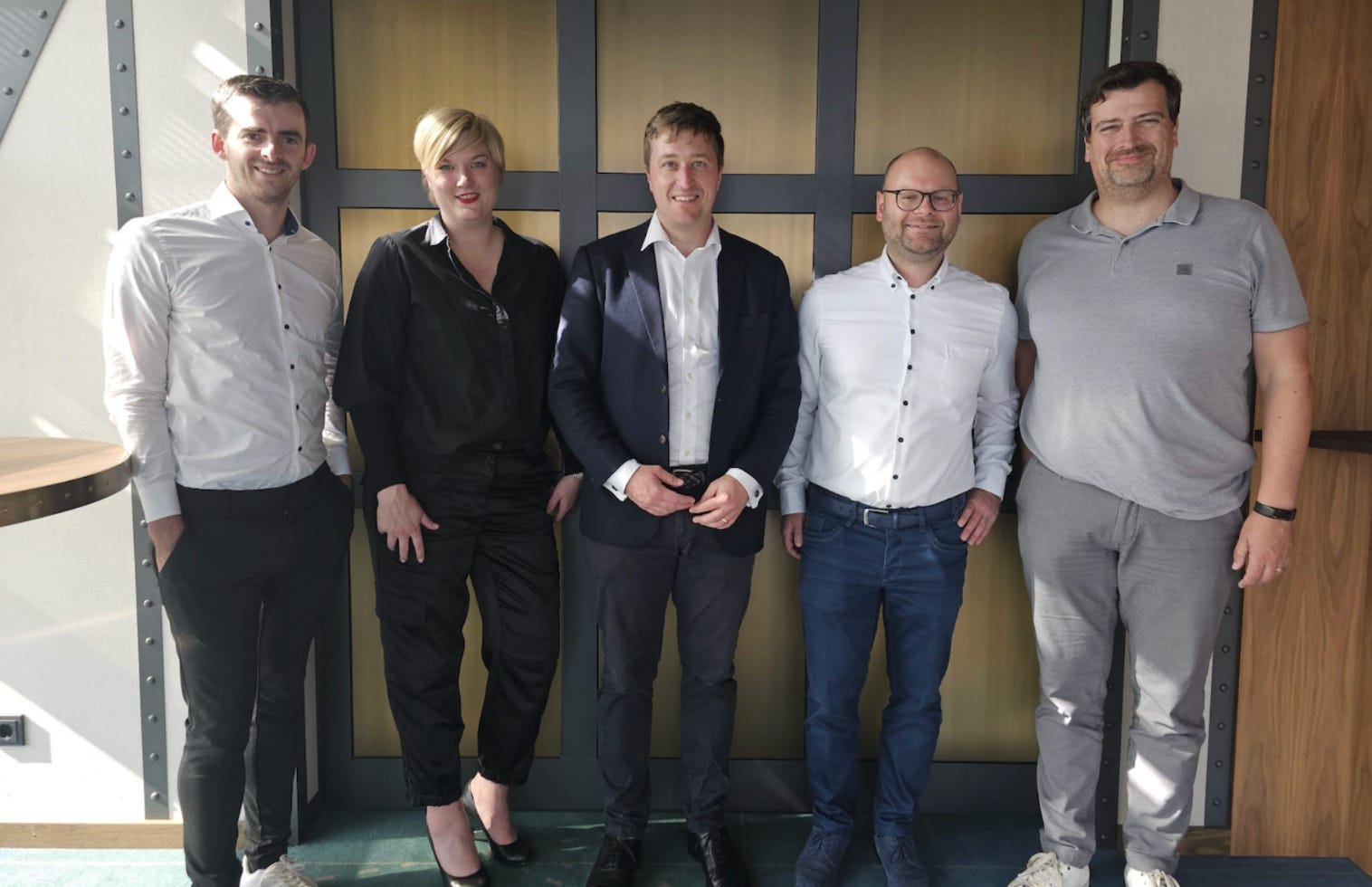
It was during his time as a fund manager that he came across a business called Medical Columbus.
Medical Columbus had just sold its strategic assets to a private equity firm when Mohr investigated the business.
What was left was a public company sitting on a large cash pile.
That’s when Jan Mohr saw an opportunity to build his own holding.
Eventually, he took control of the business.
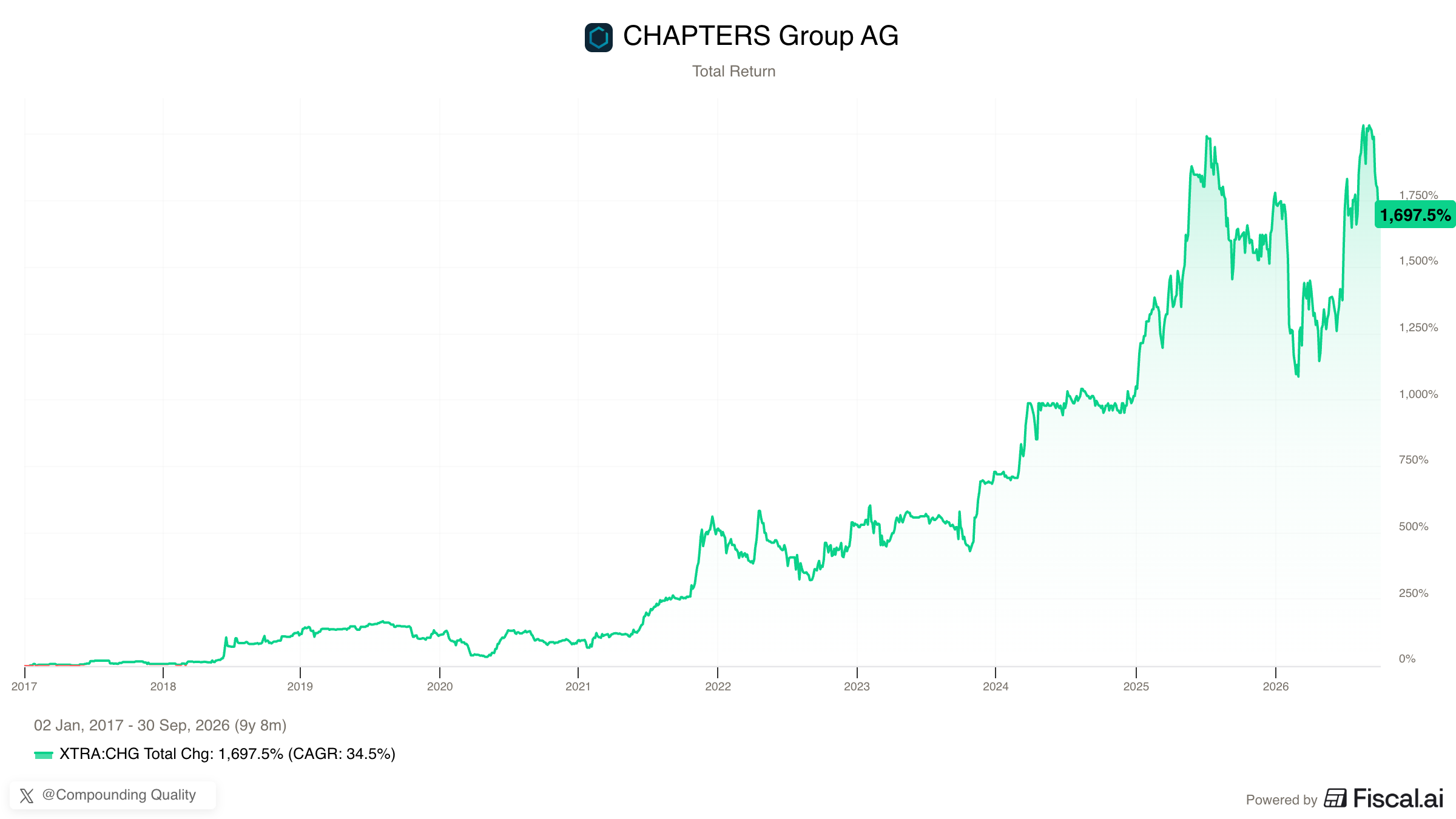
At the end of 2018, they closed their first acquisition.
Since then, the share price has compounded at a +40% CAGR:
Chapters now owns over 60 VMS businesses across 8 acquisition platforms.
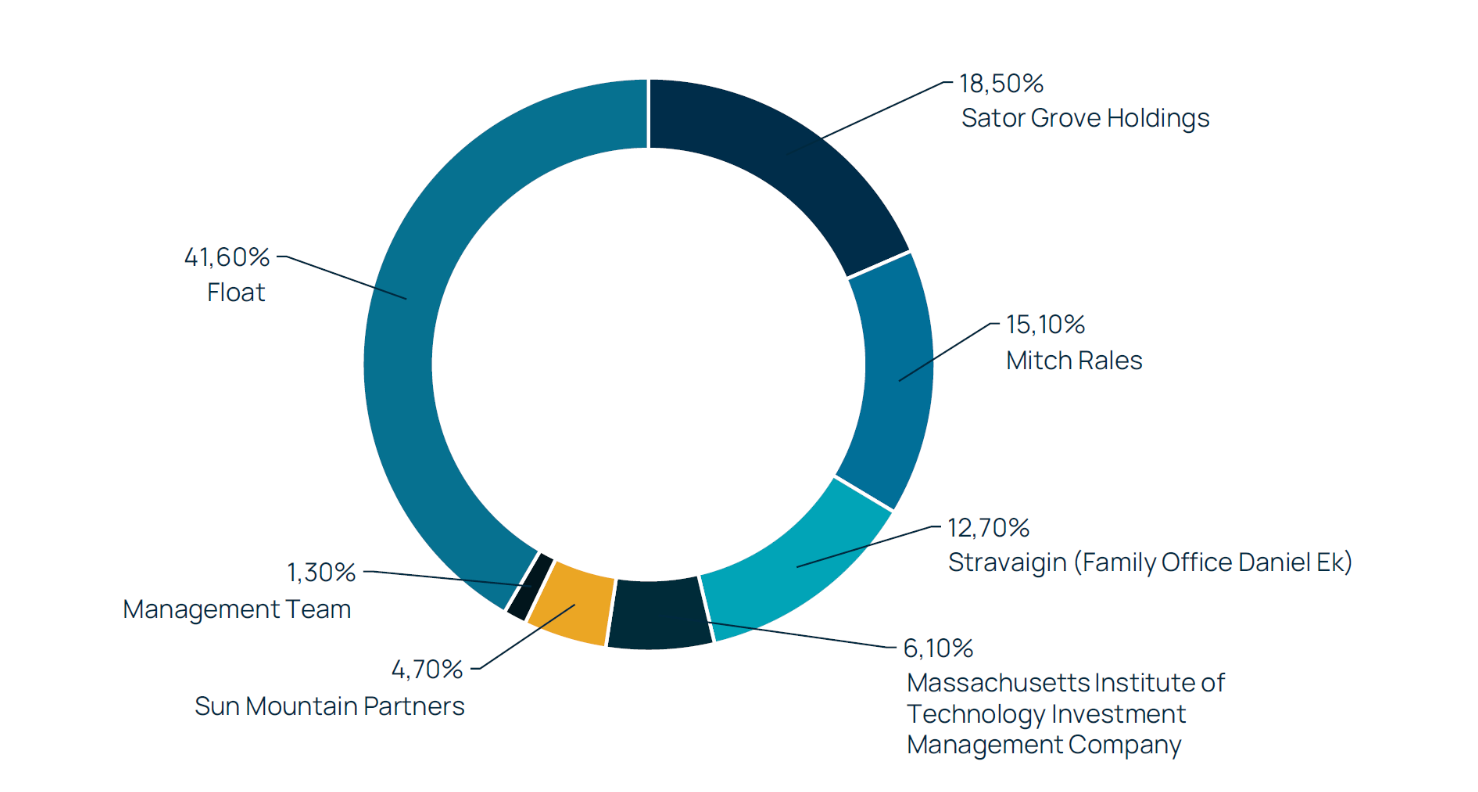
For a company with a €1 billion market cap, Chapters also has an unusually strong shareholder base.
Mitch Rales owns 15.1% and speaks with Jan Mohr every week.
Rales co-founded Danaher Corporation with his brother. Danaher has since become a 350-bagger.
And there’s another fun story.
Daniel Ek, the founder of Spotify, was listening to a podcast featuring Jan Mohr.
The story goes that Ek picked up the phone as soon as the podcast ended and became a large Chapters shareholder.
Today, he owns 12.7% of the company.
3. Software Circle ($SFT)
Mark Leonard (Constellation Software) once wrote the following in one of his shareholder letters:
“The barrier to starting a conglomerate of vertical market software businesses is pretty much a cheque and a telephone.” - Mark Leonard
One tiny UK-listed company took that advice seriously. I’m talking about Software Circle ($SFT).
A few years ago, Software Circle was still known as Grafenia, a struggling printing software business.
But some investors saw something different. They saw a cheap, publicly listed software company that could serve as a platform for acquisitions.
Today, Software Circle is a thriving VMS serial acquirer.
They have acquired 11 businesses in the UK and Ireland over the past five years.
Since the transition, the share price has risen from a low of £0.04 to a peak of £0.31.
It has since fallen roughly 50% to around £0.16, largely due to concerns about AI disruption.
We believe the company is valued too cheap right now.
Here’s a quick financial snapshot of the business:
The five-year Revenue CAGR is 26.2% (important: revenue per share growth was actually negative during this period)
Free Cash Flow went from -£1.5 million in 2020 to +£5.9 million in 2025.
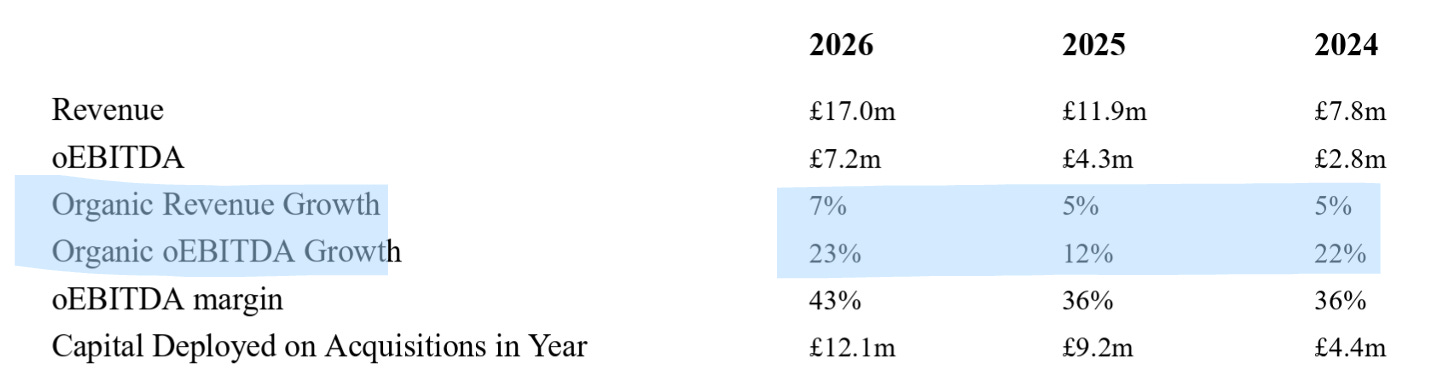
Organic revenue growth of acquired companies was +7% in 2025. This is a very strong number. It shows that they are good operators:
Total Shares Outstanding also exploded as they raised fresh equity to fund acquisitions.
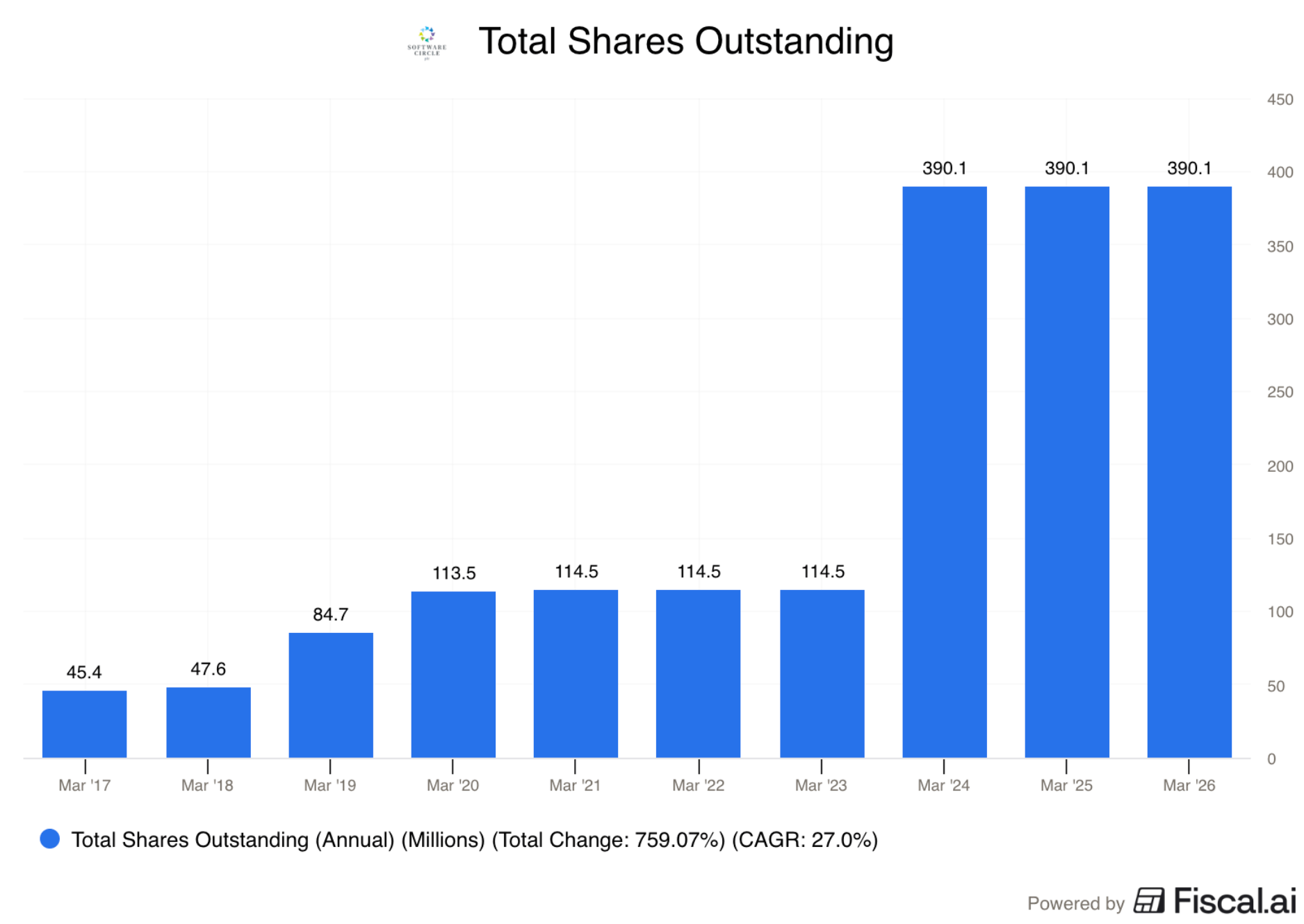
It looks like Software Circle is now switching from equity financing to using debt and internal cash flow.
Free Cash Flow in 2025 was £5.9 million, and they recently opened a £25 million credit line.
This should give them enough dry powder for M&A without needing further dilution.
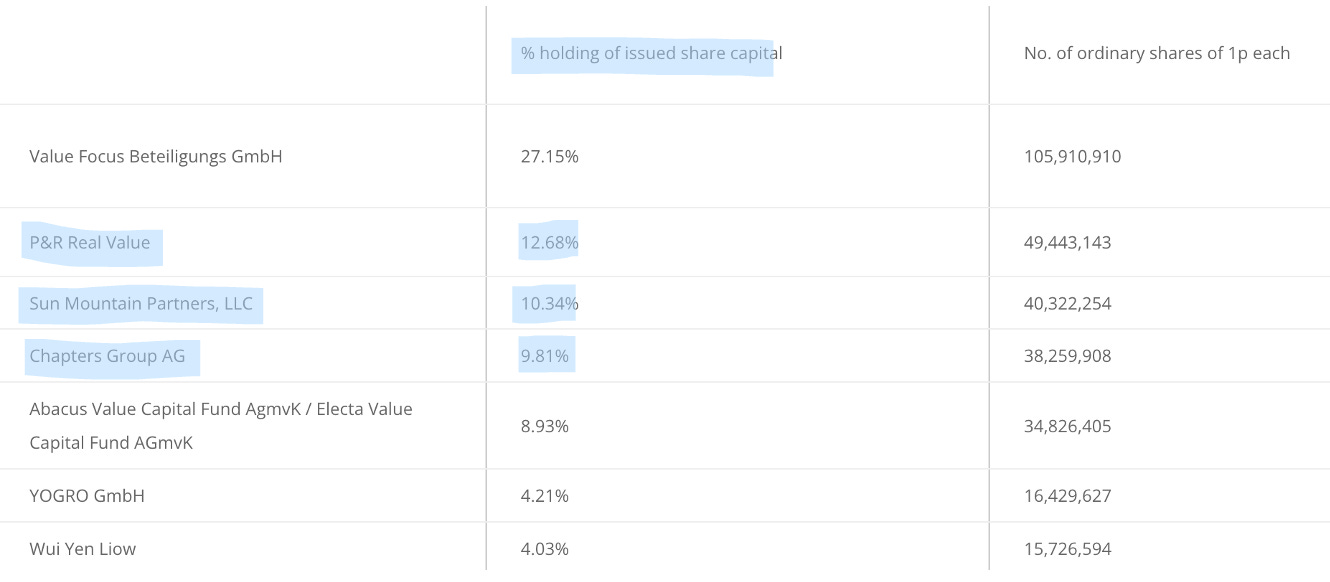
Software Circle also has an excellent shareholder base:
P&R Real Value (owns 12.7%) is an excellent serial acquirer investment fund led by Matthias Riechert
Sun Mountain Partners (owns 10.3%) is the investment vehicle of Will Thorndike, author of The Outsiders
Chapters Group (owns 9.8%): Jan Mohr also saw the transformation and invested
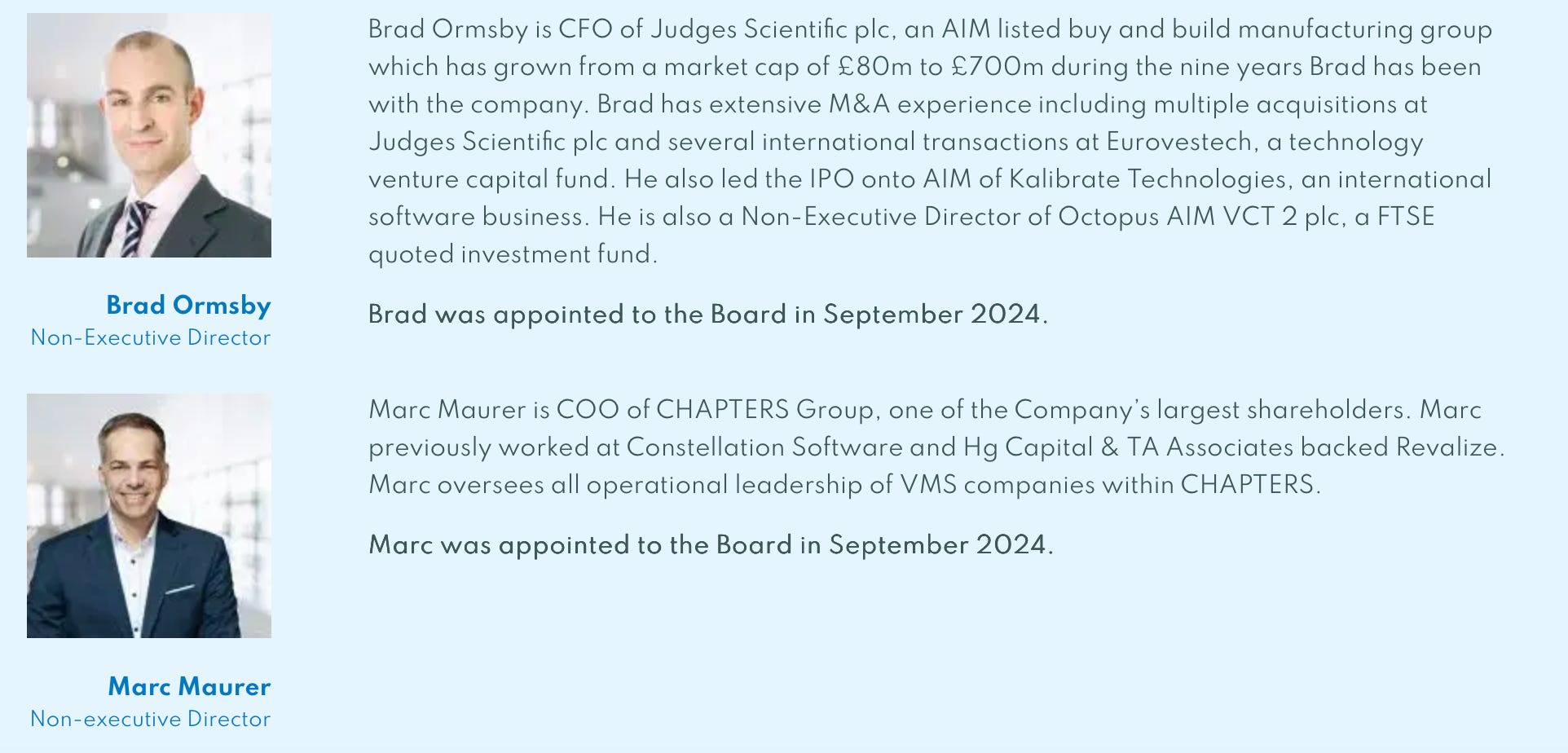
Another strength is their impressive Board of Directors.
Marc Maurer, COO of Chapters, sits on Software Circle’s Board.
Brad Ormsby, the CFO of Judges Scientific, is another Board Director at Software Circle.
Bucket 2: Swedish Serial Acquirers
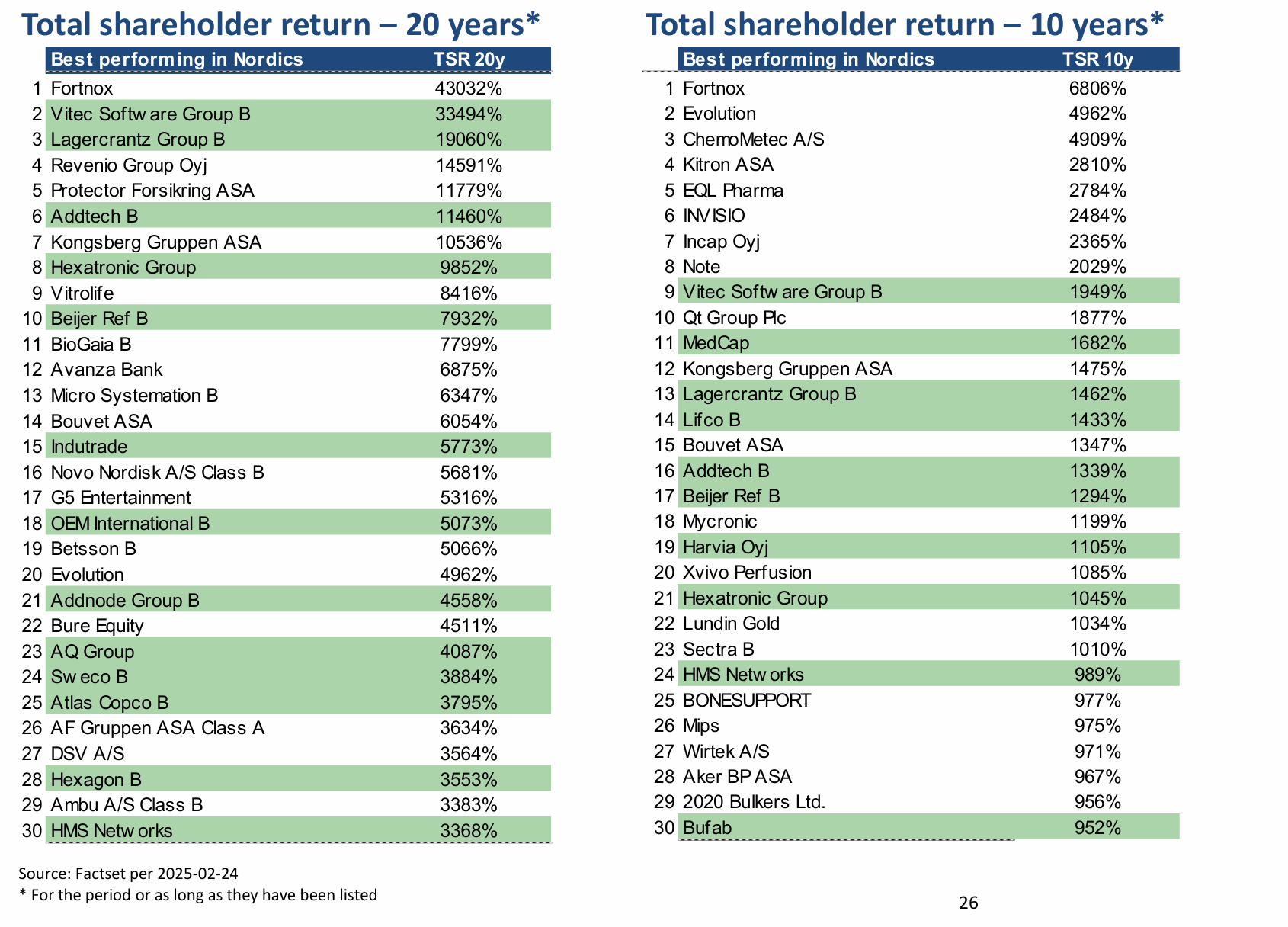
You can’t build a serial acquirer portfolio without looking at Sweden.
Much like Silicon Valley is the home of tech, Sweden is the home of serial acquirers.
Most of the best-performing Swedish businesses also use the serial acquisition model:
To honor that legacy, we add three Swedish serial acquirers to the model portfolio.
Each of them has its headquarters in Stockholm and primarily acquires businesses in the Nordics.
Here are the names:
