

Last week, SpaceX went public.
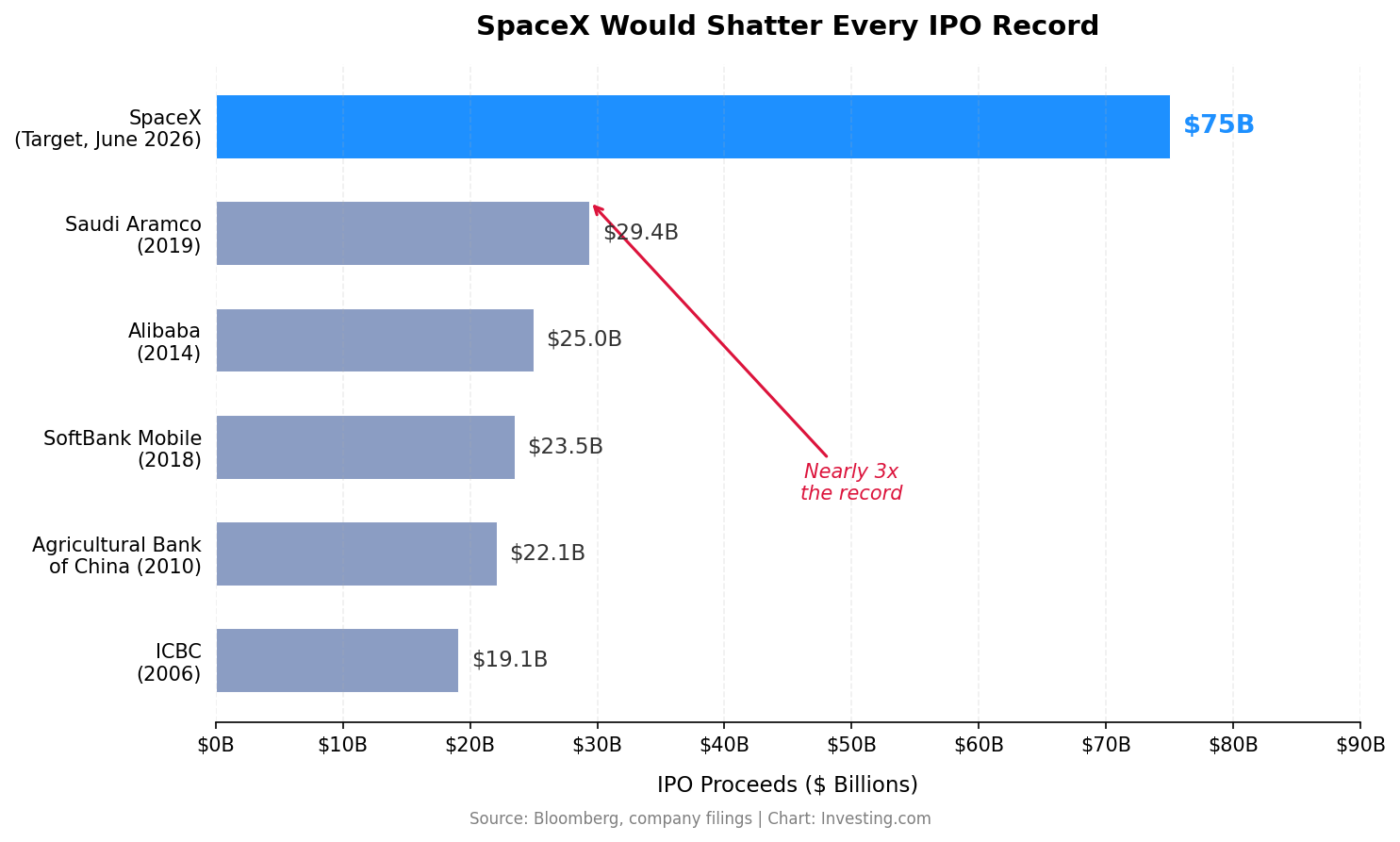
It was the biggest IPO in history. All eyes were on it.
But while the market chases the hype, we’re focused on something different: great companies that quietly create more value year after year.
Let’s dive into our Buy-Hold-Sell list today.
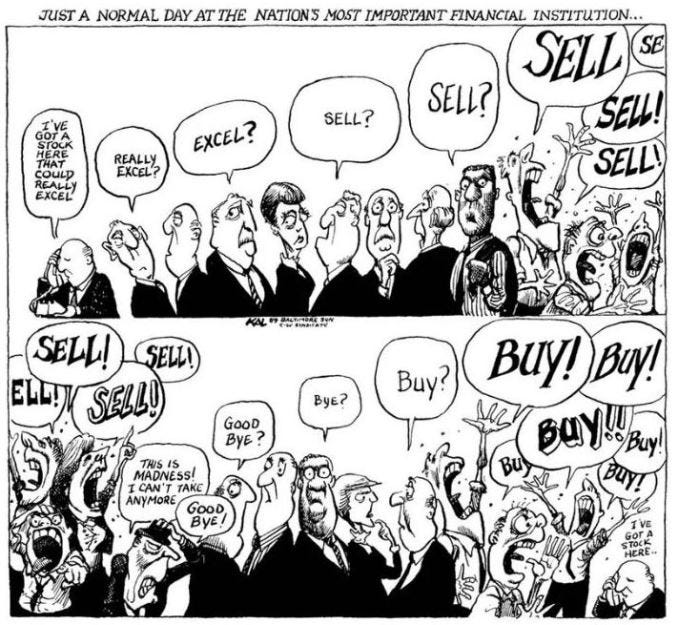
Mr. Market is a manic-depressive.
SpaceX went public at an IPO price of $135 per share and debuted on the stock market at $150 per share.
Today SpaceX is trading at $191 per share.
This means Mr. Market values SpaceX at $2.5 trillion (!)
This is even higher than the IPO valuation of $1.75 trillion, almost a trillion dollar market cap gain in less than a week (!)
Here are the facts:
Its the largest IPO ever
The sixth-largest company in the US, above Tesla
More valuable than companies like JP Morgan, Visa, and Walmart
While that looks incredible, let’s look deeper for a moment.
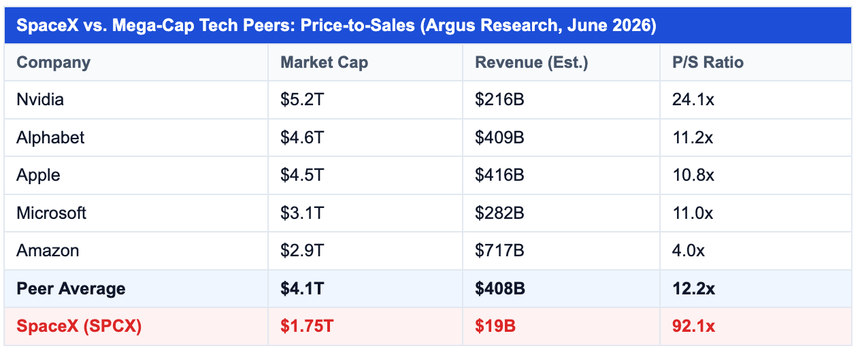
At a valuation level of $1.75 trillion, SpaceX trades at 90x (!) its revenue.
That is higher than Palantir (75x revenue)
Higher than Nvidia (20x)
Higher than Tesla (16x)
Investment banks called it the most exciting IPO in history.
No wonder they say that.
They are making over $500 million (!) just in fees from this IPO.
But this isn't the first time we've seen something this crazy.
Let’s go back to 1999.
Do you remember Pets.com?

Here’s Pets.com in a nutshell:
Pets.com was an online retailer during the dot-com bubble
They sold pet food, pet toys (they heavily advertised puppet mascot),..
The online boom was supposed to increase its revenue drastically
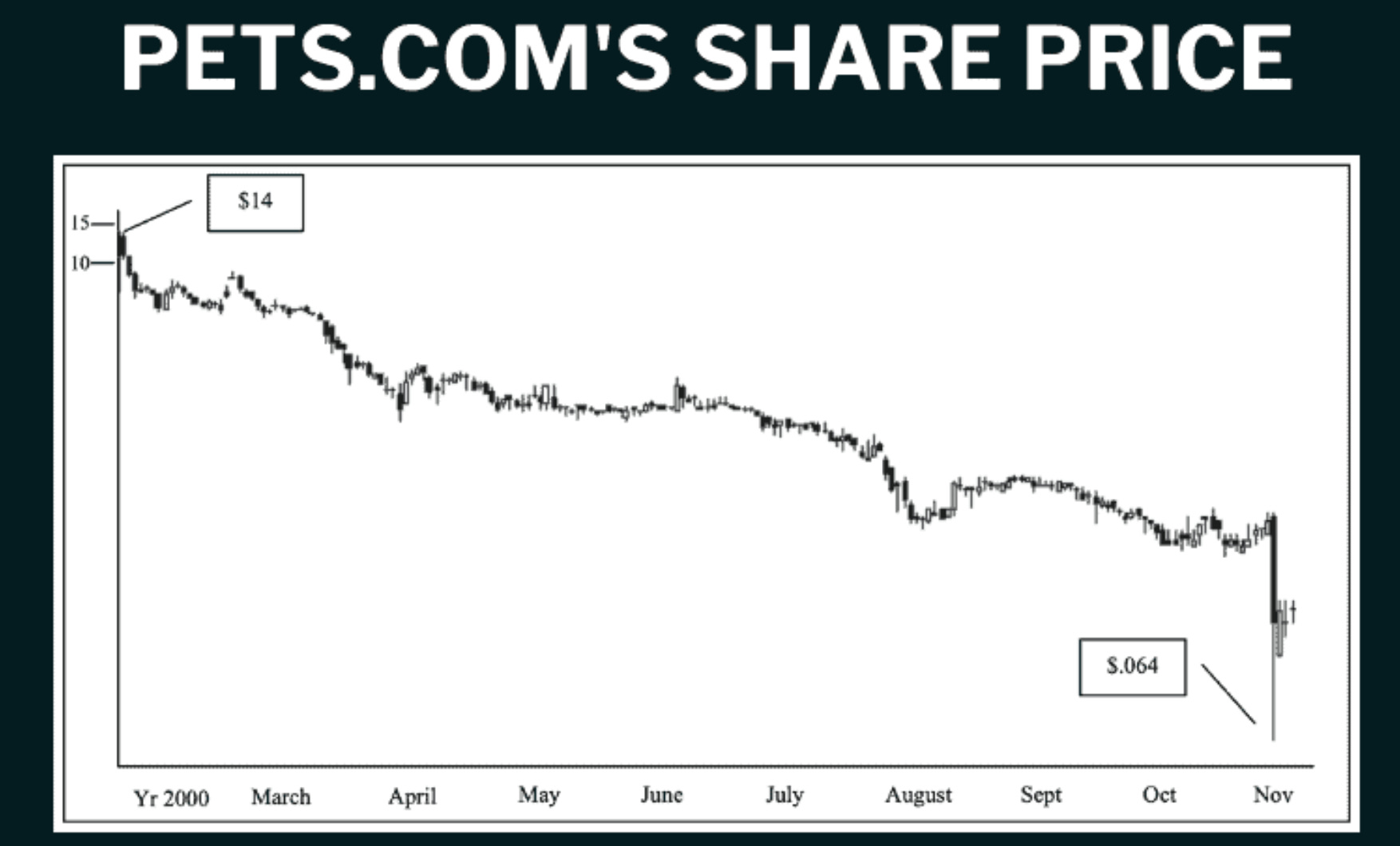
Pets.com raised $82.5 million for its IPO in 2000
The stock peaked at $14
Nine months later it traded at $0.19, and the company filed for bankruptcy
SpaceX is not exactly like Pets.com.
It brings together some of the world's most powerful companies:
SpaceX (a rocket company)
Starlink (satellite internet service company)
X and xAI (Social Media company and AI LLM company)
But here’s the thing.
SpaceX is still loss-making.
In 2025 SpaceX generated $18.7 billion in revenue and made a loss of $4.9 billion.
The AI side is even more aggressive.
xAI burned through $7.7 billion in just the first three months of 2026, posting a $2.5 billion operating loss.
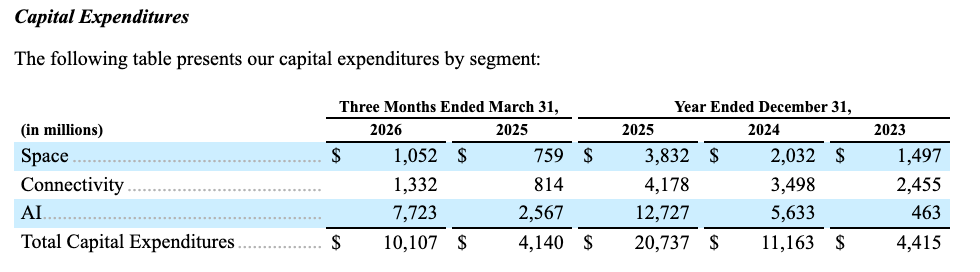
Here’s the quick valuation math on SpaceX:
To justify its price at a more reasonable 20× sales multiple, SpaceX would need to grow revenue to at least $88 billion.
That’s almost 5× its current revenue.
Even at a fast 30% growth rate every year, that milestone is still 6 years away.
And to justify the price on profits instead, at a 35× P/E, SpaceX would need around $50 billion in net profit.
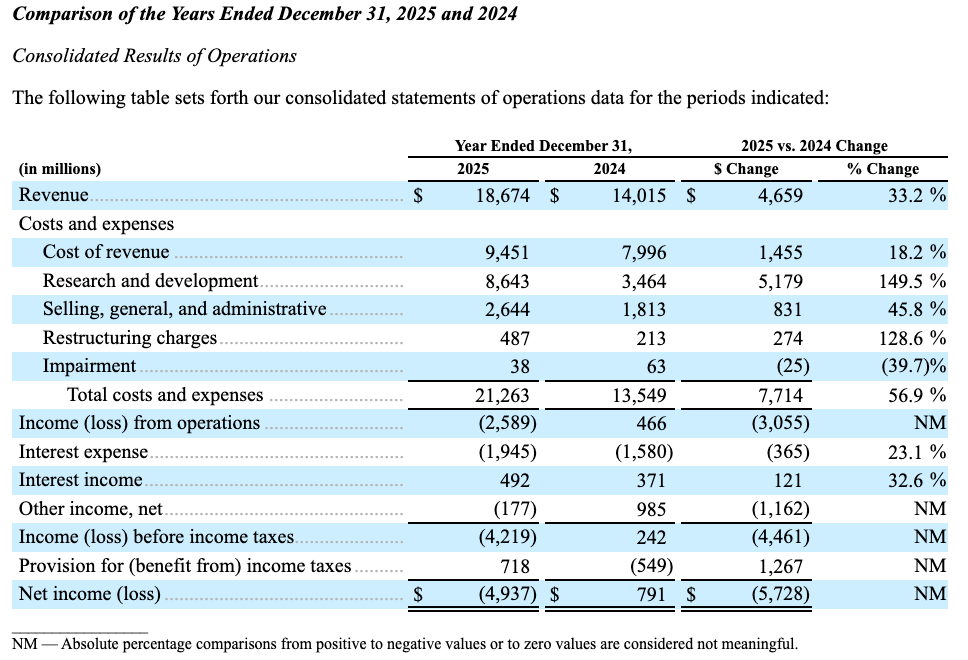
Even if we take the most optimistic scenario, SpaceX would need at least half a decade to justify it’s current valuation level.
And this is under the assumption that nothing goes wrong.
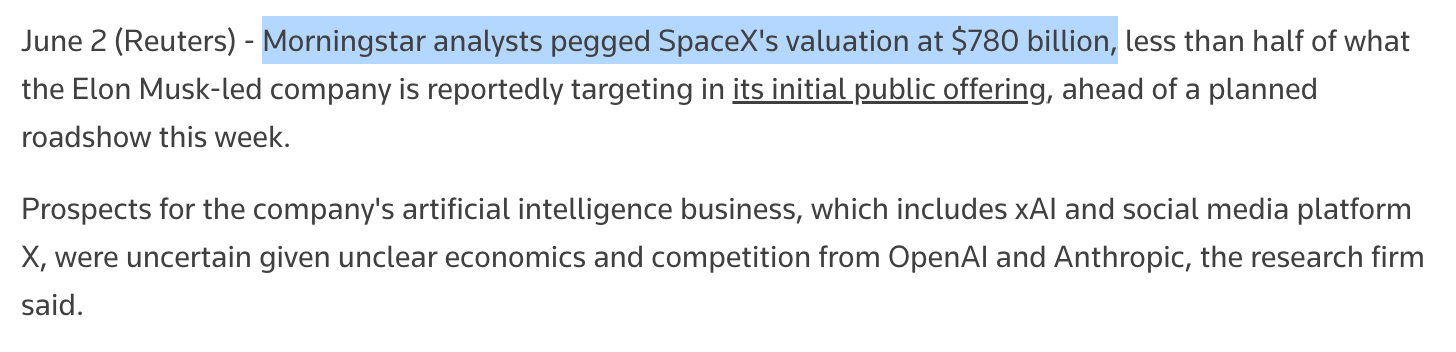
Morningstar thinks SpaceX is worth just $780 billion.
That’s less than 50% of the current market cap:
Even in peer comparison terms, SpaceX’s IPO valuation was on Elon Musk’s hype.
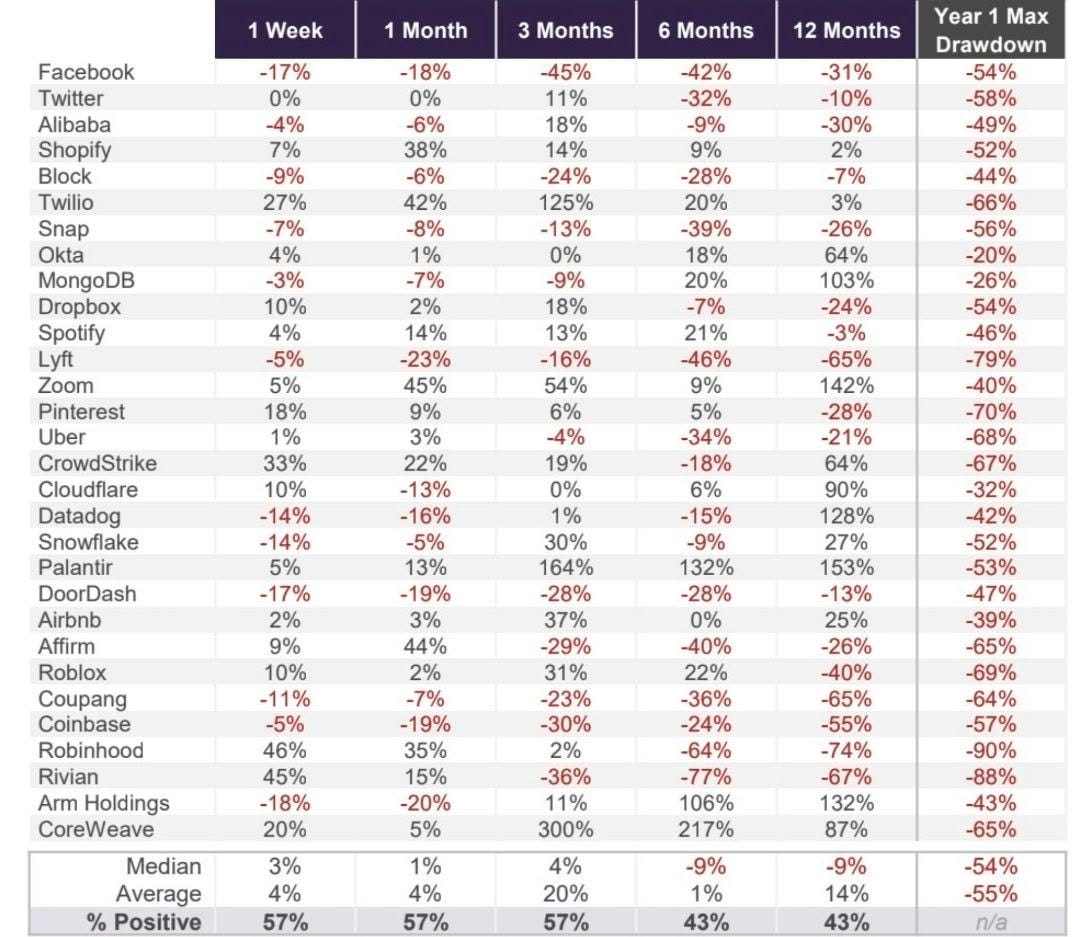
In general, you should stay away from IPOs.
IPO… It’s Probably Overpriced.
Just look at these past IPOs:
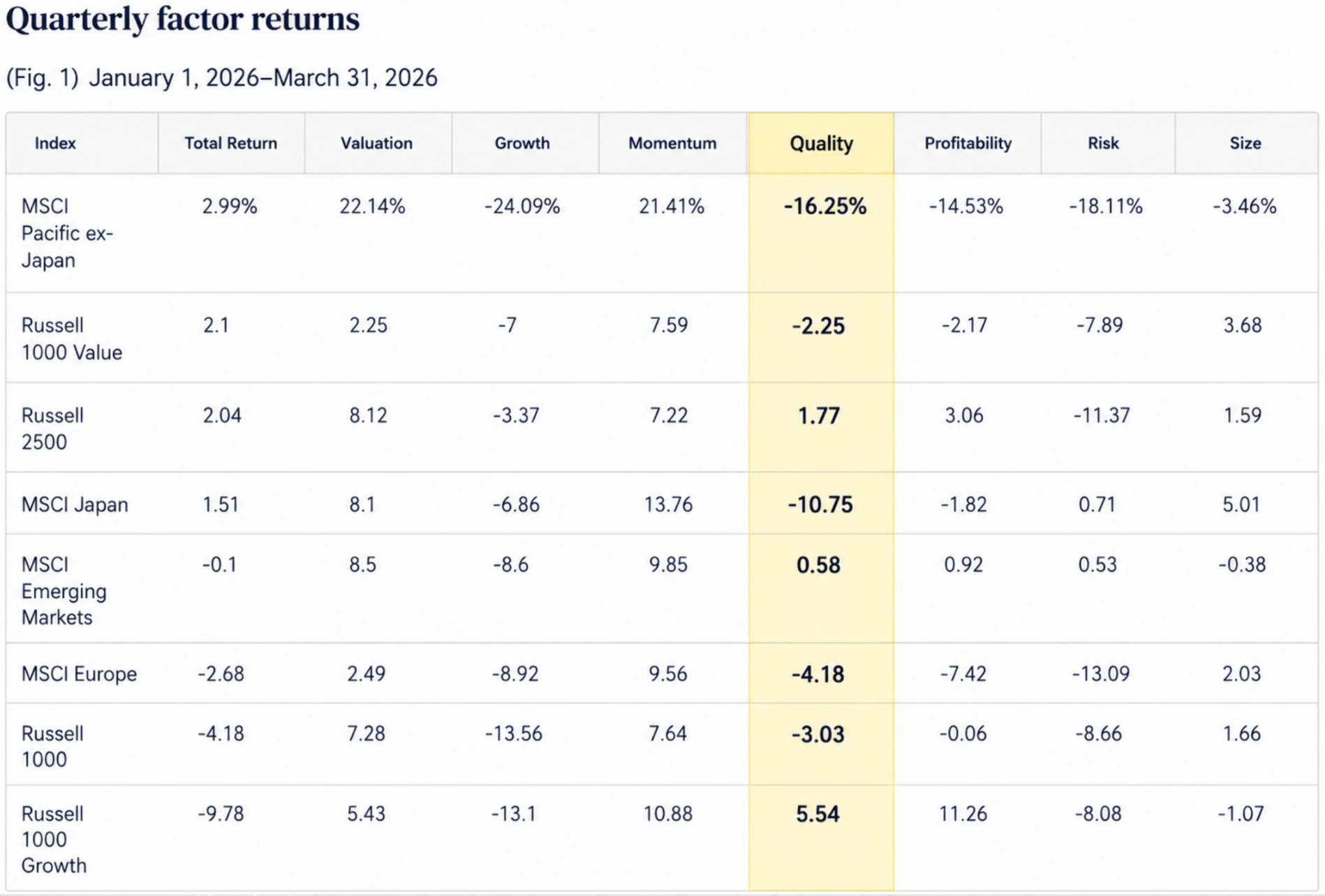
Quality is Underperforming
While SpaceX is being valued at 90x revenue, quality stocks are struggling.
They are trading at some of their cheapest valuation levels ever.
As a result, the setup looks great for future outperformance.
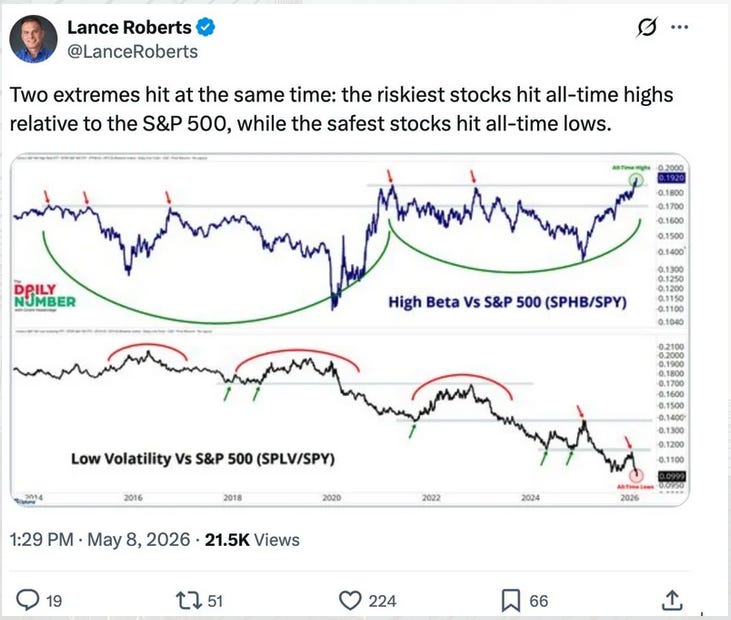
The market is acting more and more like a casino.
Investors look more like gamblers as a result.
The most volatile stocks are hitting all-time highs compared to the index, while the least volatile ones are at all-time lows.
As Warren Buffett said:
“A bull market is like sex. It feels best just before it ends.”
This trend can’t continue forever.
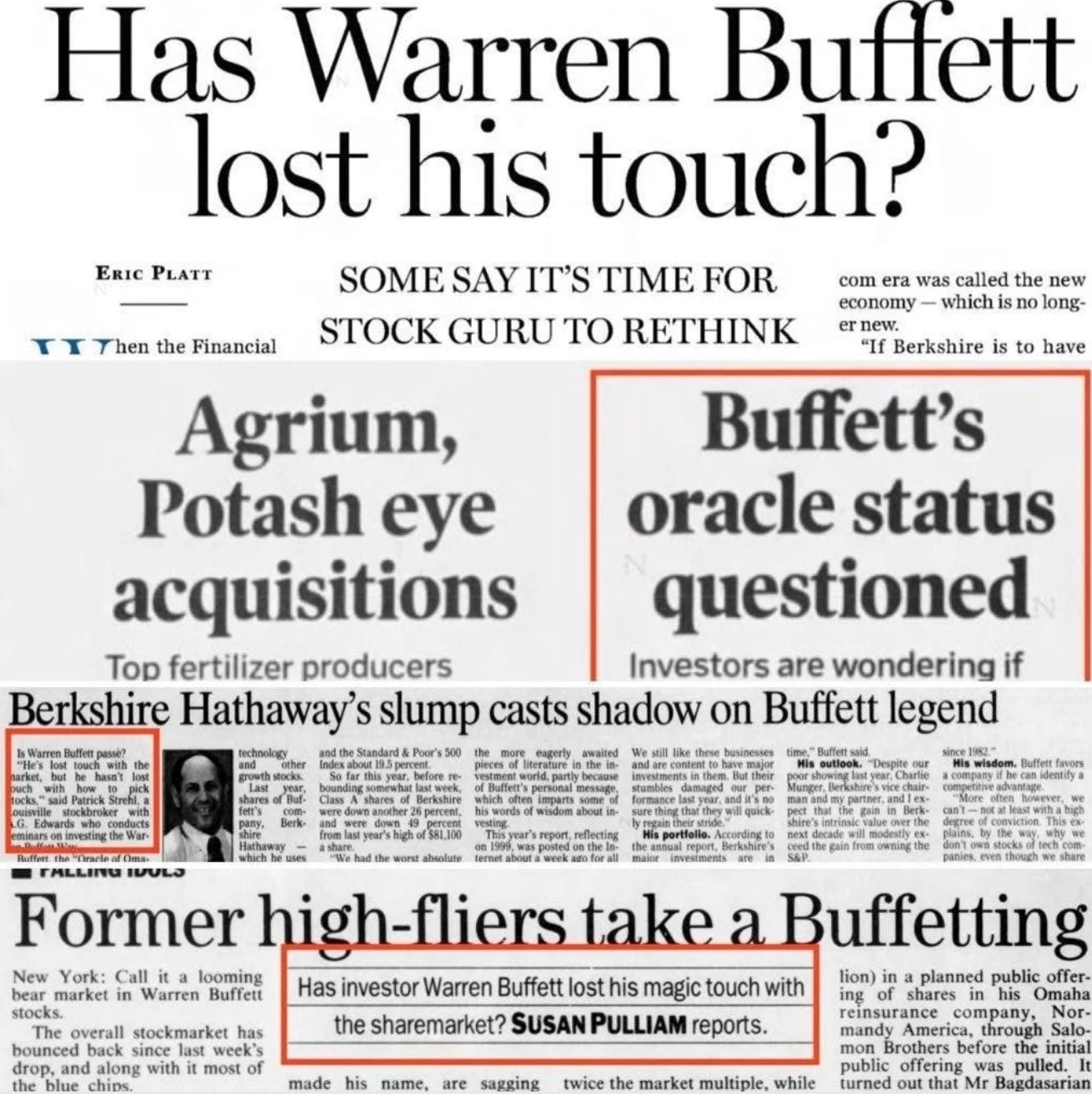
What’s going on today reminds me of the Dot.com bubble.
Newspapers were asking themselves whether Warren Buffett lost his magic touch:
Right now, we need to be extra careful about which stocks we buy.
History doesn’t repeat itself. But it often rhymes.
In the late 1990s, everyone was piling into tech stocks.
Everyone except Warren Buffett.
He refused to join in, even though it looked like he was running behind and missing out.
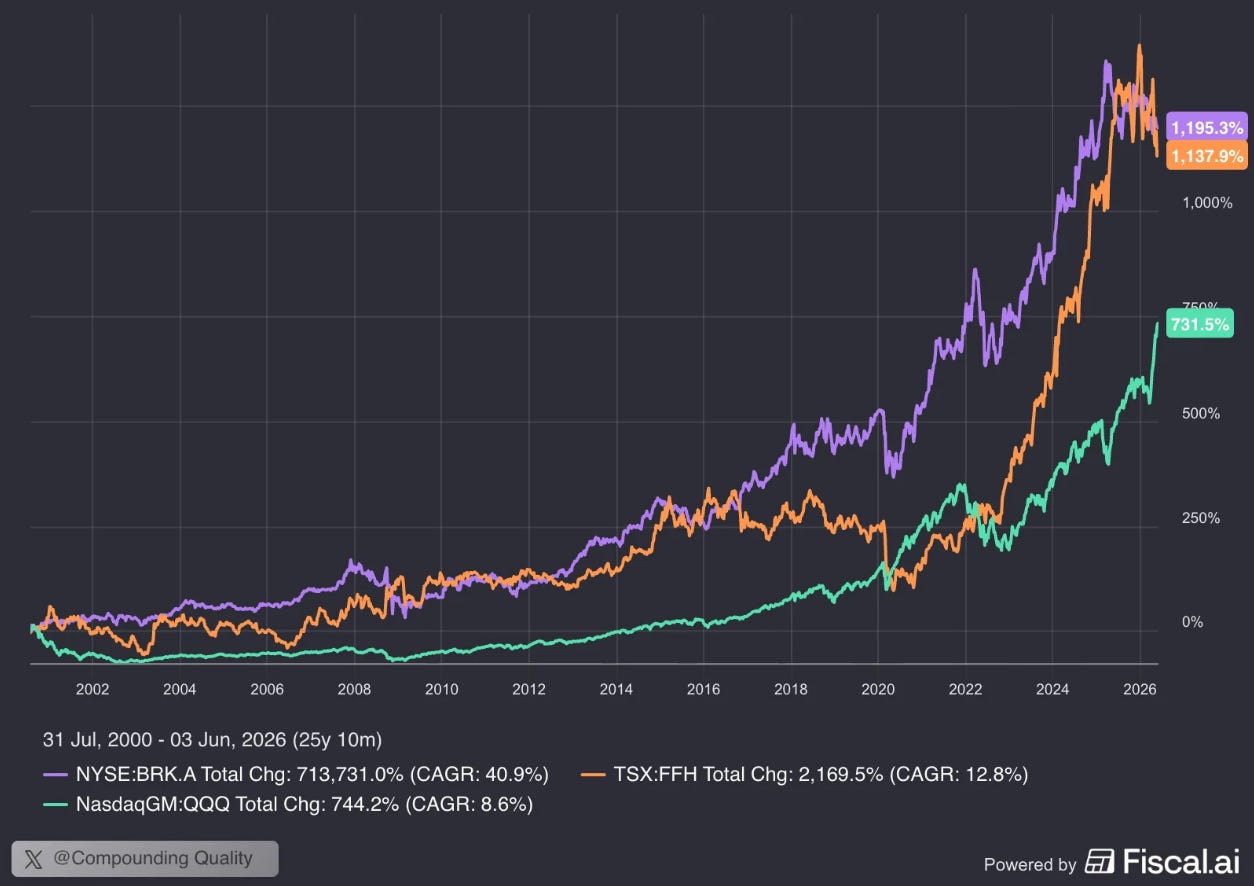
And the numbers were brutal. Between mid-1998 and early 2000, the Nasdaq surged 145%. Berkshire Hathaway? It fell 44%.
That’s a massive underperformance.
The press smelled blood. Barron’s even ran a cover story: “What’s Wrong, Warren?”
You can guess what happened next.
The bubble burst.
Between 2000 and 2002, the S&P 500 lost almost half its value.
And Buffett? His Berkshire Hathaway gained 65% (!) over that exact same period.
The lesson? Patience feels painful. But it pays off.
In times like today, we need to ask ourselves 4 simple question about the companies we own:
Are valuations reasonable?
Has anything structurally changed?
Do the fundamentals remain strong?
Do our companies still have durable moats?
As long as the answers to those questions is ‘yes’, the right thing to do is usually nothing.
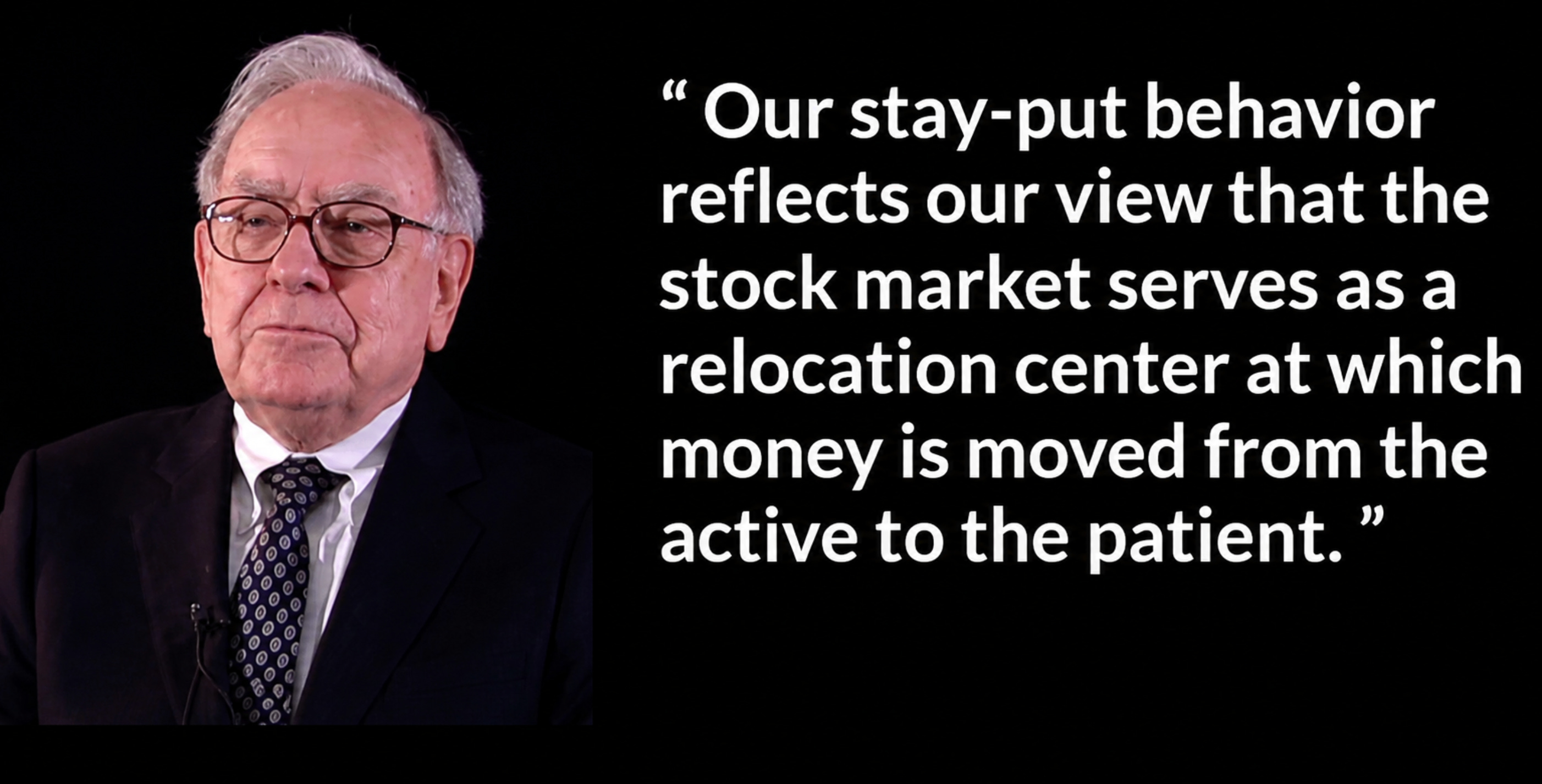
We feel like we’re very well positioned right now.
Just look at the fundamentals of Our Portfolio:
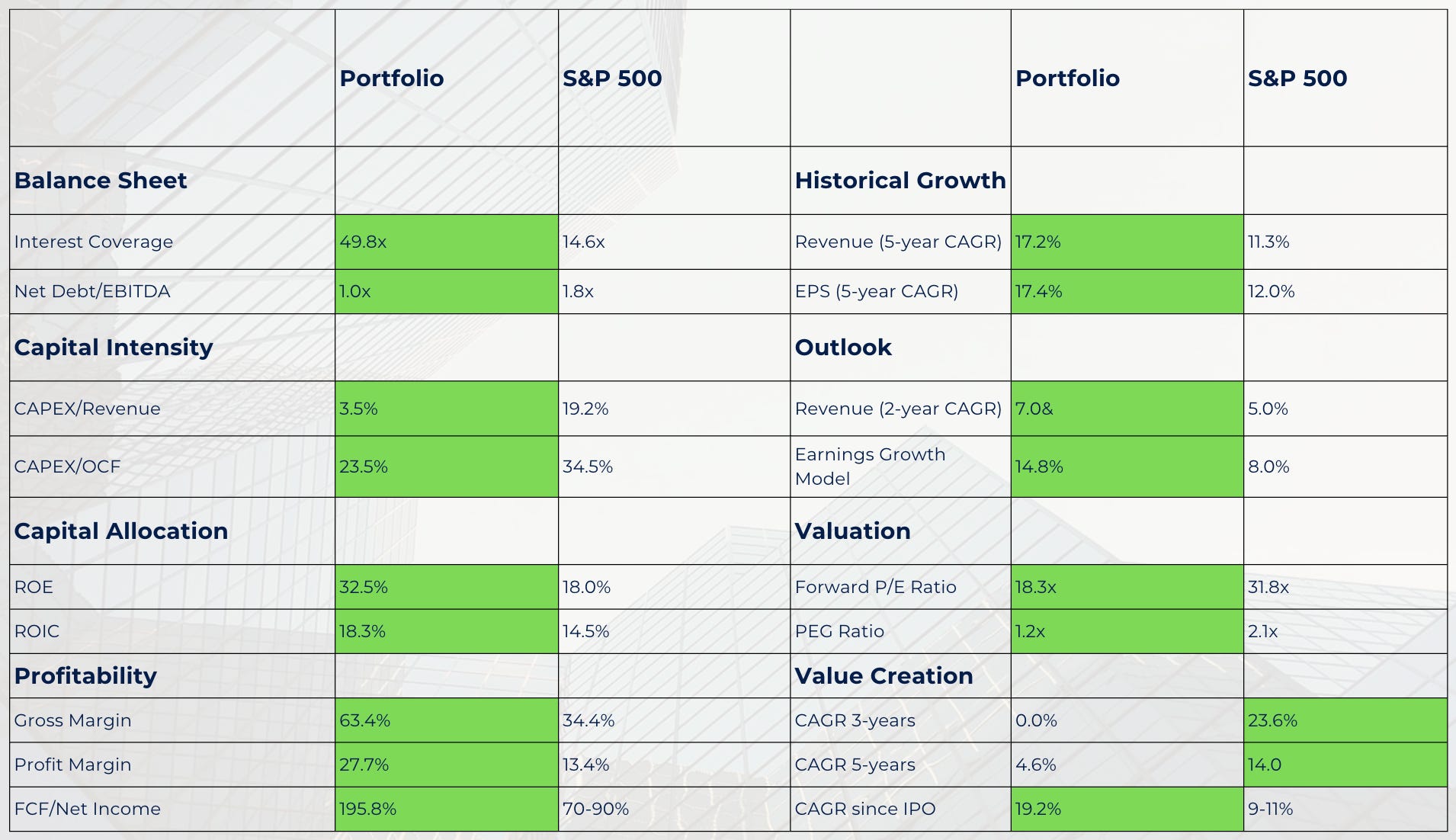
We own better companies that are cheaper than the index.
Update Buy-Hold-Sell List: June 2026
Let’s now update our Buy-Hold-Sell List.
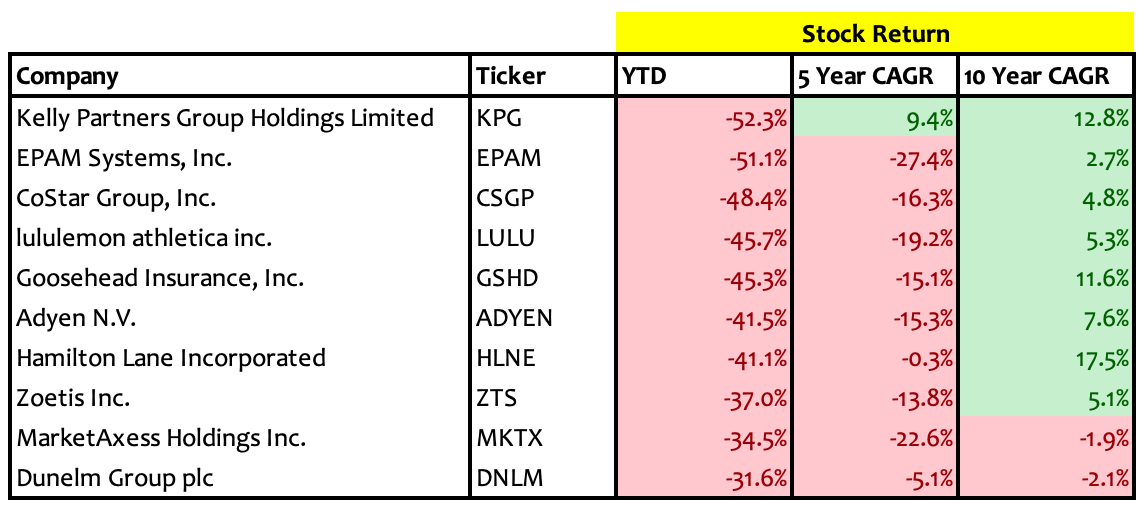
Worst performers
Here are the 10 worst performers on our watchlist so far this year:
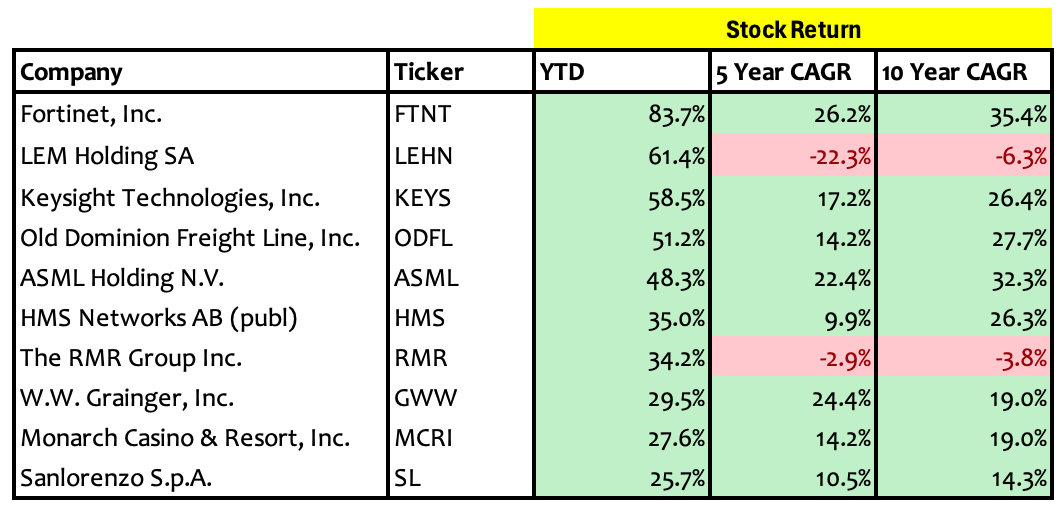
Best performers
The 10 best performers look as follows:
Changes to the Buy-Hold-Sell list
Now let’s look into the changes on our watchlist.
Four companies went from Hold to Buy:
Medpace Holdings ($MEDP): Global clinical research organization
Microsoft ($MSFT): Global technology holding company
TransDigm Group ($TDG): Aerospace components company
Berkshire Hathaway ($BRK): Diversified holding company
One company went from Buy to Hold:
Alphabet ($GOOGL): Technology and internet services company
One company went from Sell to Hold:
Hermès ($RMS): Luxury goods company
One company went from Hold to Sell:
Judges Scientific ($JDG): Scientific instruments company
We sold Judges Scientific because we see better opportunities elsewhere
Currently there are 53 stocks on ‘Buy’.
This number has never been higher.
You can download the entire Buy-Hold-Sell List here:
