

You want to invest in companies that generate a lot of cash.
But you know what’s even better?
Companies that:u
Generate a lot of cash
Are growing attractively
Trade at cheap valuation levels
The good news is you can easily achieve this via some well-chosen ETFs.
The Buffett Mindset
When you look at a ticker on a screen, it’s easy to forget what you’re actually buying.
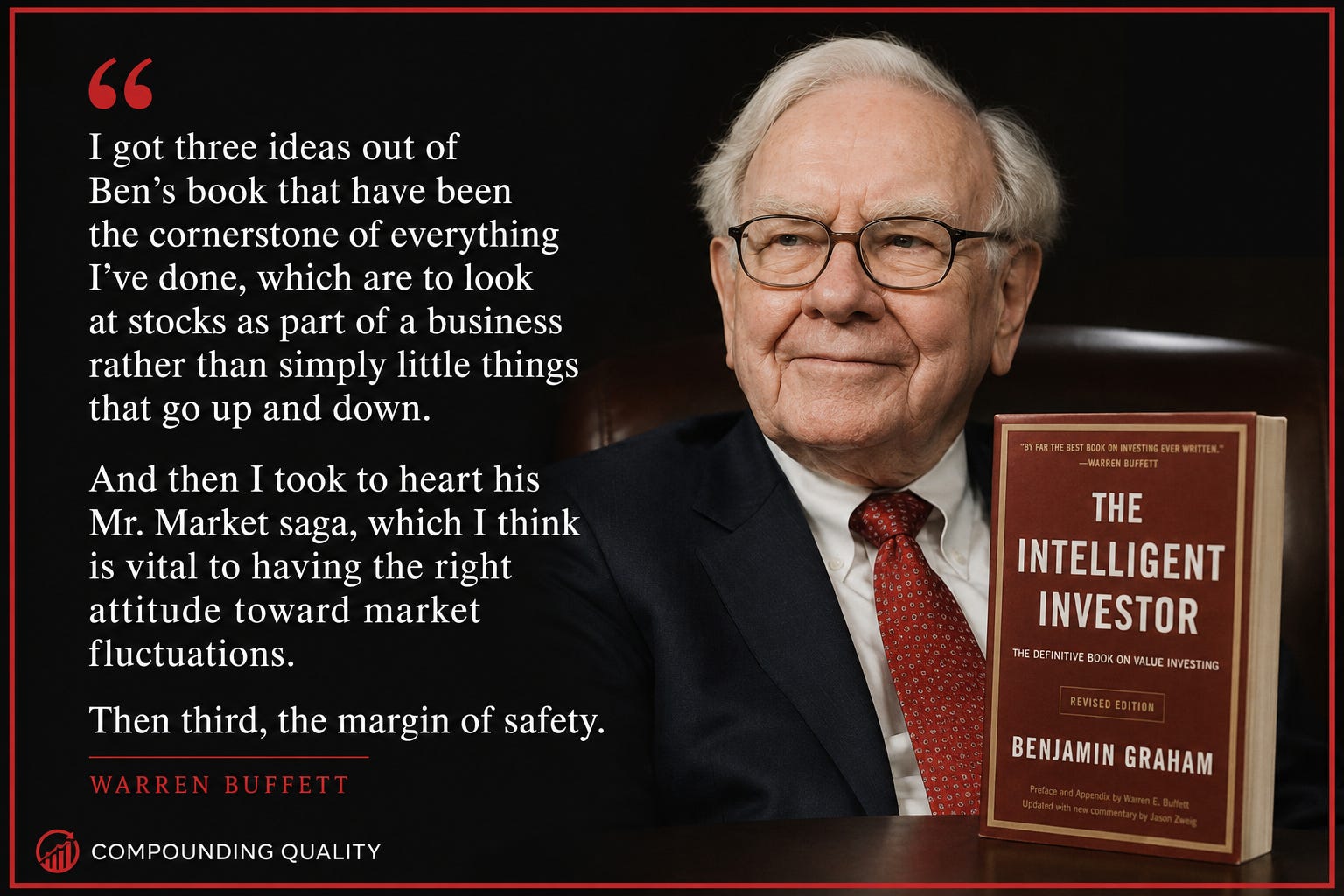
Warren Buffett has called The Intelligent Investor by Ben Graham the best investing book ever written.
Here are the three most important takeaways:
The most important thing?
When you buy a stock, you become the owner of that company.
It’s like buying a part of your local butcher across the street.
And it also means: if you buy 1 share of a company, you should be willing to buy the entire business if you had the money.
So just imagine you buy 1 share of Apple today.
In that case, you would be willing to buy the entire company for $4.6 trillion and you think it’s worth more than that.
PS If you have $4.6 trillion available, please send me a DM.
I’m just kidding of course… Or not? 😉
What’s the Purpose of a Business?
If owning a stock makes you a business owner, it’s worth asking what the purpose of a business is.
I think the easiest way to answer this is to think about a small, local business.
You probably have a gas station or convenience store in your town.
Let's use this as an example.

The owner runs the business to make sure your car is fueled with gas, and that you’re fueled with coffee or snacks.
But the real purpose?
To sell you those things so that the owner earns an income.
Which, of course, means cash.
A business can look profitable on paper…
But if it has to reinvest every dollar into inventory or repairing gas pumps, it's not a great business.
Why would you want to own it?
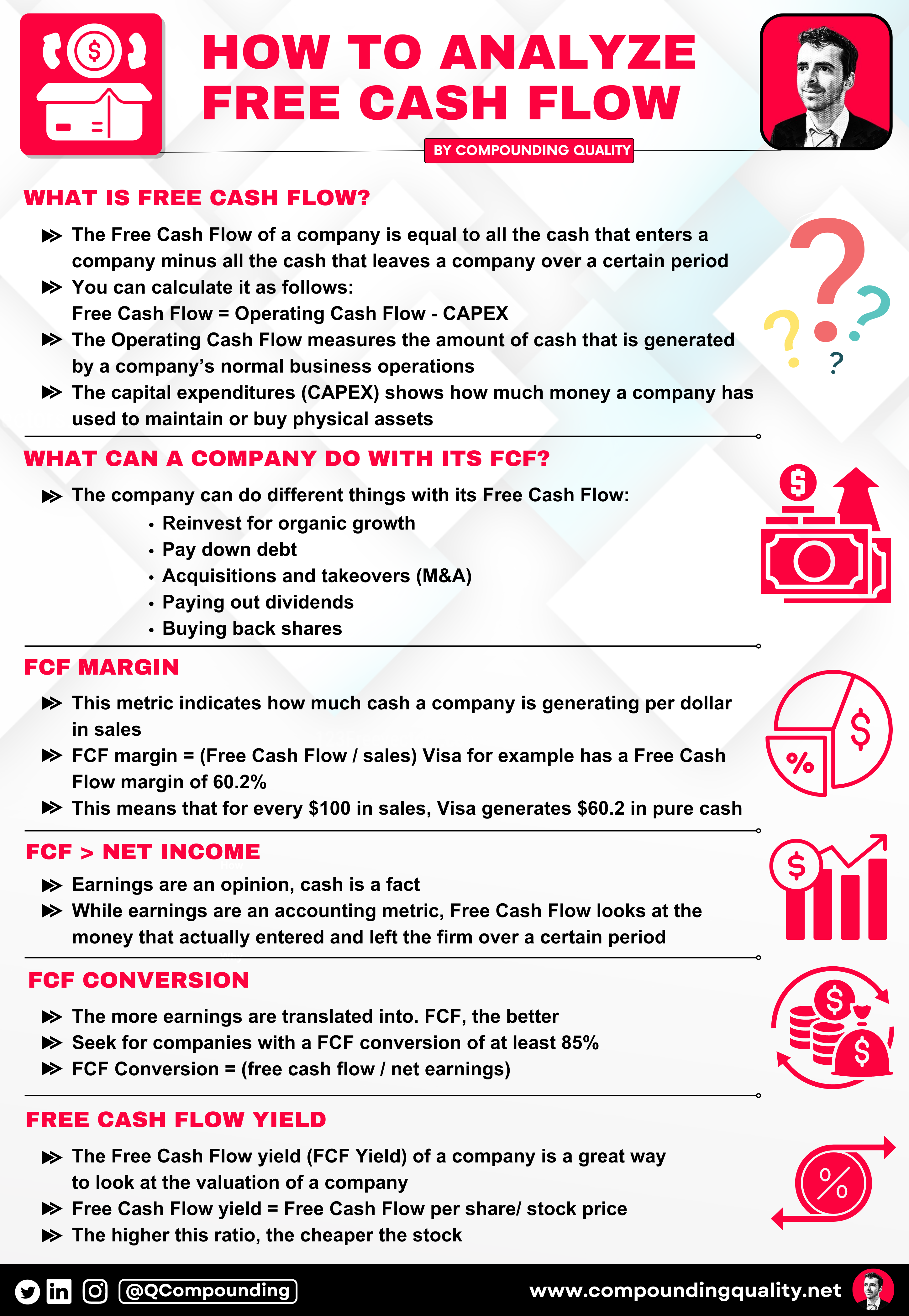
As an investor, you want businesses that produce a lot of Free Cash Flow (FCF).
Free Cash Flow is the real cash a company generates after deducting all expenses.
It’s basically all cash that comes in minus all cash that goes out.
Two ways to win
The beauty of being an investor?
You have more than one way to win.
A business owner makes more money when the business becomes more profitable.
But as an investor, you can win in two ways:
More profit: The business grows its earnings.
Higher valuation: The market decides to pay more for those earnings (e.g., the P/E ratio goes up).
More profit
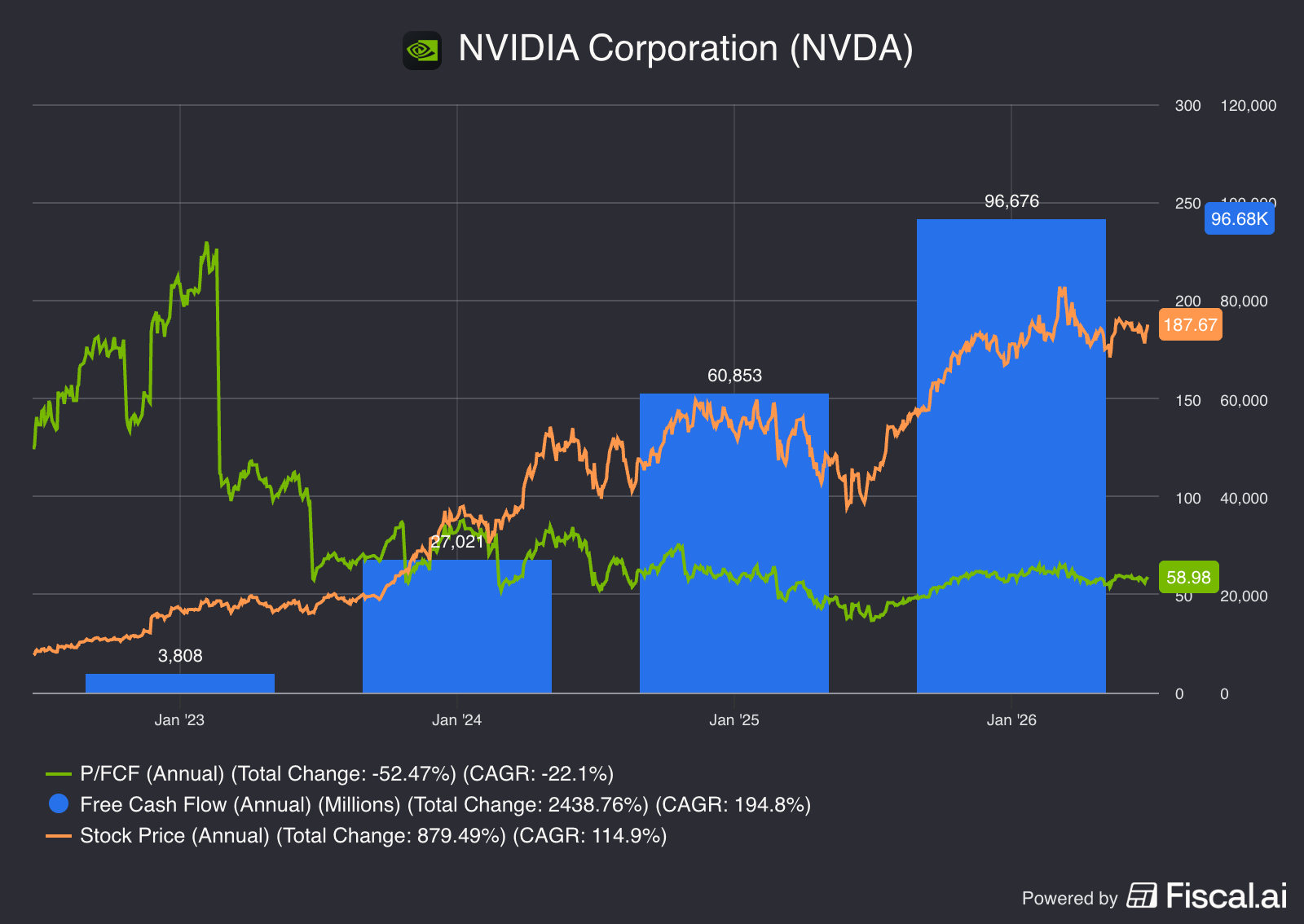
Nvidia's stock surged nearly 900% between 2023 and 2025.
That's despite its P/FCF multiple falling from over 100x to 58x.
The reason? Free cash flow grew by almost 25x (+2,500%).
Multiple Expansion
But a stock can also go up without profits growing.
Just take Apple from 2022 to 2025.
The stock went up more than 60% during that period:
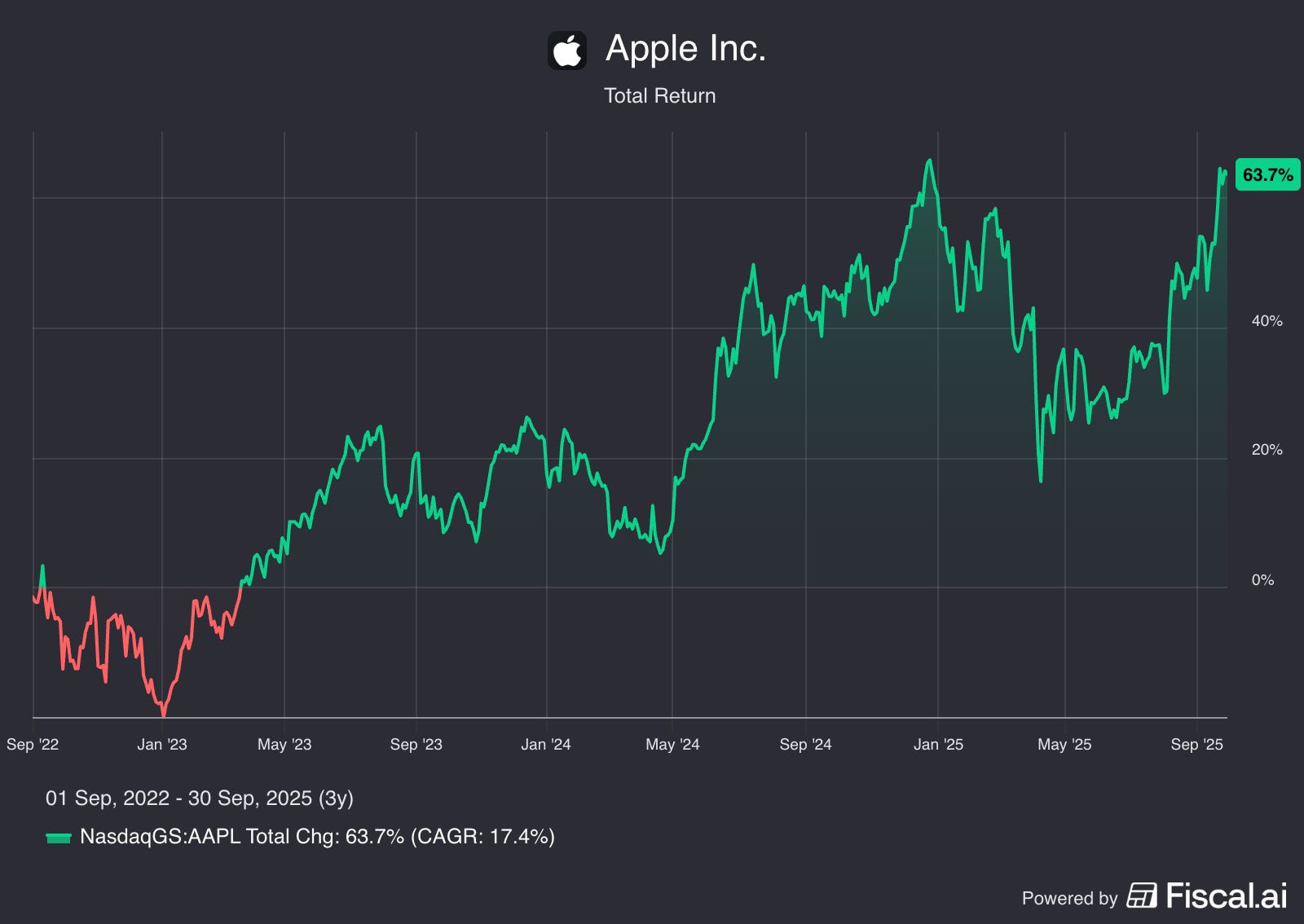
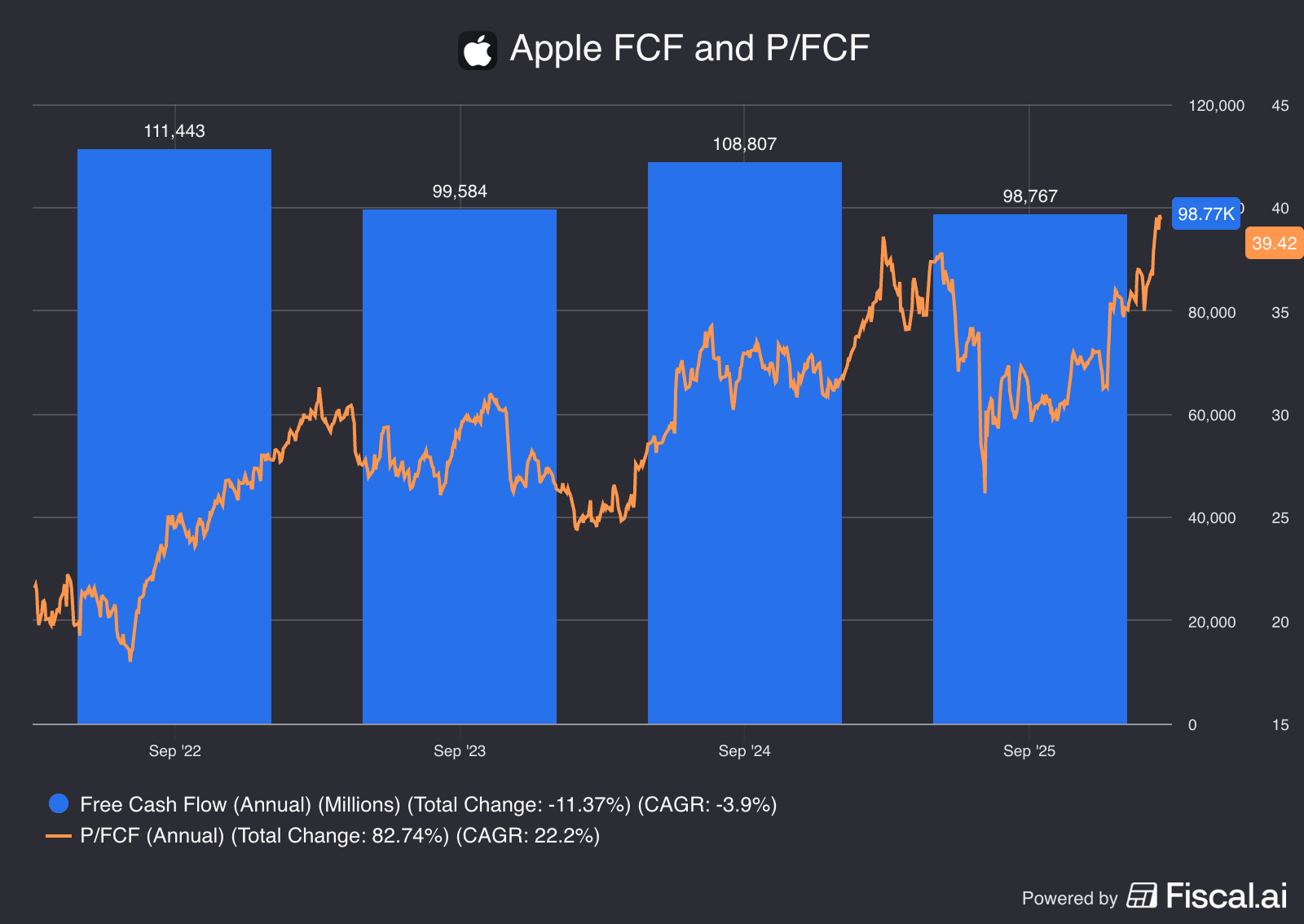
But Free Cash Flow went down during the same period.
What happened?
The answer is multiple expansion.
The market decided that instead of being worth 20x cash flow, Apple was worth 40x.
In other words: the valuation of Apple doubled.
The Twin-Engines of Returns
But what if both engines fire together? That’s where magic happens.
In his book 100 Baggers, Chris Mayer calls this the ‘twin-engines’ of wealth creation.
Engine 1: High earnings growth (like Nvidia).
Engine 2: Multiple expansion (like Apple).
When you buy a cheap, growing company, you benefit from both rising cash flows and an expanding valuation multiple.
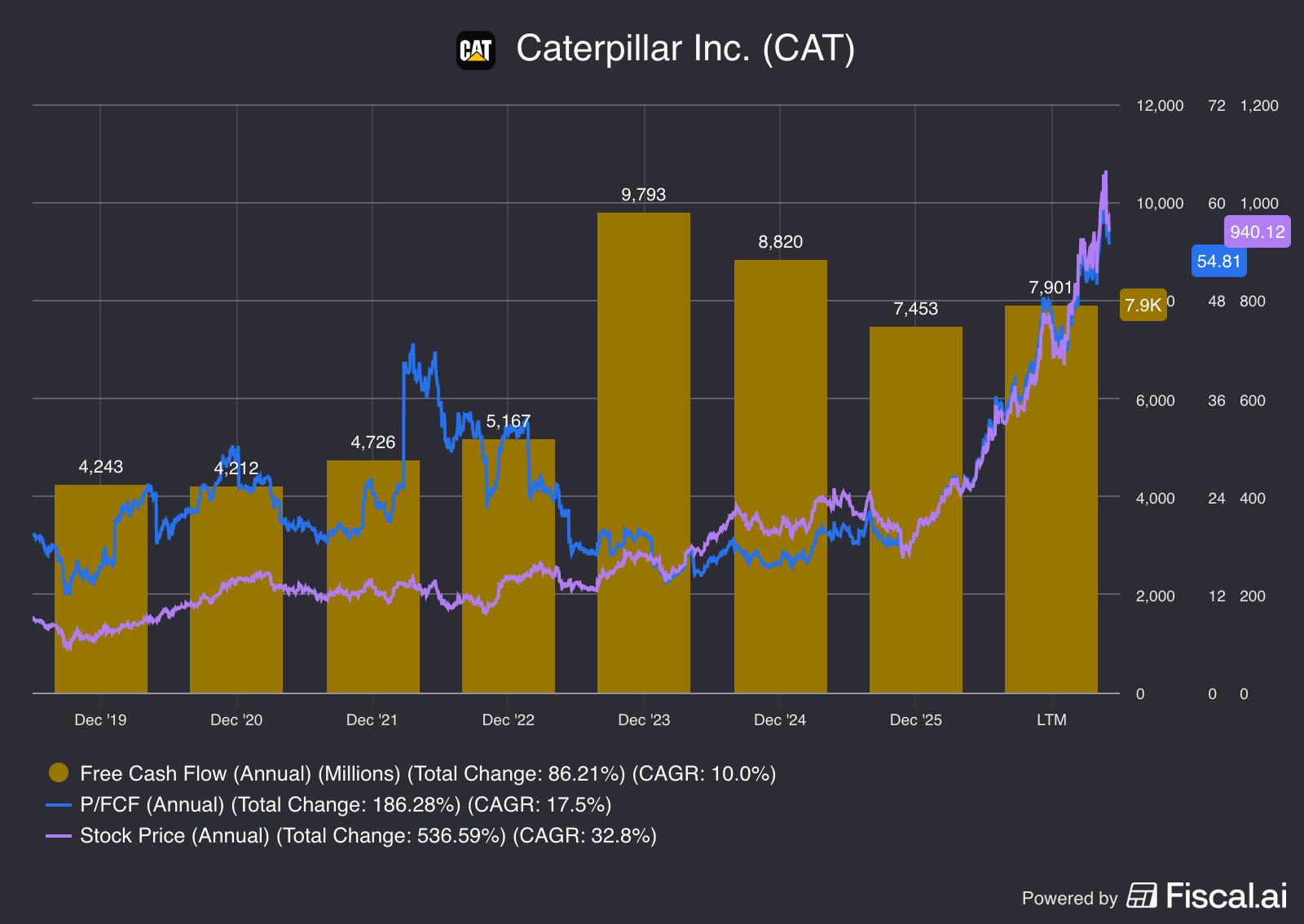
That’s what happened to Caterpillar ($CAT) from 2019 to today.
Free Cash Flow: +86%
Multiple: +186%
Stock Price: +536%
High earnings growth + multiple expansion is the golden goose for you as an investor.
To summarize
Stocks are pieces of businesses.
Businesses exist to generate cash.
Investors make money in two ways:
When the business generates more cash
When the market is willing to pay a higher multiple for that cash.
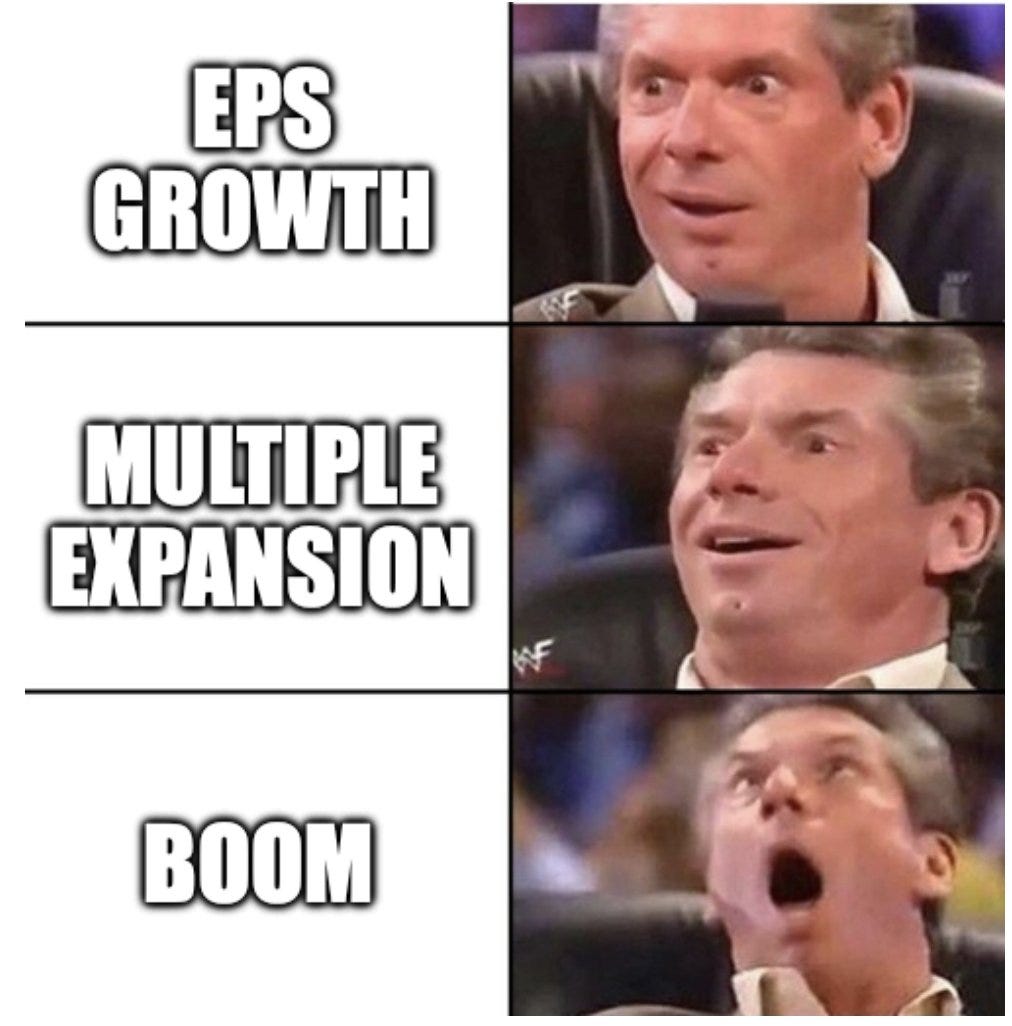
Combining growth with an attractive valuation gives you two powerful engines for compounding.
Wouldn’t it be interesting to buy an ETF that captures exactly these characteristics?
The good news is that you can.
⭐ ETF of the Month
VictoryShares Free Cash Flow ETF (VFLO)
Key Information
Name: VictoryShares Free Cash Flow ETF
Ticker: VFLO
Total Expense Ratio: 0.39%
Physical/Synthetic ETF: Physical
What?
The ETF invests in large companies in the United States with a specific set of characteristics:
High Free Cash Flow Yield
Strong forward growth
You might be wondering how this works in practice.
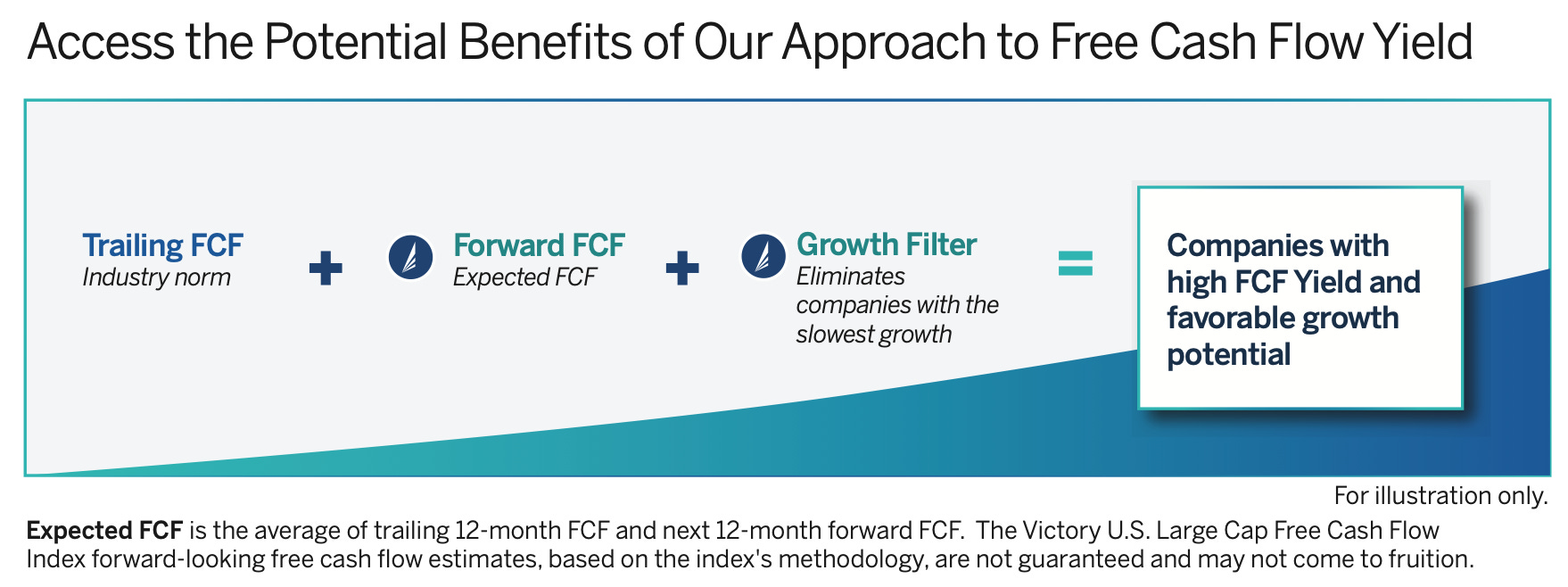
The ETF starts with the VettaFi US Large Cap Free Cash Flow Index.
Afterwards, it applies a two-step filter:
Value: It finds companies generating the most free cash flow relative to their enterprise value
Growth: It screens out companies with the lowest expected growth
Why?
Buying the cheapest companies with the highest expected growth gives us the best chance to let our two favorite return engines work together:
Attractive growth
Room for multiple expansion
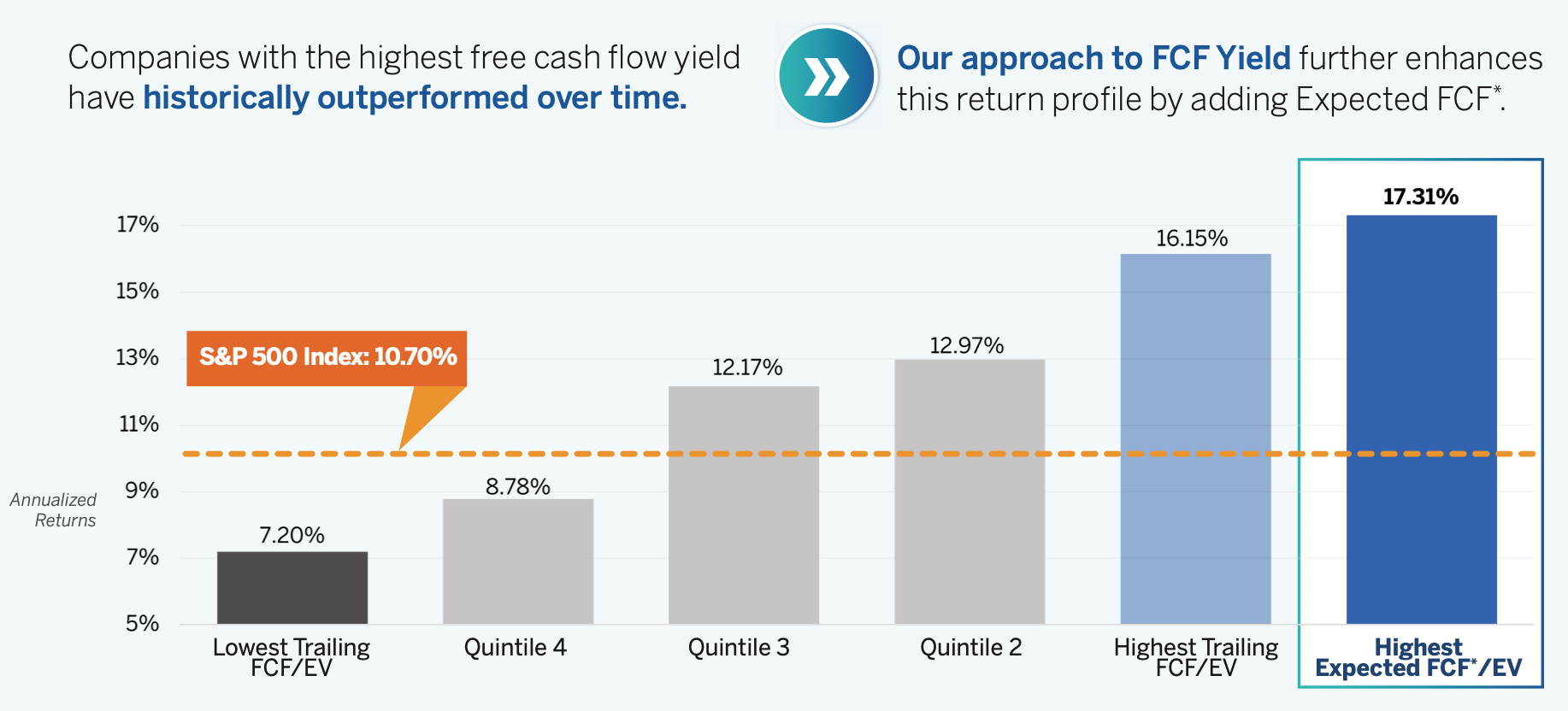
Historically, this strategy has worked very well.
Companies with the highest expected FCF/EV had a return of 17.3% (!) per year:
Sector Split
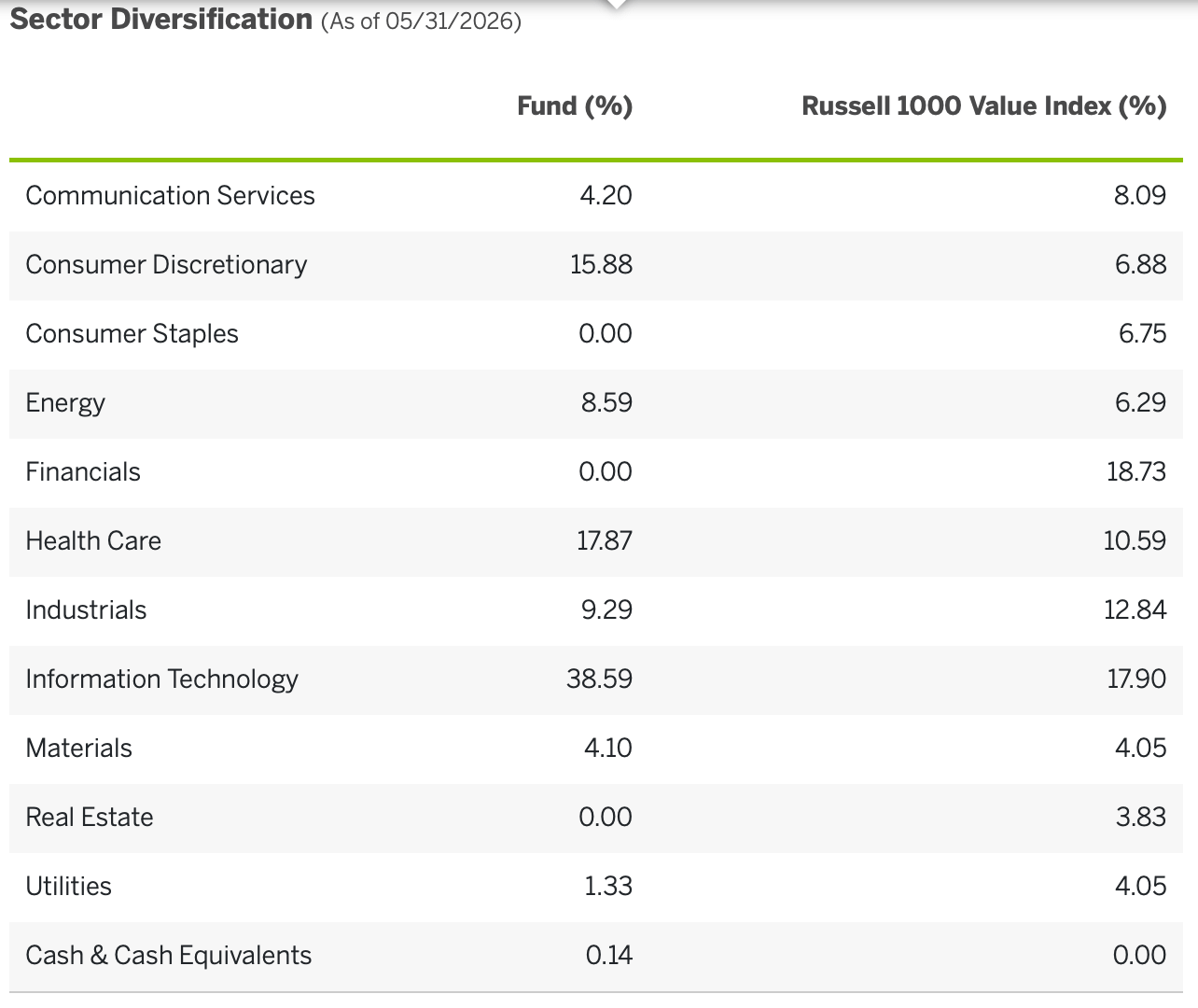
Here’s the sector breakdown of the ETF.
The three largest sectors are Information Technology (38.6%), Health Care (17.9%) and Consumer Discretionary (15.9%).
Top Holdings
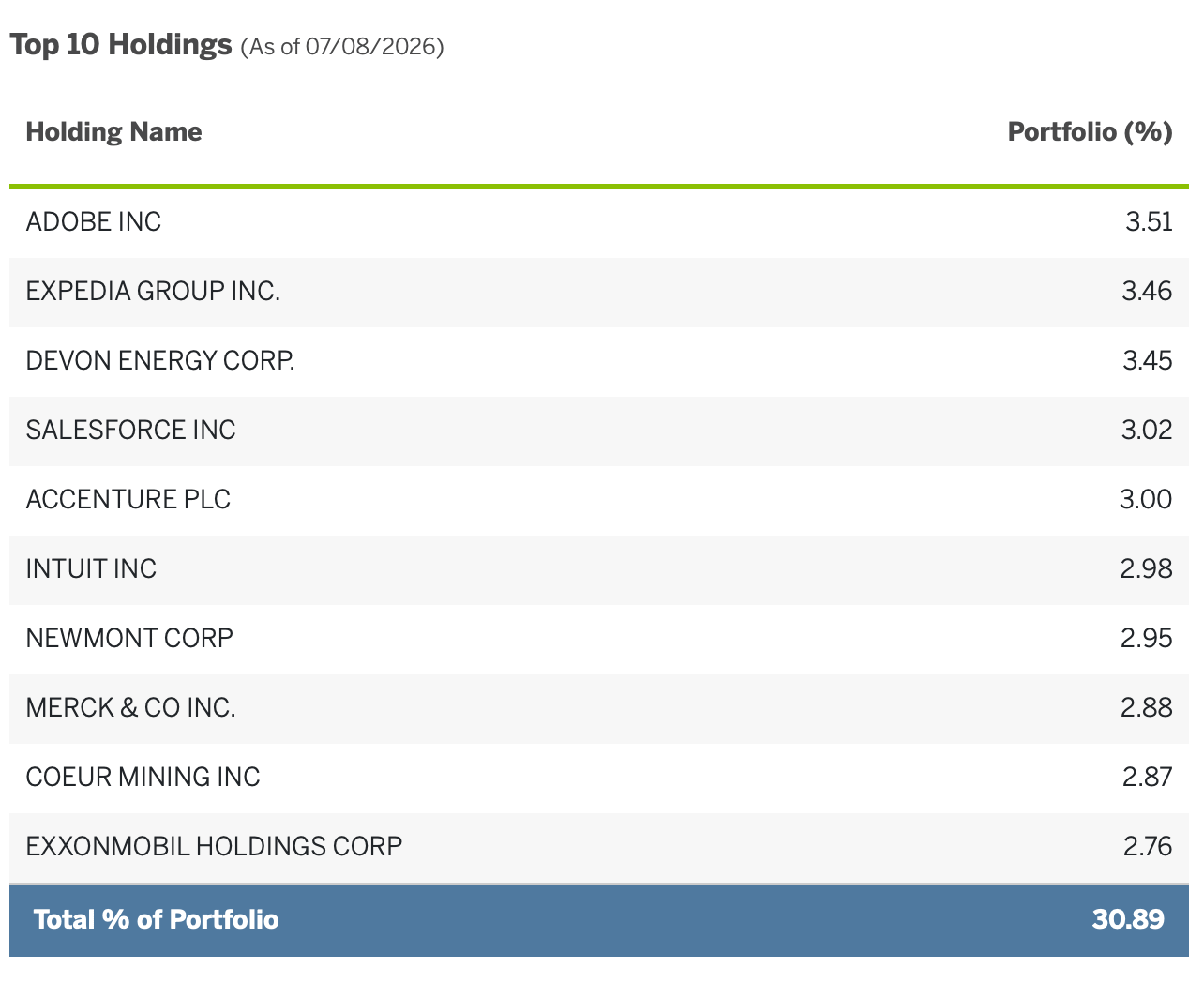
Here are the top 10 holdings of VFLO:
ETF Portfolio Update: July 2026
Now let’s dive in Our ETF Portfolio Update.
Our Portfolio is a great mix of ETFs that should be able to outperform in the long term.
We use multiple factors that tend to do well:
👑 Quality: Only invest in companies that have already won
📏 Size: The smaller the better
🚀 Multifactor: Quality, size, value & momentum
🌏 Emerging Markets: Small exposure to Emerging Markets
Let’s now dive into the ETF Portfolio itself.
You have 24/7 access to the ETF Portfolio here: