

You want to invest in companies with a wide moat.
But you know what’s even better? Finding a small company with a wide moat.
Let’s look at how you can do this via ETF investing.

Moats Matter
Capitalism is brutal.
When a company starts making a lot of money, it usually attracts competition.
In most cases, it means margins and profits go down for everyone.
That’s called reversion to the mean.
But sometimes… This is not the case.
Reversion to the mean doesn’t take place when a company has a durable competitive advantage (moat).

A moat puts a company in a superior business position.
This allows the business to maintain and increase its profit margin and market share.
It’s the most important thing if you’re going to be a long-term investor.
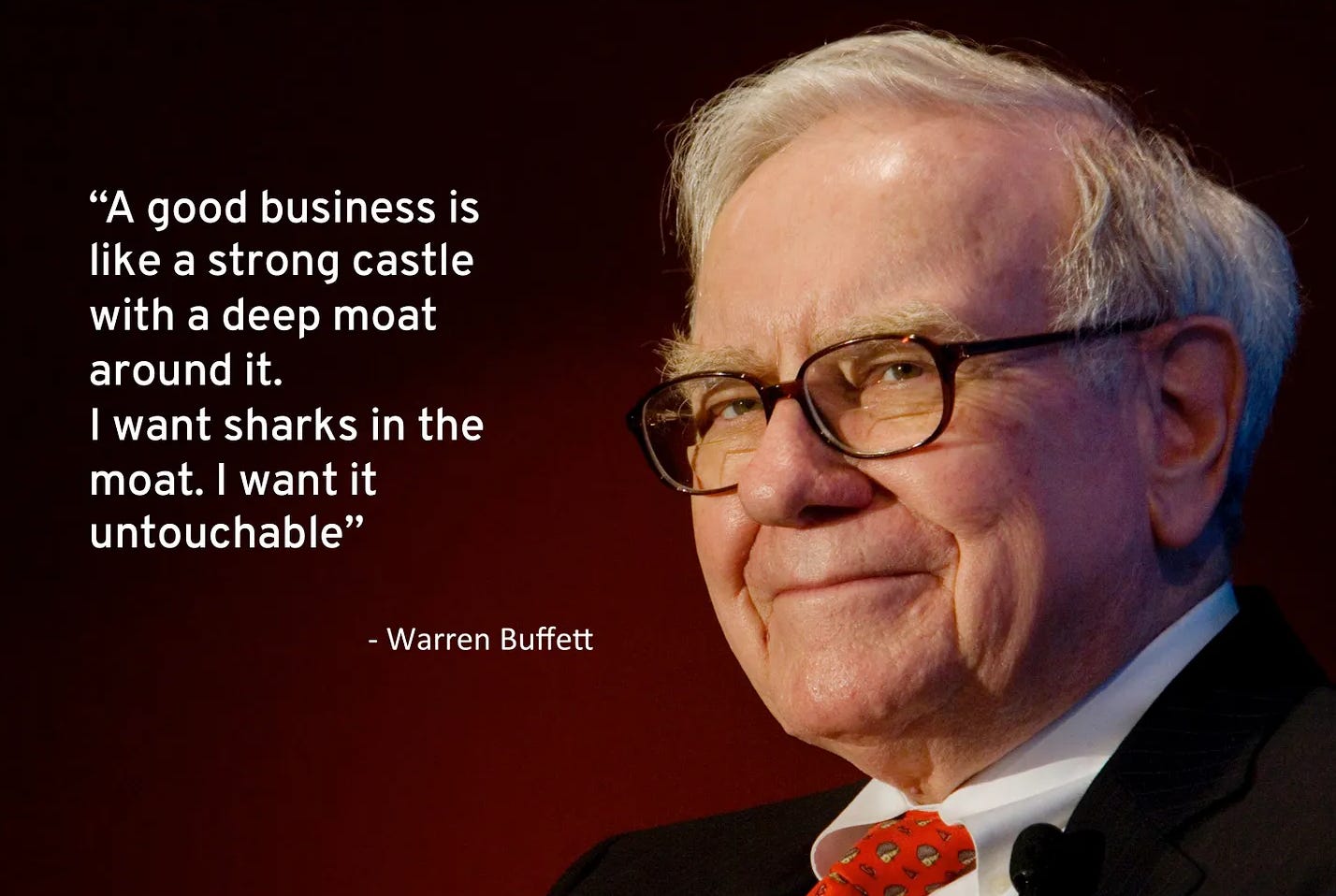
Morningstar rates companies based on their economic moat.
There are 3 categories:
Wide moat: A durable competitive advantage expected to last 20 years or more
Narrow moat: A competitive advantage expected to last 10–20 years
No moat: Either no advantage or one that will be gone quickly
The wider the moat, the better.
Moat Sources
In general, there are 5 different moat sources:
Switching costs
What? It’s hard for a customer to switch to a competitor
Example? FICO scores. Banks have built their automated loan approval systems around them, and switching to a competitor means massive operational risk for no real advantage
Intangible assets
What? Brands, patents, or regulatory licenses that allow the company to charge more than competitors
Example? Hermès. A competitor can make a similar bag, but they’ll never have the prestige that allows Hermès to consistently raise prices without losing demand.
Network effects
What? As the business gets more customers, it becomes more valuable to everyone involved.
Example? Visa is a classic example. Consumers use Visa because every merchant accepts it. Merchants accept Visa because every consumer carries it.
Cost advantages
What? Allow a business to produce goods or deliver services at a lower cost than everyone else.
Example? Costco buys in bulk, and passes the cost savings to customers, which makes the customers more loyal, and drives higher volumes, which allows Costco to lower prices even more.
Efficient scale
What? Happens when a market is too small for it to make sense for competitors to enter.
Example? Railroads like Union Pacific have this kind of moat. Building a new coast-to-coast rail network would require hundreds of billions of dollars in land rights and infrastructure, only to split an already mature market.

Moats Outperform
I hope you are convinced by now that companies with a wide moat outperform.
But does a moat really matter for an investor like you?
The answer is very clearly yes.
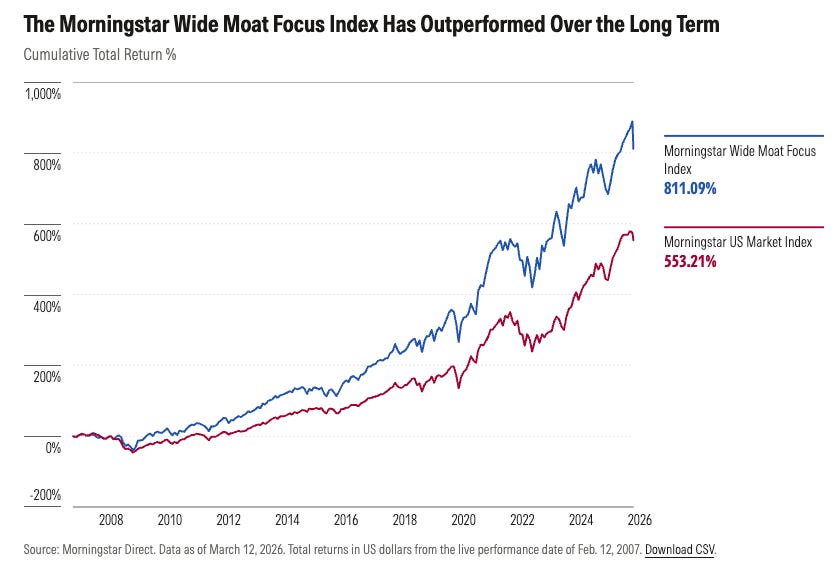
Since 2008, the Morningstar Wide Moat Index has beaten the US Market by 4% a year.
Size Matters
Another thing that makes a difference in investing?
Size.
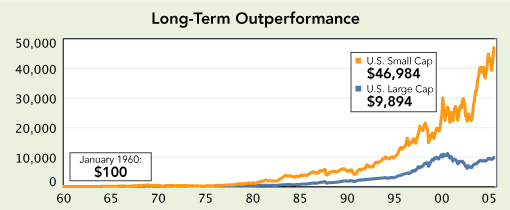
Over time, smaller companies tend to outperform large ones.
The Size Problem
At Compounding Quality we have a serious size problem.
But don’t get me wrong… It’s not what you think it is.
The larger a company gets, the harder it is to grow.
Let’s look at a hypothetical example.
Company A:
Generates $50 million in revenue.
To grow 20%, it needs to find $10 million in new sales.
That could be just a few new enterprise contracts or expanding into one new state.
Company B:
Generates $400 billion in revenue (similar to Apple).
To grow 20%, it needs to find $80 billion in new sales.
That’s a huge challenge. iPads and Macs combined generated $62 billion in revenue last year. Apple would have to invent an entirely new category bigger than both to grow by 20%.
Warren Buffett has talked about size being a disadvantage for decades.
In 1995 he said:
“The giant disadvantage we face is size: In the early years, we needed only good ideas, but now we need good big ideas,”
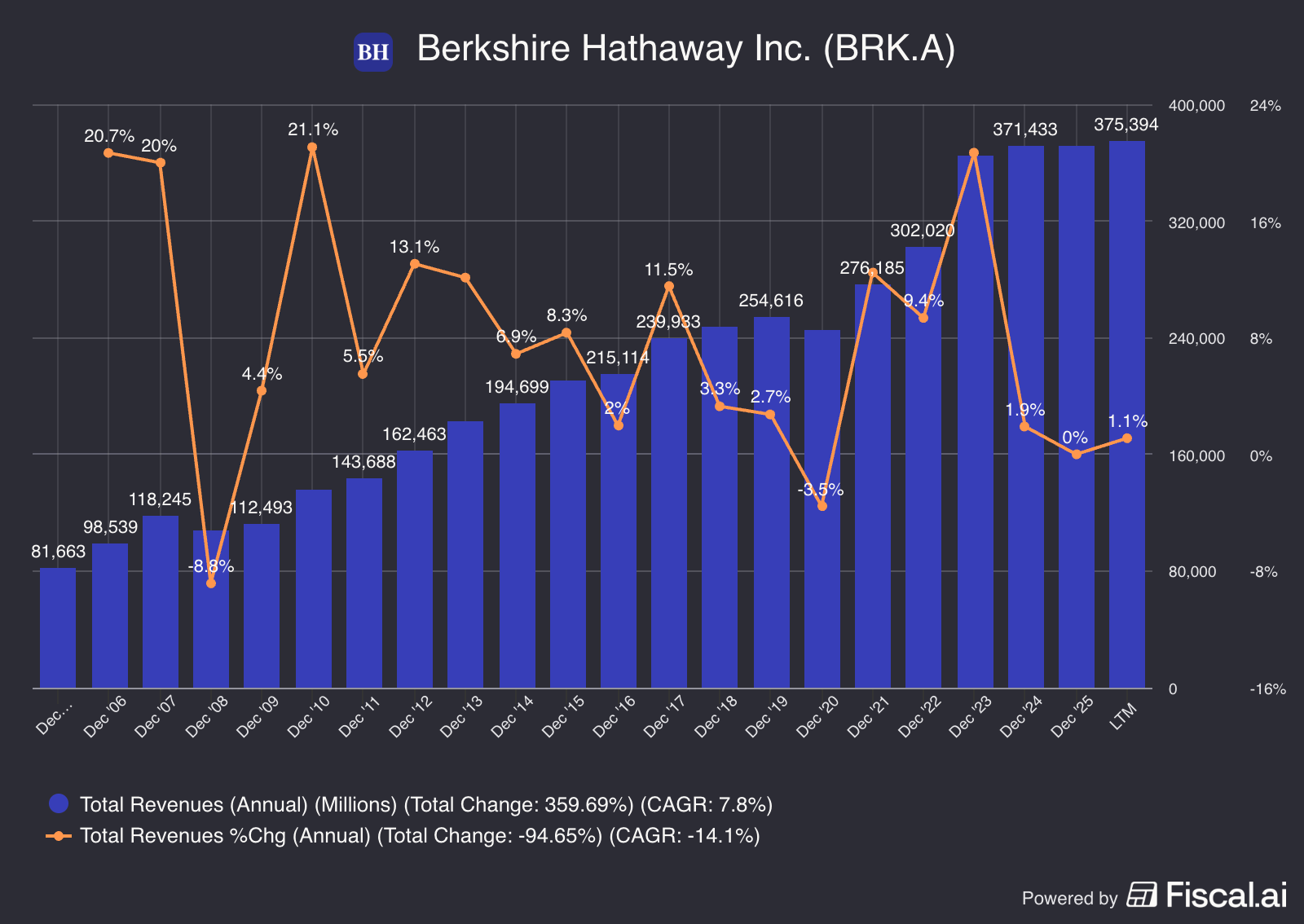
Berkshire has nearly quadrupled its revenue in the past 20 years.
But the revenue growth rate is slowing down:
To summarize:
Companies with a wide moat outperform on average by 4% per year
Small companies outperform the market by 3% per year
Wouldn’t it be interesting to buy an ETF that has both characteristics?
The good news is that you can!
⭐ ETF of the Month (Spotlight)
VanEck Morningstar SMID Moat ETF (SMOT)
Key Information
Name: VanEck Morningstar SMID Moat ETF
Ticker: SMOT
ISIN: US92189H7301
Total Expense Ratio: 0.49%
Physical/Synthetic ETF: Physical
What?
The ETF invests in companies with 3 characteristics:
Strong small and medium-sized businesses
Wide competitive advantage
Selling at a discount
But how does this work in practice?
The ETF starts from the Morningstar US Small-Mid Cap Index.
Within this index, it only keeps companies with a “Wide” or “Narrow” economic moat.
Then it checks two things:
Is the stock performing well (drop the ones with bad momentum)?
How cheap is the company?
Finally, the ETF buys the best-priced companies (115 in total).
Why?
We already know that both smaller companies and companies with a moat tend to outperform over time.
But this strategy could be particularly interesting right now.
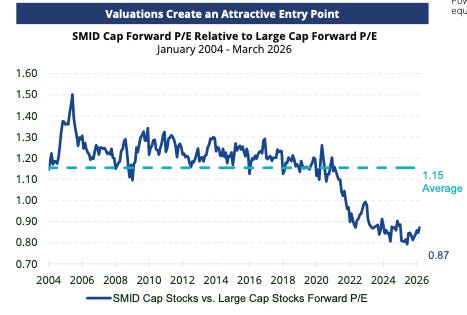
Today, smaller companies look very attractively valued compared to large caps:
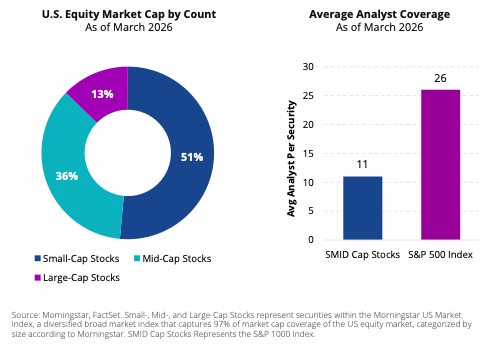
On top of that, small companies are way less covered than large ones.
This offers opportunities for rational investors.
Sector Split
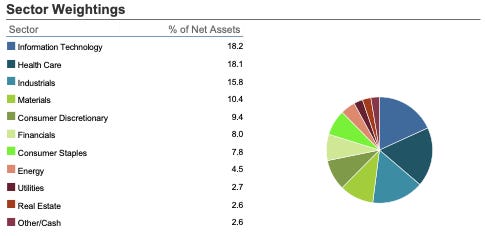
Here’s the sector breakdown of the ETF.
The three largest sectors are Information Technology (18.2%), Health Care (18.1%) and Industrials (15.8%).
Top Holdings
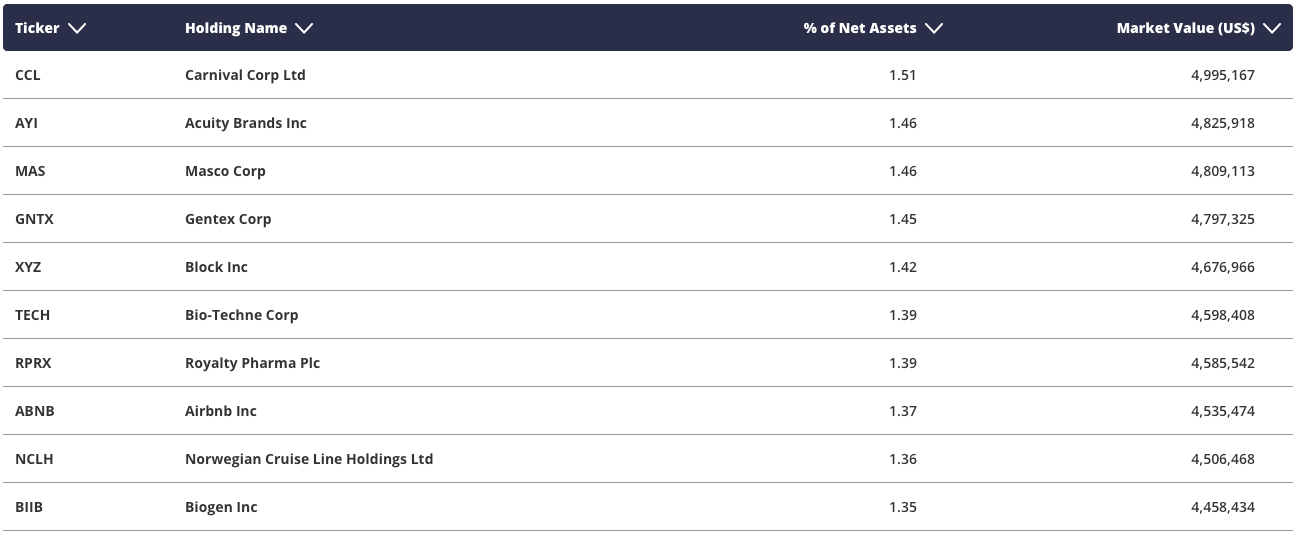
Here are the top 10 holdings of SMOT:
ETF Portfolio Update: June 2026
Now let’s dive in Our ETF Portfolio Update.
Our Portfolio is a great mix of ETFs that should be able to outperform in the long term.
We use multiple factors that tend to do well:
👑 Quality: Only invest in companies that have already won
📏 Size: The smaller the better
🚀 Multifactor: Quality, size, value & momentum
🌏 Emerging Markets: Small exposure to Emerging Markets
Let’s now dive into the ETF Portfolio itself.
You have 24/7 access to the ETF Portfolio here:
