

Passive investors don’t look for the needle in the haystack, they just buy the entire haystack.
But which haystack should you buy?
Let’s dive into our ETF Portfolio today.

Passive investing 101
Passive investors don’t try to beat the market.
They are more than happy with matching the performance of the market.
To build wealth you don’t have to beat the market, just follow these simple steps:
Spend less than you earn
Invest at least 10% of your income every single month
Everyone can do it.
You don’t need to be interested in investing or spend a lot of time researching stocks.
“Paradoxically, when ‘dumb’ money acknowledges its limitations, and starts to invest periodically in an index fund, it ceases to be dumb.” - Warren Buffett
Why Does Passive Investing Work?
Lower Costs: Passive funds are cheaper than active funds
Lower Stress: you can automate your investments and ignore the market
Market Growth: The stock market tends to go up in the long run
Another big reason passive investing works?
Diversification.
When you invest in an ETF, you own a small part of many companies.

This spreads out your risk.
If one company does poorly, it won’t hurt you as much because you have a lot of other investments.
Diversification doesn’t just mean owning a lot of different companies.
It means owning companies in different places.
Global Diversification
You can’t predict where the next winner will come from.
Since the bottom of the Global Financial Crisis in March of 2009, US stocks have compounded at 15% per year.
They have outperformed almost every asset over this period.
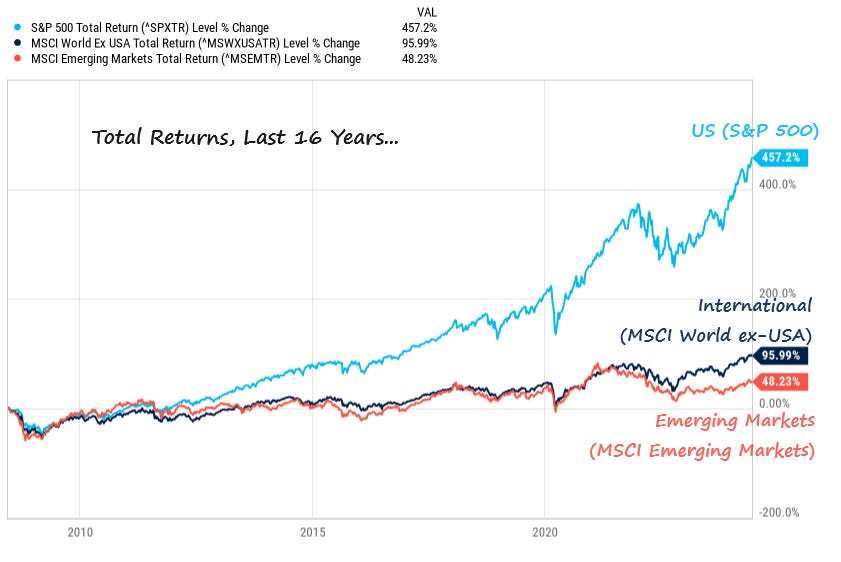
It feels like US stocks will keep going up forever.
So why wouldn’t you solely invest in US ETFs?
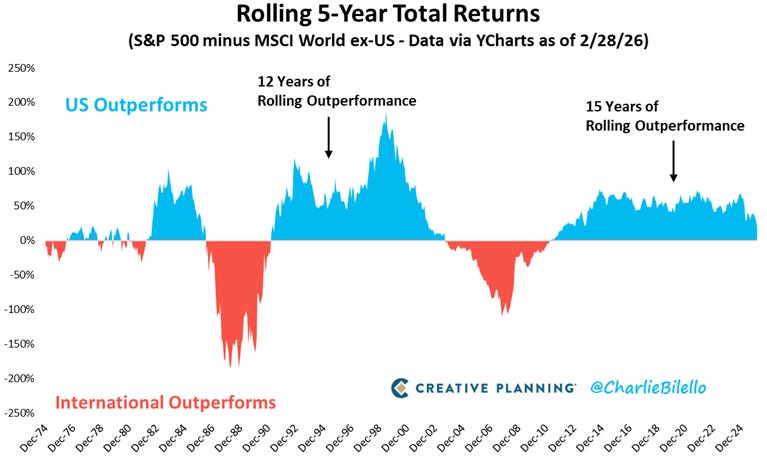
Because US stocks don’t always outperform.
The chart below shows the rolling 5-year returns.
Blue areas show where the US outperformed
Red areas show where the rest of the world outperformed
The US outperformance can’t go on forever.
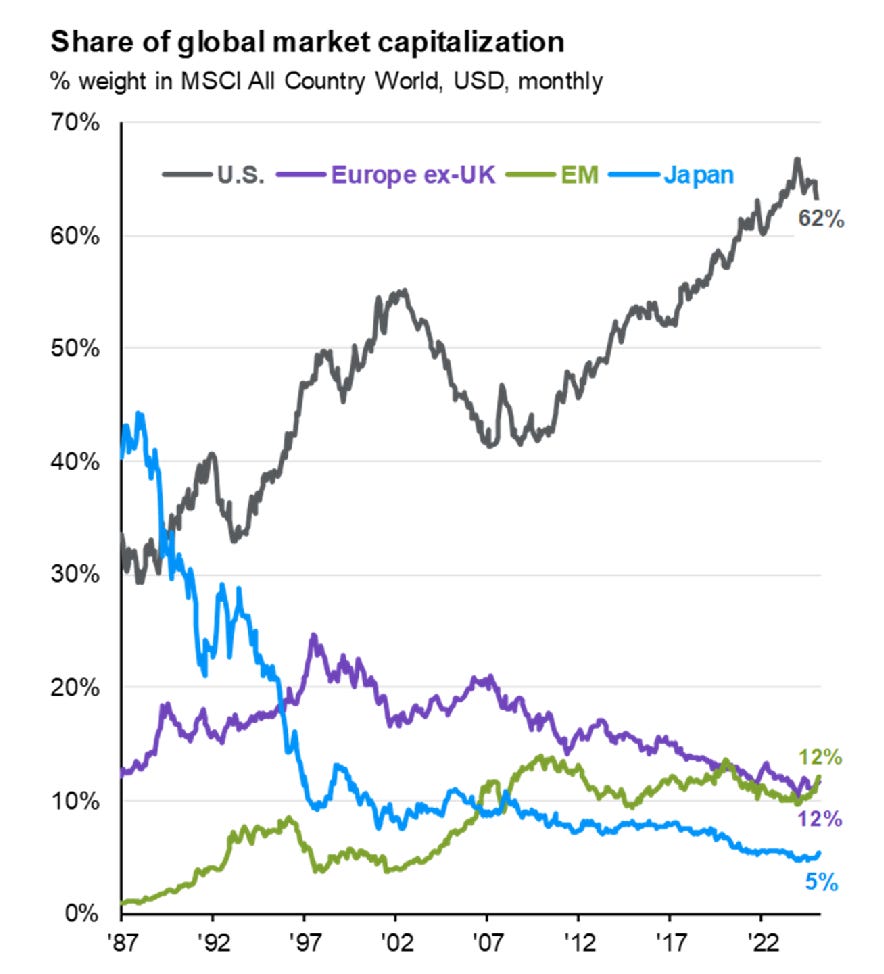
If it did, US stocks would eventually make up 100% of the global stock market.
The chart below shows the market share of the following countries:
The United States
Europe, ex-UK
Emerging Markets
Japan
You can see that US stocks already make up a lot of the global market cap.
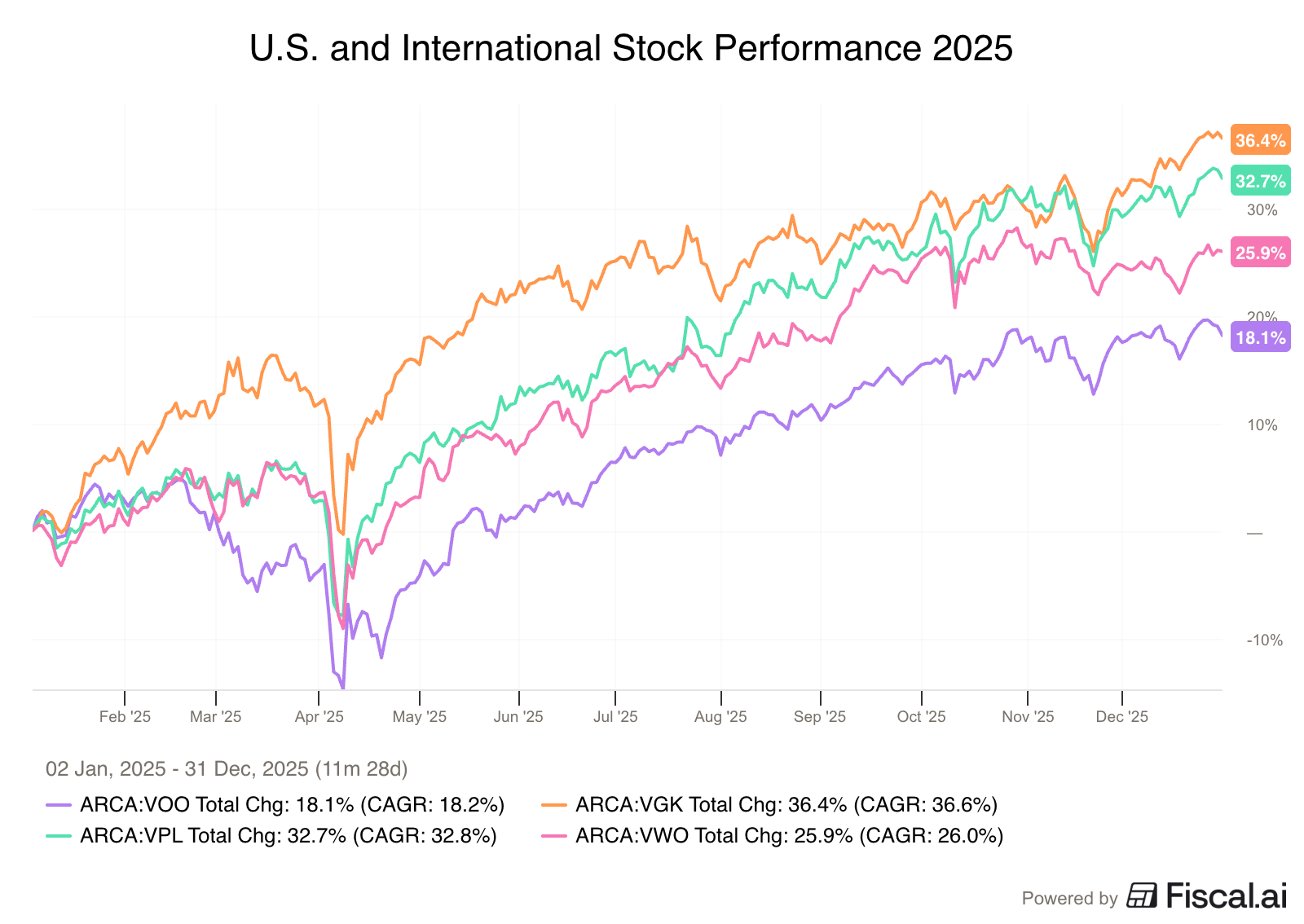
In 2025, the S&P 500 had a total return of 18.1%, which is amazing!
But it’s lower than a lot of other markets.
Here’s the performance of different regions:
US stocks (purple): 18.1%
Emerging Markets (pink): 25.9%
Asian Stocks (green): 32.7%
European Stocks (orange): 36.4%
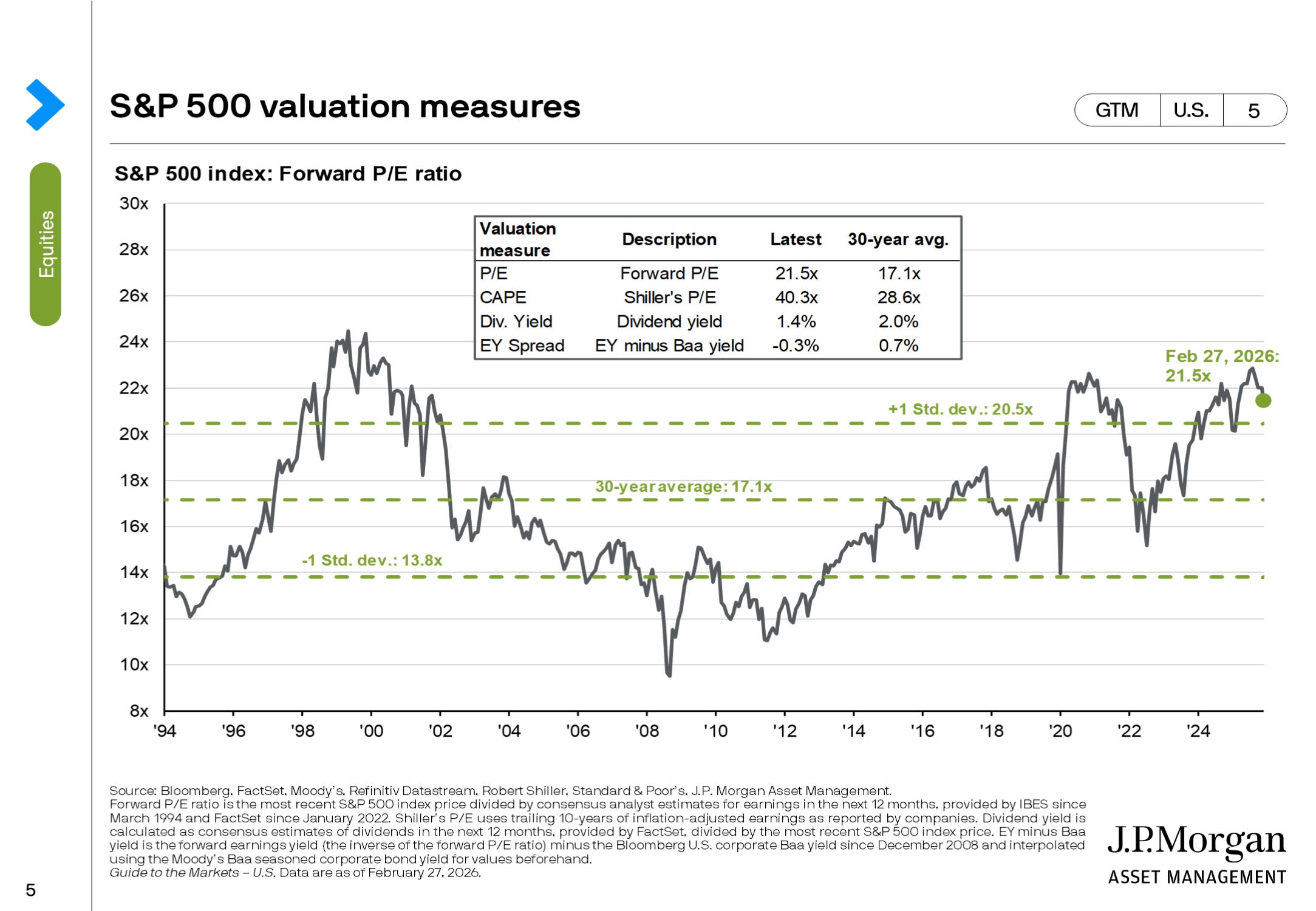
The US market is also quite expensive at this point in time.
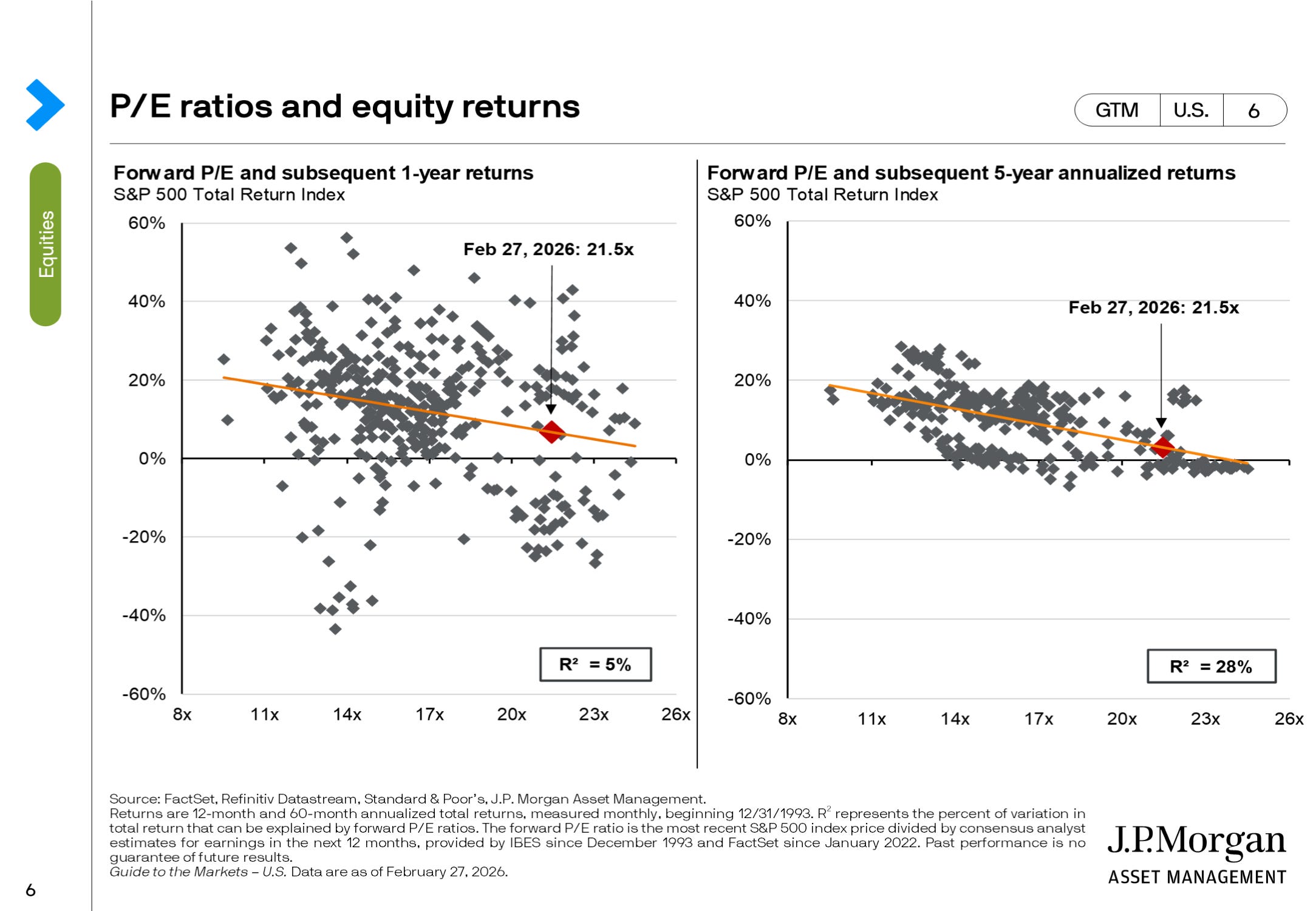
Buying the S&P 500 at the current valuation levels will probably yield lower returns:
But how do you diversify outside the United States?
How do you play this idea?
Let’s find out together.
