

Chris Hohn is one of the best investors in the world.
His hedge fund TCI made almost $20 billion (!) last year.
Let’s teach you some key lessons from this amazing investor.

Who is Chris Hohn?
People call Chris Hohn ‘The Tollkeeper Investor’.
Why?
He only invests in businesses that control essential pieces of the economy.
Think about crucial infrastructure , airports, railroads, …
Chris Hohn was born in 1966 in England to a working-class family. His mother was a secretary and his father was a car mechanic.
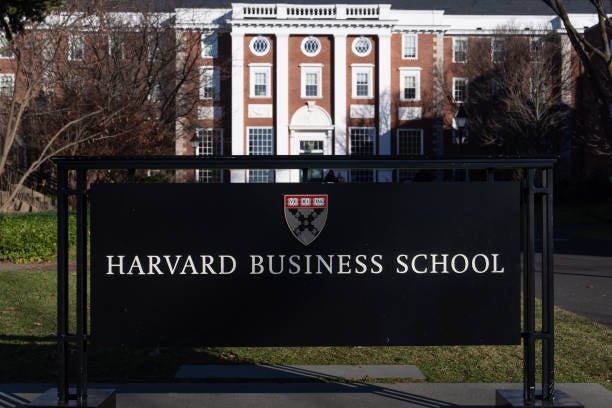
He studied accounting at the University of Southampton, then earned an MBA from Harvard Business School.
An interesting story?
In his third year at a New York hedge fund, Chris was awarded a bonus check of $10 million.
Most people would think they are set for life.
But Chris didn’t.
He immediately set up a foundation and put the money into it.
He said “I didn’t want it… This isn’t really something I should have.”
In 2003, Chris founded The Children’s Investment Fund.
It’s better known under the name TCI.
As the name suggests, the fund donates a portion of its profits to charities for children.
To date, the Children’s Investment Fund Foundation (CIFF) has donated over $2 billion to children’s causes, primarily in developing countries.
In 2025 alone, the hedge fund TCI gave $797 million to charity.
This kind of purpose-driven approach is rare in the hedge fund world.
In 2014, Hohn received a knighthood in recognition of his charitable work.

Investment Philosophy
The Chris Hohn approach can be summarized as follows:
Manage risks first, returns second: Don’t lose money
Invest in tollkeeper businesses: Companies that control essential infrastructure
Buy companies with high barriers to entry: Look for stocks with multiple moats
Make concentrated bets: Only invest in your best ideas
Hold for the long term: Chris Hohn keeps every stock for 8 years on average
1. Manage risks first, returns second
Most investors ask: “How much money can I make?”
Chris Hohn asks: “How much can I lose?”
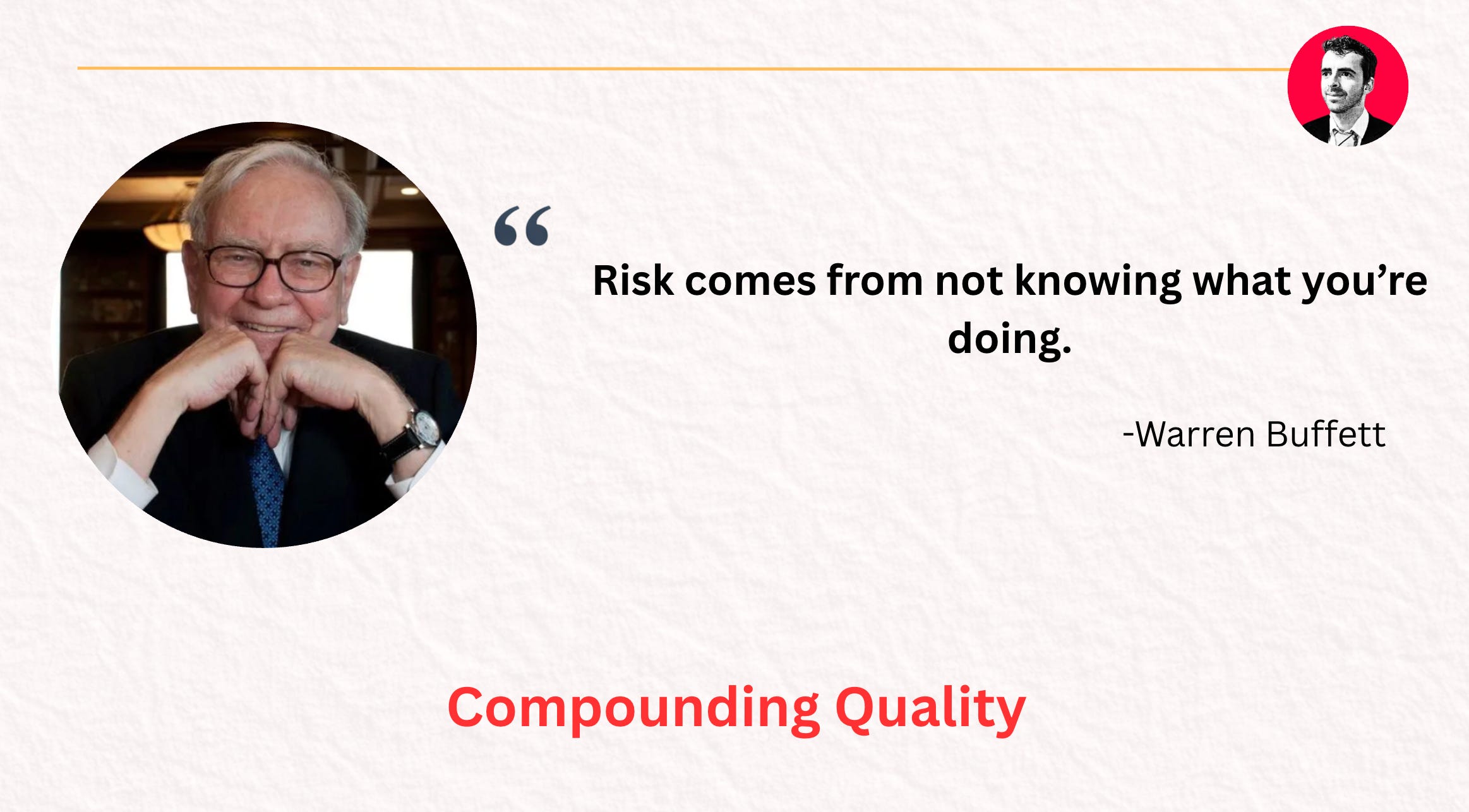
“Investing is all about risk and return. The vast majority of investors focus on return. But I focused my career on managing risks.”
That’s why Hohn avoids complicated businesses he cannot understand.
He once told the CEO of Credit Suisse that he didn’t understand the bank’s multi-trillion dollar balance sheet.
When he asked the CEO to explain it, the CEO allegedly replied: “I don’t either.”
Chris sold all bank stocks shortly after.
That’s why he famously calls TCI a stay rich fund, not a get rich fund.
2. Invest in tollkeeper businesses
Chris only invests in tollkeeper businesses.
What are tollkeeper businesses?
Tollkeeper businesses are companies that earn steady profits by controlling essential infrastructure or platforms and charge users a small “toll” each time they pass through or transact.
These companies have powerful characteristics:
High barriers to entry
Structural pricing power
Predictable cash flows
Think of it this way:
Whether people drive electric cars or gas cars, they still need roads
Similarly, whether they use Visa or Mastercard, the payment network takes a cut
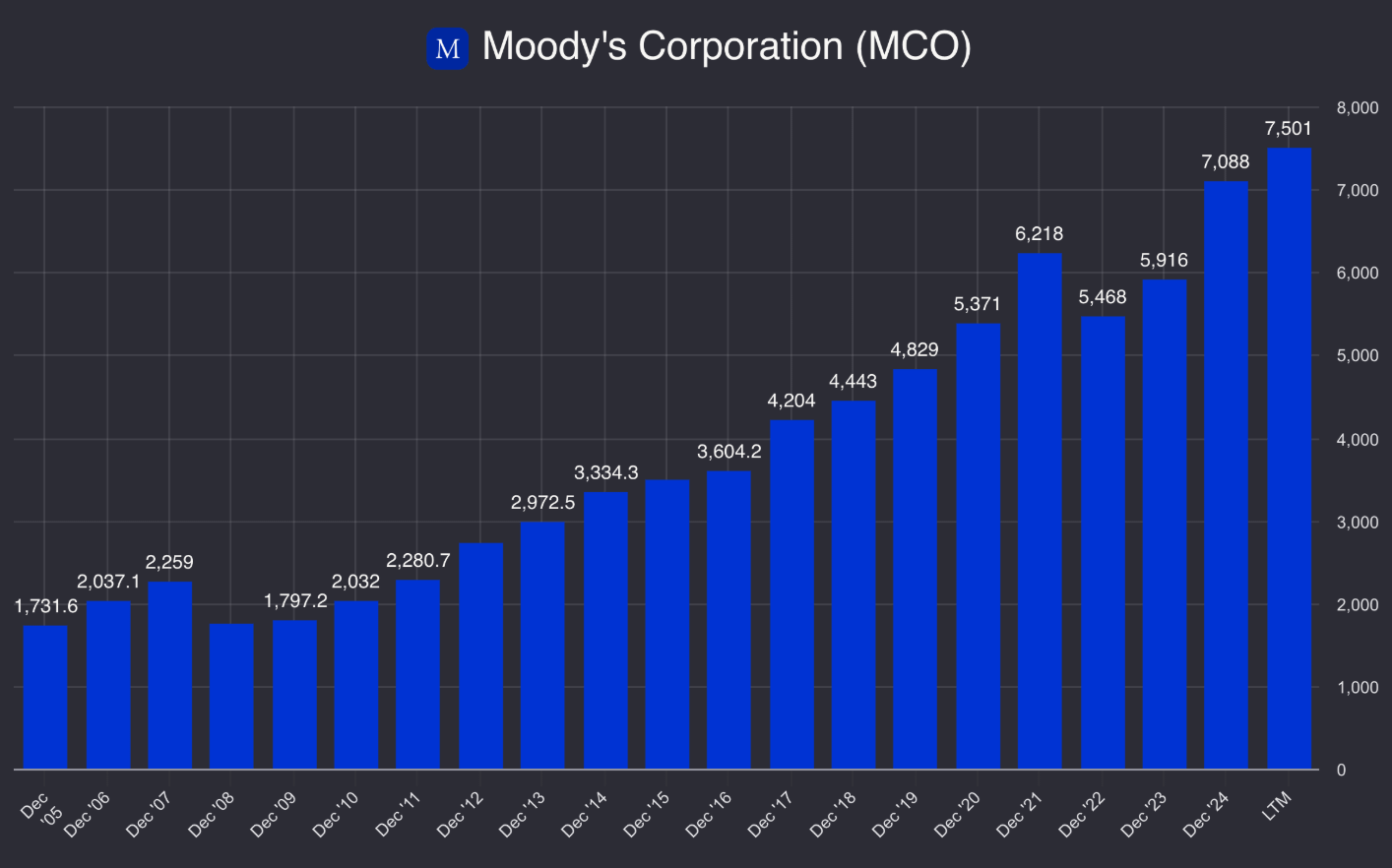
Another example? Moody’s.
This company has grown revenue by over 8% per year for over 100 years.
3. Buy companies with high barriers to entry
One competitive advantage isn’t enough for Chris.
For every company he owns, he wants five or six overlapping barriers.
Intellectual property
Strong brands
Hard assets
Long-term contracts
Network effects
Regulatory switching costs
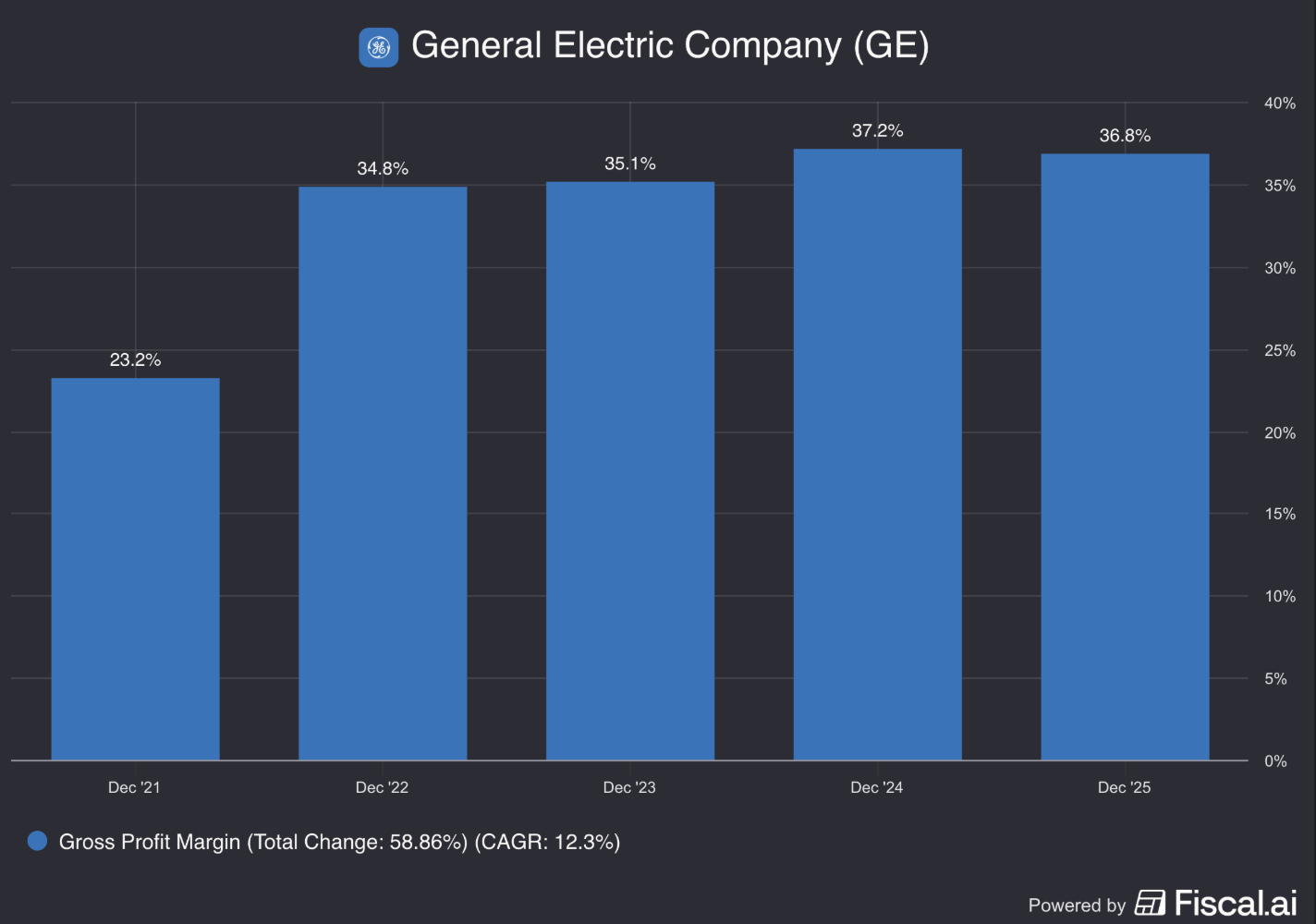
A good example is GE Aerospace
This company makes jet engines with massive Intellectual Property.
They enjoy 30-year service contracts, regulatory approvals, and an installed base that is nearly impossible to replace.
“Often you would like not just one barrier to entry but maybe five... Big jet engines have many of those.” - Chris Hohn
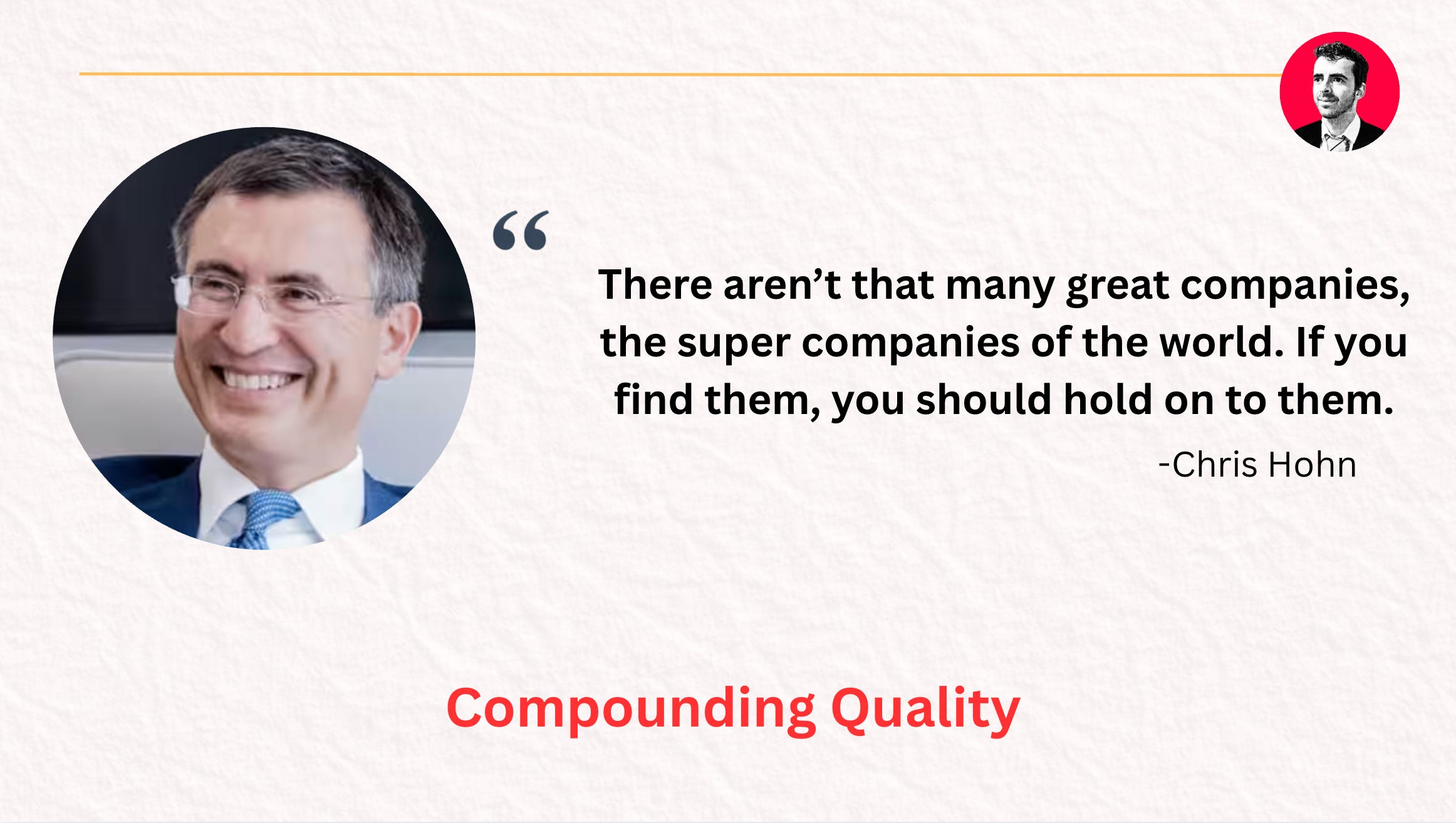
4. Make concentrated bets
While most fund managers hold 50-100 stocks, Chris Hohn holds only 10-15 stocks.
His logic is simple:
“By concentrating our capital in a handful of very good ideas... We should be able to outperform.” - Chris Hohn
His top 5 positions usually make up over 80% of his portfolio.
5. Hold for the long term
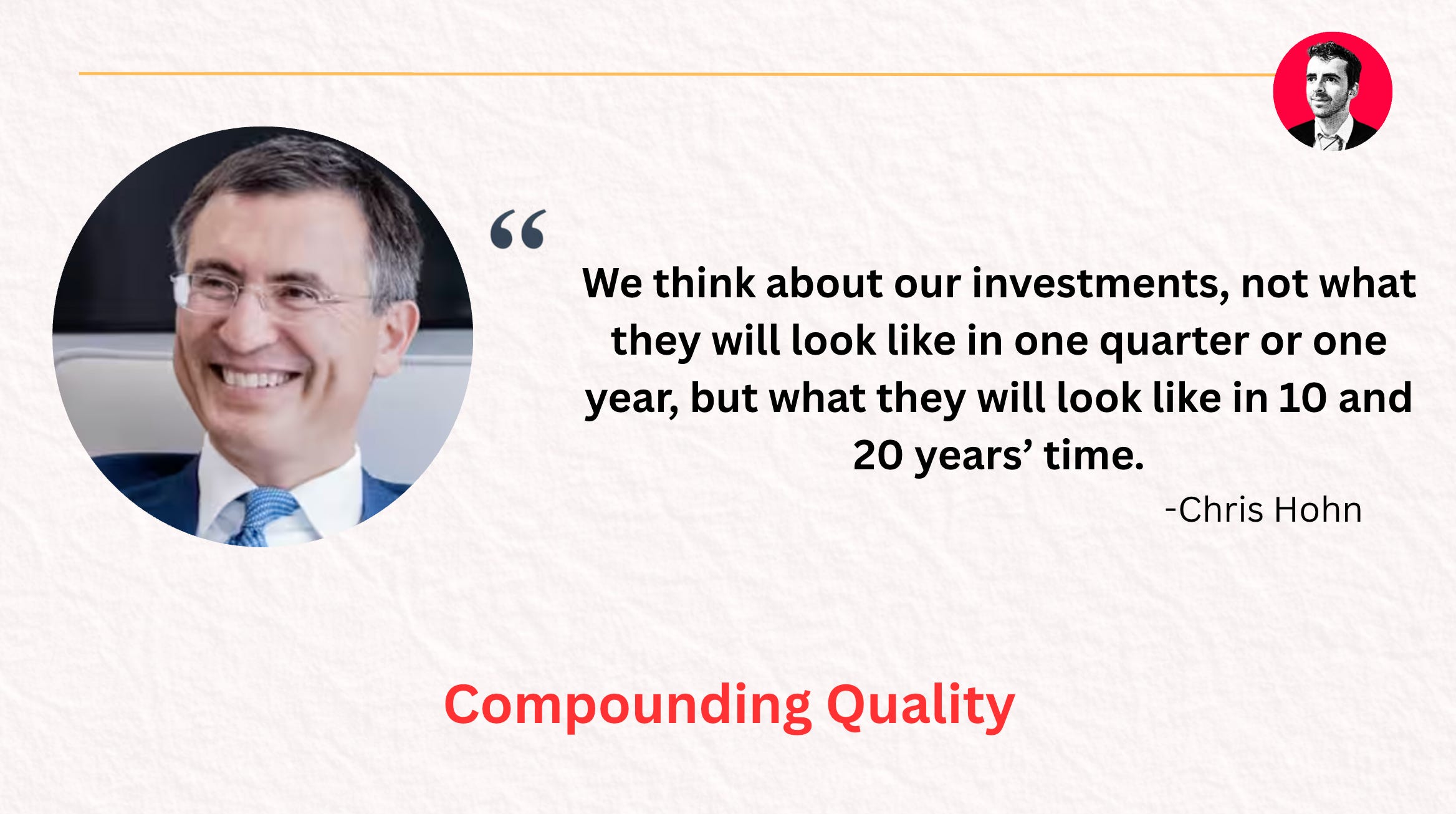
The average investor holds a stock for less than one year.
Chris Hohn holds stocks for 8 years on average.
Some companies are in his portfolio for over 13 years.
He believes “good companies stay good and bad companies stay bad.”
Once he finds a great business, he rarely sells.
Performance
Chris Hohn is doing something at TCI that almost no one can replicate.
Here are the numbers:
2025: $18.9 billion in profit. The largest single-year gain in the entire history of hedge funds.
Since 2003: $70 billion earned for his investors.
Long term: 18%+ CAGR since 2003. The S&P 500 returned 10% per year.
Chris Hohn’s Portfolio
Now let’s take a look at Chris Hohn’s portfolio.
Please note that only the US positions are included here.
Chris Hohn also has significant positions in Safran and Airbus. Both companies are active in the aerospace and defense sector.
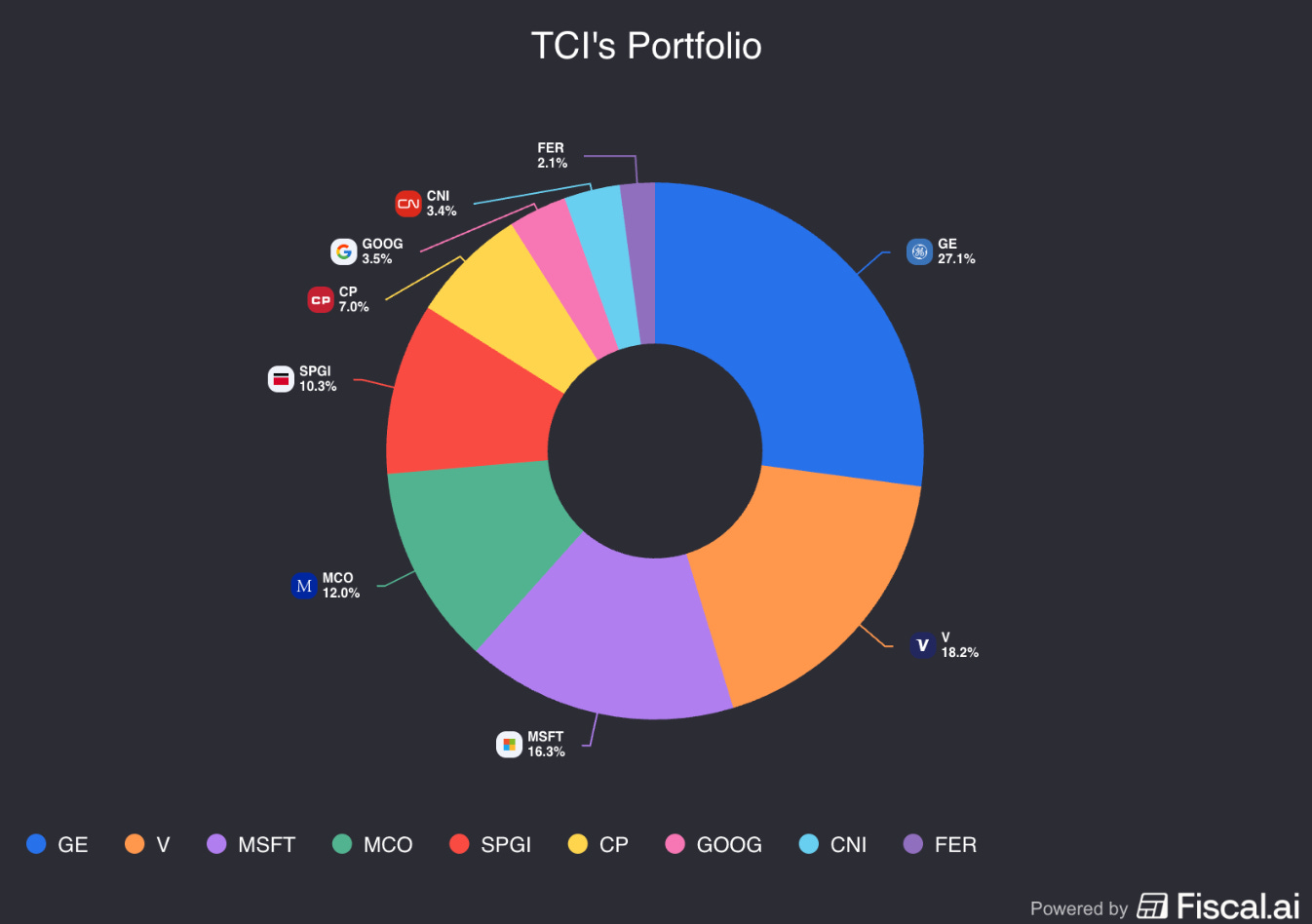
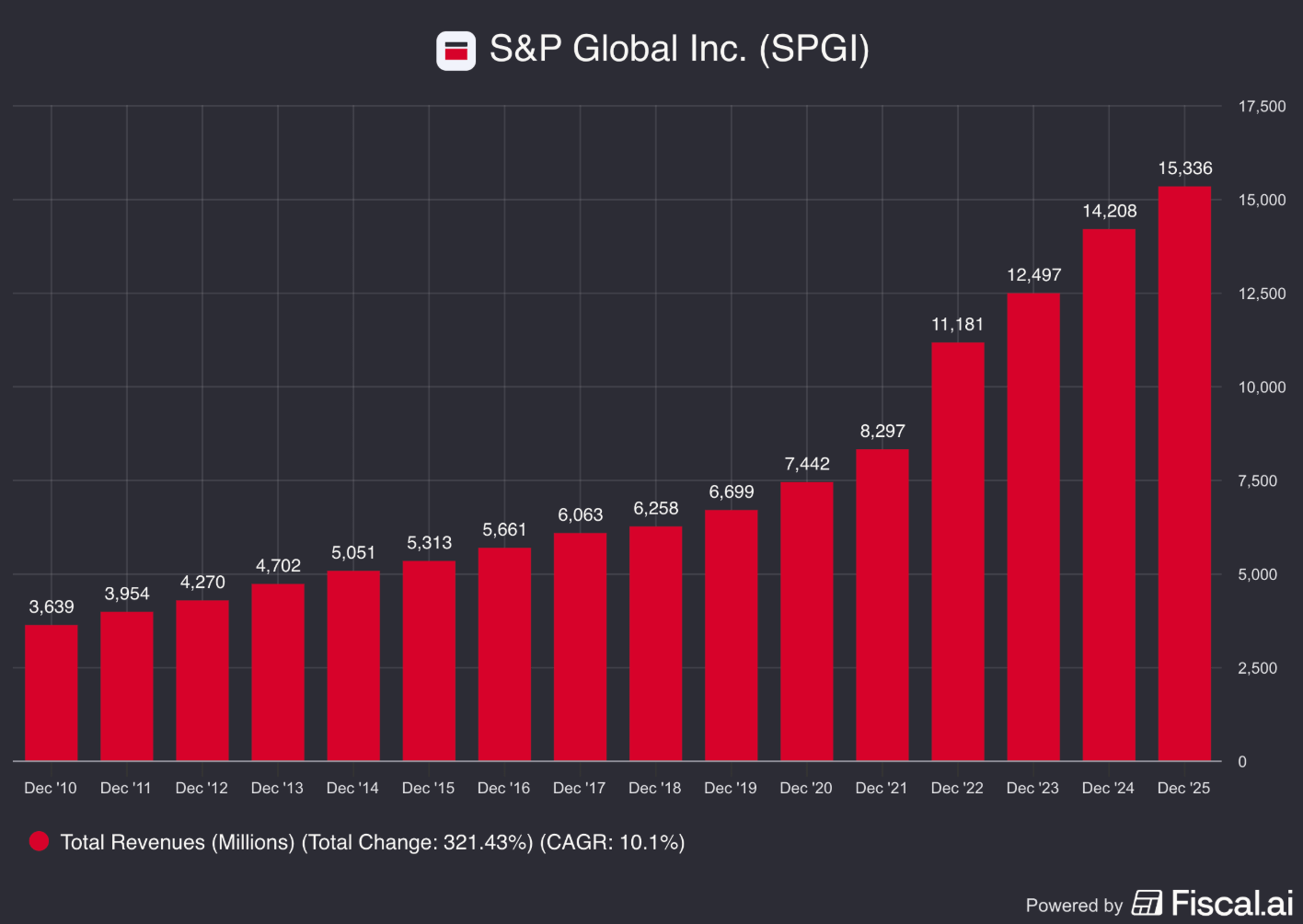
5. S&P Global ($SPGI) - Weight of 10.3%
How does the company make money?
S&P Global provides credit ratings, benchmarks, and market intelligence to financial markets.
Why Chris Hohn likes S&P Global?
S&P Global is part of a oligopoly with Moody’s and Fitch in credit ratings.
When companies issue bonds, they must get a rating from at least 2 of these companies:
S&P Global
Moody’s
Fitch
This is a classic tollkeeper business with incredible pricing power.
The ratings business requires minimal capital, generates massive free cash flow, and has high renewal rates.
Chris says:
“If you can price 1% above inflation and you have a 20% profit margin, your profits will grow 5% faster than revenue.”
4. Moody’s Corporation ($MCO) - Weight of 12.0%
How does the company make money?
Moody’s provides credit ratings, research, and risk analysis to financial markets worldwide.
Why Chris Hohn likes Moody’s?
Warren Buffett called Moody’s one of his best investments.
Chris Hohn agrees.
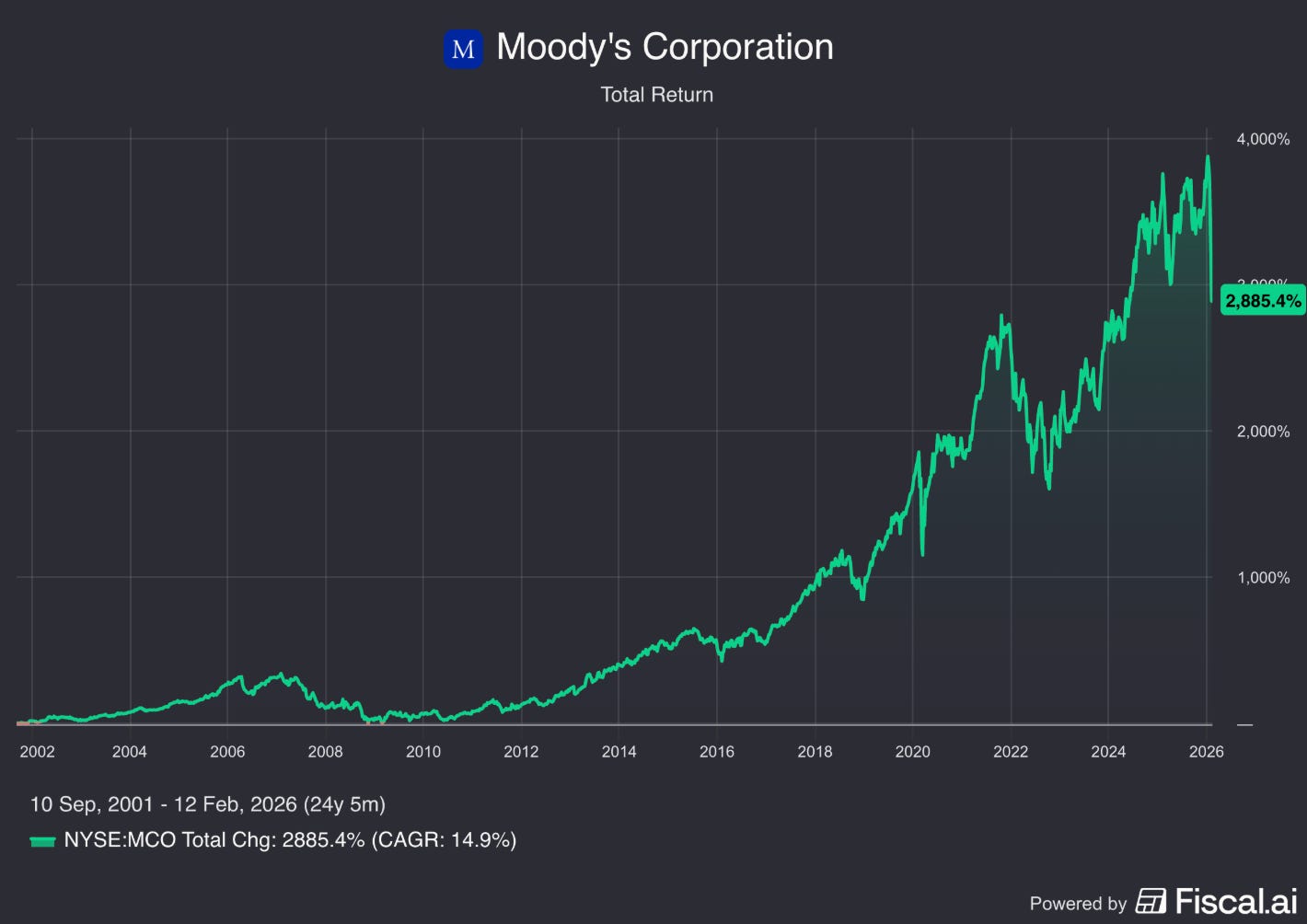
Moody’s has grown its revenue at roughly 10% annually for over 100 years.
Why? Because the business model is nearly impossible to disrupt.
The regulatory system requires credit ratings.
Chris has held Moody’s for over a decade, letting the magic of compounding do the work for him.
3. Microsoft Corporation ($MSFT) - Weight of 16.3%
How does the company make money?
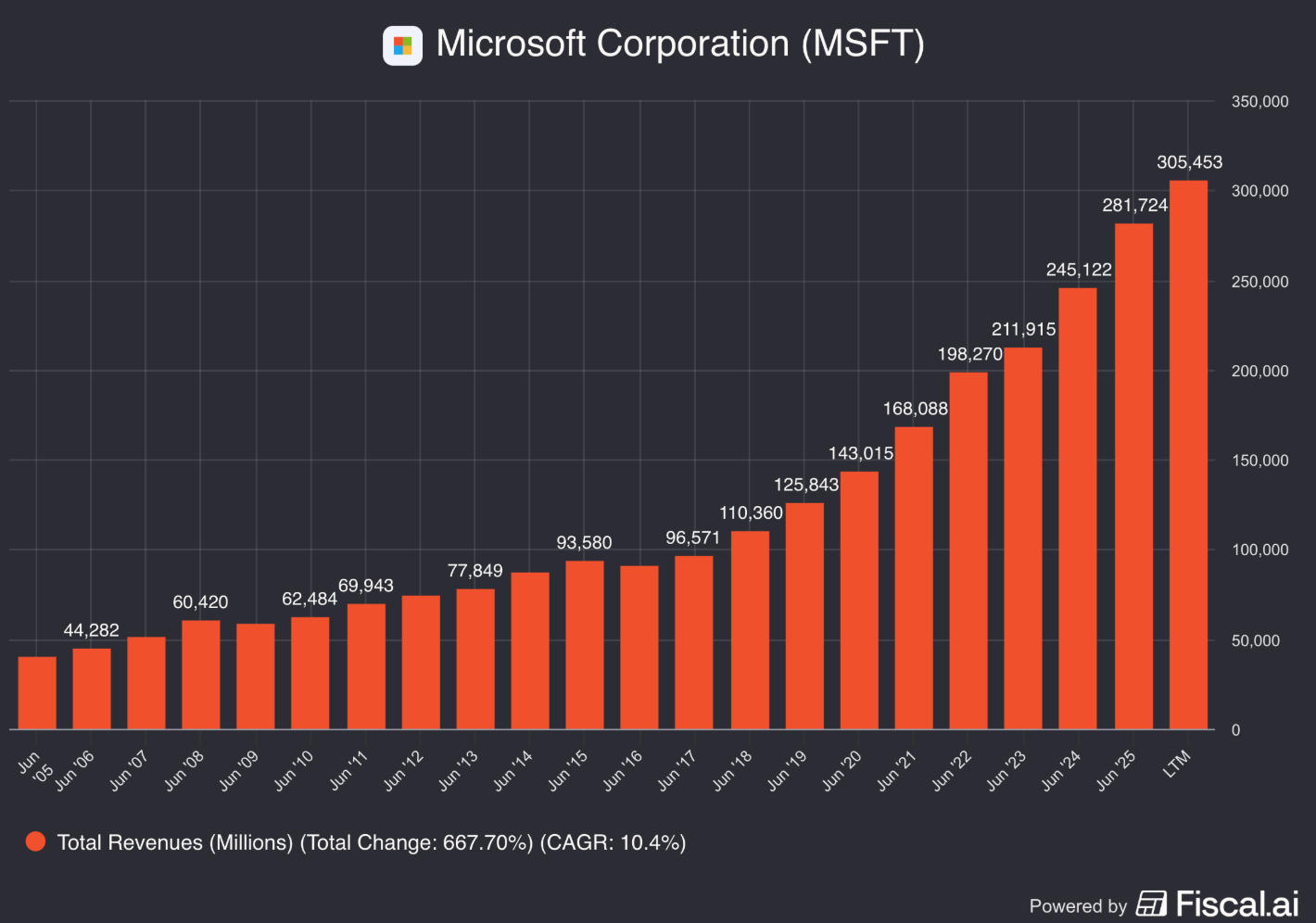
Microsoft generates revenue from cloud computing (Azure), productivity software (Office 365), Windows operating systems, and gaming (Xbox).
Why Chris Hohn likes Microsoft?
Microsoft is the tollkeeper of the digital age.
The business has multiple overlapping moats:
Network effects: Office 365 becomes more valuable as more people use it
Switching costs: Companies cannot easily migrate away from Microsoft ecosystems
Scale advantages: Azure competes effectively with Amazon AWS due to massive infrastructure
Recurring revenue: Subscription models create predictable, growing cash flows
Whether businesses use cloud services, productivity software, or operating systems, Microsoft is often the unavoidable choice.
2. Visa Inc ($V) - Weight of 18.2%
How does the company make money?
Visa operates as the largest electronic payment network in the world, taking a small fee from every transaction.
Why Chris Hohn likes Visa?
Every time you swipe a card, Visa takes a cut. They don’t take credit risk, they just own the network.
The business has:
Massive network effects: Merchants need Visa because consumers have Visa cards. Consumers use Visa because all merchants accept it.
Zero marginal costs: Adding one more transaction costs almost nothing.
Pricing power: They can raise their fees above inflation)
Chris believes payment networks are essential infrastructure for the modern economy.
You can read a Not So Deep Dive here.

1. GE Aerospace ($GE): Weight of 27.1%
How does the company make money?
GE Aerospace manufactures jet engines for commercial and military aircraft. They also provide long-term service contracts.
Why Chris Hohn likes GE Aerospace?
GE Aerospace is Hohn’s largest position. It accounts for over 25% of his entire portfolio.
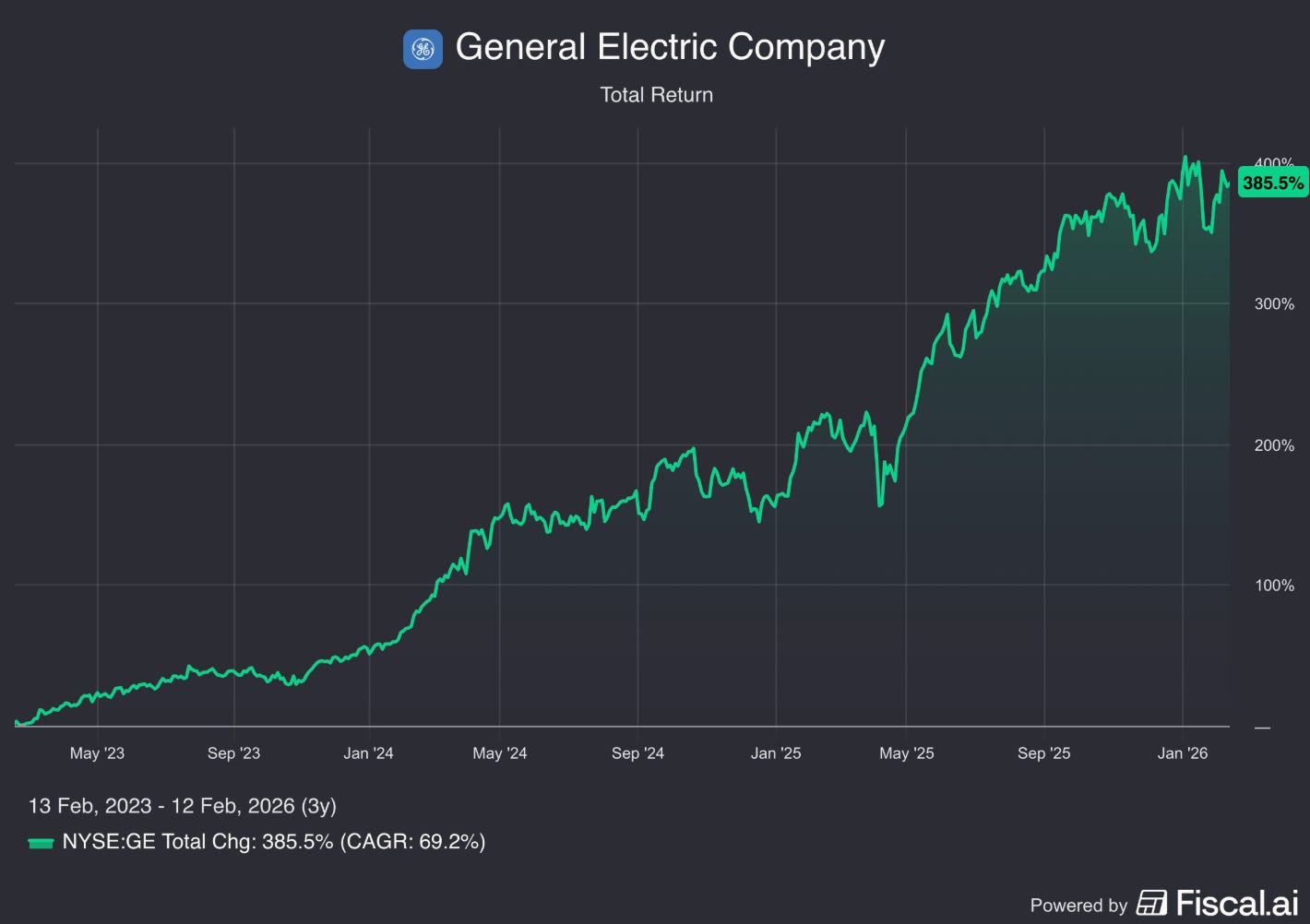
In 2025 alone, this investment made around $10 billion.
Why is he so confident?
Multiple moats: Intellectual Property, regulatory approvals, 30-year service contracts, a large installed base, …
Oligopolistic market: Only GE, Pratt & Whitney, and Rolls-Royce make large jet engines
Recurring revenue: Engines need maintenance for decades
Pricing power: Airplane manufacturers cannot switch engine suppliers easily
Chris Hohn met with GE’s CEO and CFO personally.
He believes the company is taking market share because their engines are more reliable.
The stock rose 85% in 2025, making it the biggest driver of Hohn’s record-breaking year.
Conclusion
Chris Hohn is a master at finding tollkeeper businesses with multiple moats.
Think about companies like
Visa
Moody’s
GE Aerospace
These companies control essential infrastructure with a lot of pricing power.
At Compounding Quality, we try to do the same thing.
We look for companies with:
High barriers to entry
Predictable cash flows
Long runways for growth
Everything in life compounds
Pieter (Compounding Quality)
PS You are not a Partner of Compounding Quality yet? Discover everything you need to know here.
Book
Order your copy of The Art of Quality Investing here
Used sources
Interactive Brokers: Portfolio data and executing all transactions
Fiscal.ai: Financial data
The Credit Suisse story is the most instructive moment in the piece and most readers will skim past it for the portfolio. Hohn asked the CEO to explain the balance sheet. The CEO couldn't. Hohn sold everything. Most investors would have stayed because the position was profitable and the brand was prestigious. Hohn left because he couldn't understand what he owned, and the inability to understand was itself the risk signal. A CEO who can't explain his own balance sheet is a CEO who won't see the crisis coming until it's already in the numbers, and by then it's too late to sell.
The tollkeeper philosophy is really a complexity filter. Toll roads, payment networks, ratings agencies, jet engines. Every one of them is a business you can explain in one sentence to someone who knows nothing about finance. That simplicity isn't a limitation. It's the moat. The businesses simple enough to understand are the businesses where you can see something going wrong before it shows up in the earnings. The ones too complicated to explain are the ones where the crisis arrives as a surprise, and Chris Hohn decided twenty years ago that surprises aren't worth the upside.
What stood out to me most is how much emphasis he puts on risk management first. Most people obsess over upside, but protecting downside is what keeps compounding alive.