

Hi Partner 👋
It’s time to wrap up serial acquirer week.
Today, it’s time for the most fun part: building a serial acquirer portfolio.
We already gave you 6 names.
Today it’s time to give you the final 6 names.
Let’s dive in right away.
![Pac-Man Pictures and Images: Free HD Downloads [380+]](https://substackcdn.com/image/fetch/$s_!3gVa!,f_auto,q_auto:good,fl_progressive:steep/https%3A%2F%2Fsubstack-post-media.s3.amazonaws.com%2Fpublic%2Fimages%2F6404a2a0-34ce-4a11-b6f7-38e699b75747_1920x1200.jpeg "Pac-Man Pictures and Images: Free HD Downloads [380+]")
Reminders
In general, there are 4 buckets for Serial Acquirers:
VMS Serial Acquirers
Swedish Serial Acquirers
Industrial Serial Acquirers
Special Serial Acquirers
We will now dive into the Industrial Serial Acquirers and Special Serial Acquirers.
Industrial Serial Acquirers
Whereas bucket 1 focused on software acquirers, we also want three serial acquirers that are focused on more industrial businesses.
The 3 names are:
TerraVest ($TVK)
Tasmea ($TEA)
Lindbergh ($LDB)
1. TerraVest ($TVK)
TerraVest used to be an extremely boring business.
In cold, remote areas, people often don’t have access to gas pipelines to heat their homes. Instead, they rely on propane, which is stored in large storage tanks.
These storage tanks is where TerraVest comes in.
Although propane storage is very boring, please don’t confuse that with poor returns.
Since its IPO in 2012, TerraVest has compounded shareholder returns at an incredible 31.6% CAGR by being a disciplined acquirer.
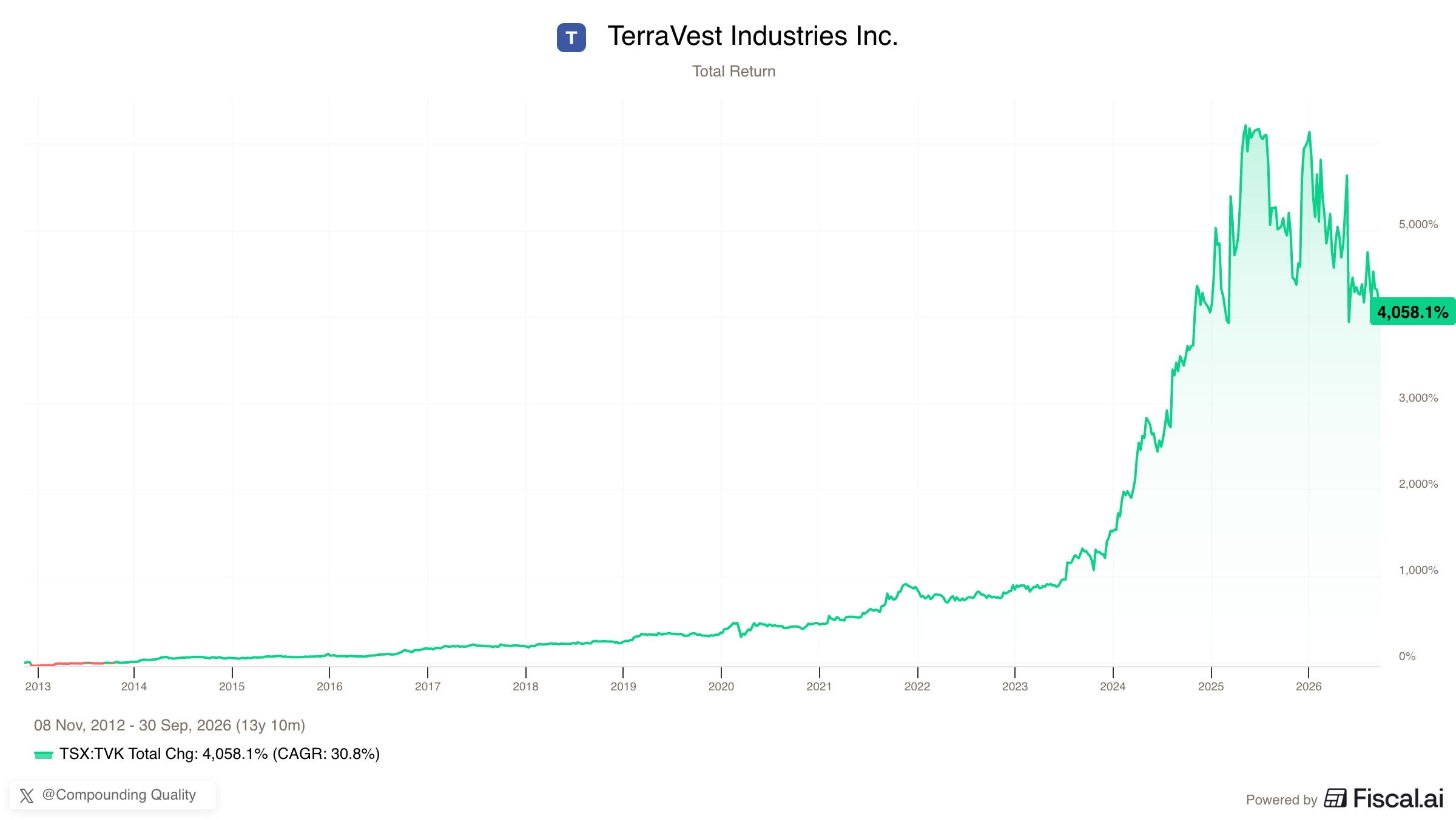
Today, TerraVest happens to be in the right place at the right time.
It is becoming a pick-and-shovel play on the AI infrastructure buildout.
Why?
Data centers consume enormous amounts of energy, mostly in the form of electricity.
But relying entirely on the grid is risky.
If the grid goes down, the data center stops running, which is very costly.
That’s why data centers typically have emergency backup generators that run on fuel.
And that fuel needs to be stored in large storage tanks.
Storing cooling water for data centers also drives storage tank demand.
That’s where TerraVest comes in.
This creates a new tailwind for a company that has already been growing very attractively:
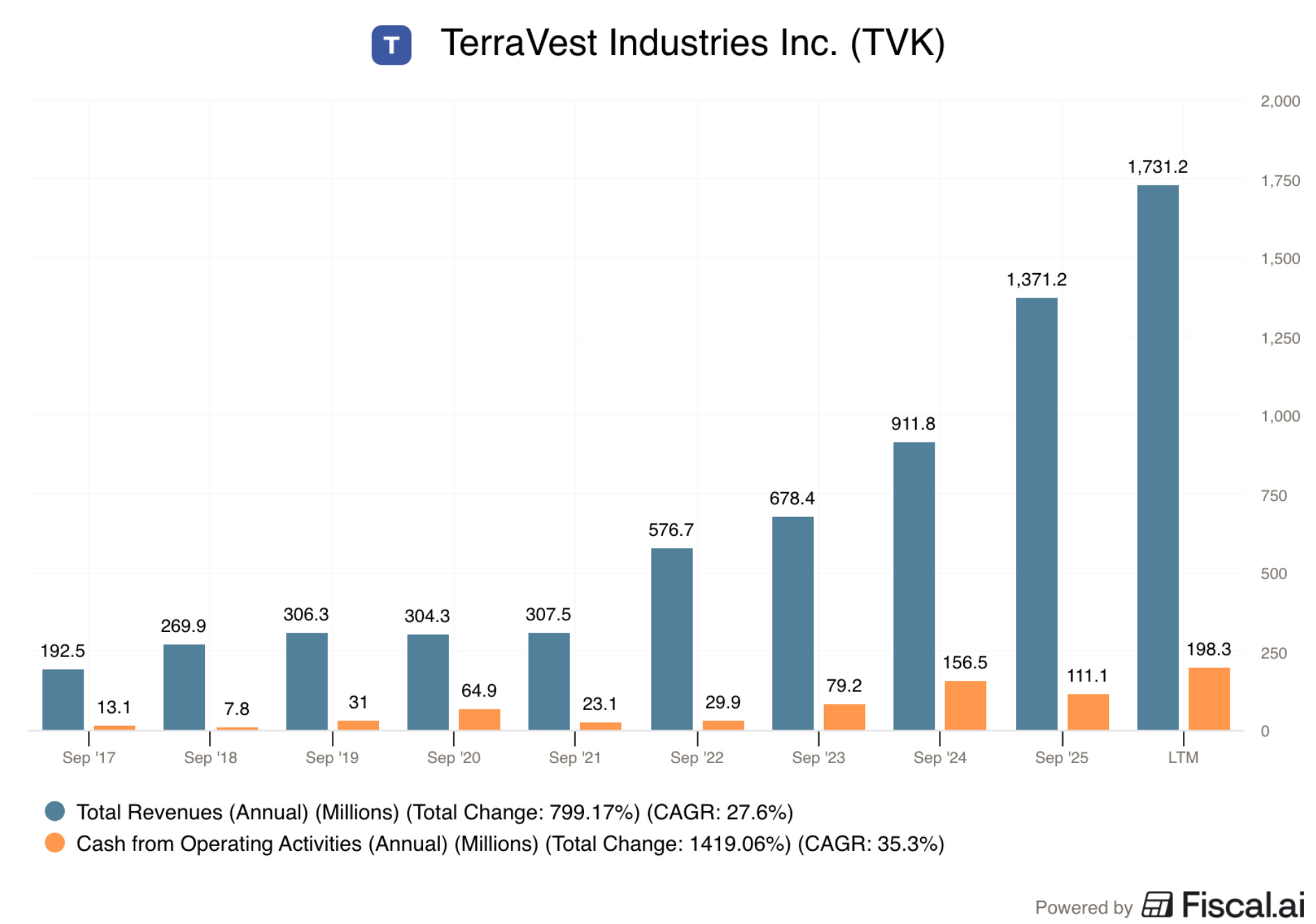
TerraVest’s HVAC & Containment Equipment segment, which includes its storage-tank business, grew revenue by 83% YoY in the latest quarter.
Management said this growth was largely driven by the data-centre buildout.
Additional research material
If you want to learn more about TerraVest, you can learn more here:
2. Tasmea ($TEA)
Australia has a population of around 28 million people.
Where it gets interesting is where these people live:
Sydney has around 5.5 million inhabitants
Perth has around 2.5 million
Melbourne has around 5.5 million
Brisbane has around 3.0 million
Subtract these four major cities, and just 11.5 million people are spread across a landmass almost as large as the United States.
And the US has more than 350 million inhabitants.
Tasmea co-founder Stephen Young made the comparison with Europe:
“If you put Perth, an Australian city in the southwest, on Lisbon, then Cairns, an Australian city in the northeast, will become Moscow. In Europe, 750 million people live on that physical landmass between Lisbon and Moscow. In Australia, there are 28 million people.” – Stephen Young
Australia’s low population density is a concept to understand because it’s right where Tasmea’s moat lies.
Most Australian industrials are not located in major cities like Sydney or Melbourne.
They are often in remote areas, close to the raw materials and resources that drive industries such as mining.
That is Tasmea’s hunting ground.
Large industrial facilities need to keep running. If a critical plant goes down, the cost can run into millions of dollars per day.
Tasmea acquires companies that help prevent this from happening.
In other words, it buys critical maintenance service businesses that keep essential infrastructure running.
As an example, they own a subsidiary that uses drones to inspect hard-to-reach infrastructure.
The beauty of the model is that remoteness often means less competition.
Being able to operate where others can’t go is a major competitive advantage.
As Stephen Young says:
“We are everywhere in remote Australia, and that’s intentional.” – Stephen Young
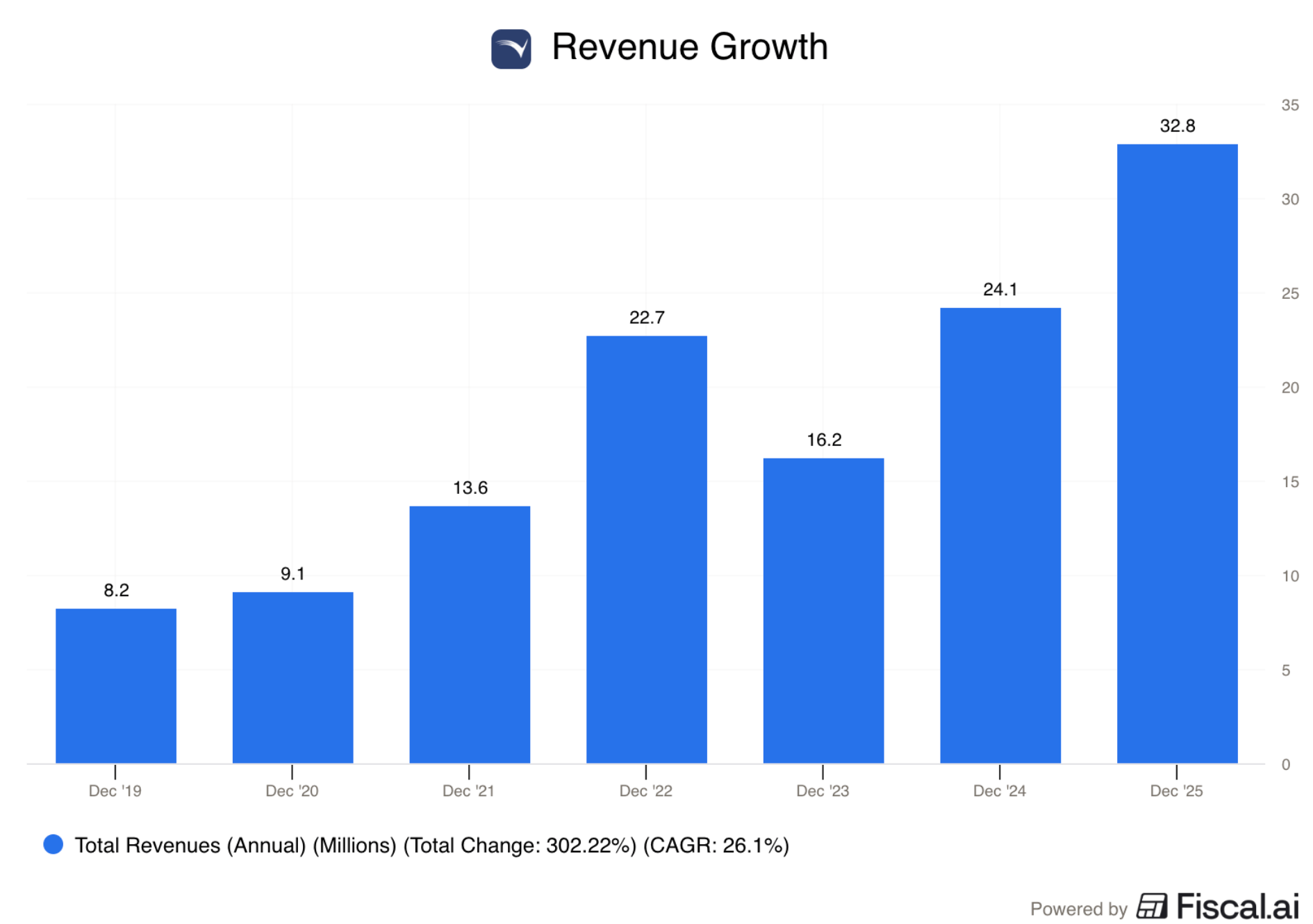
If you look at the financials, it’s clear that this strategy is paying off:
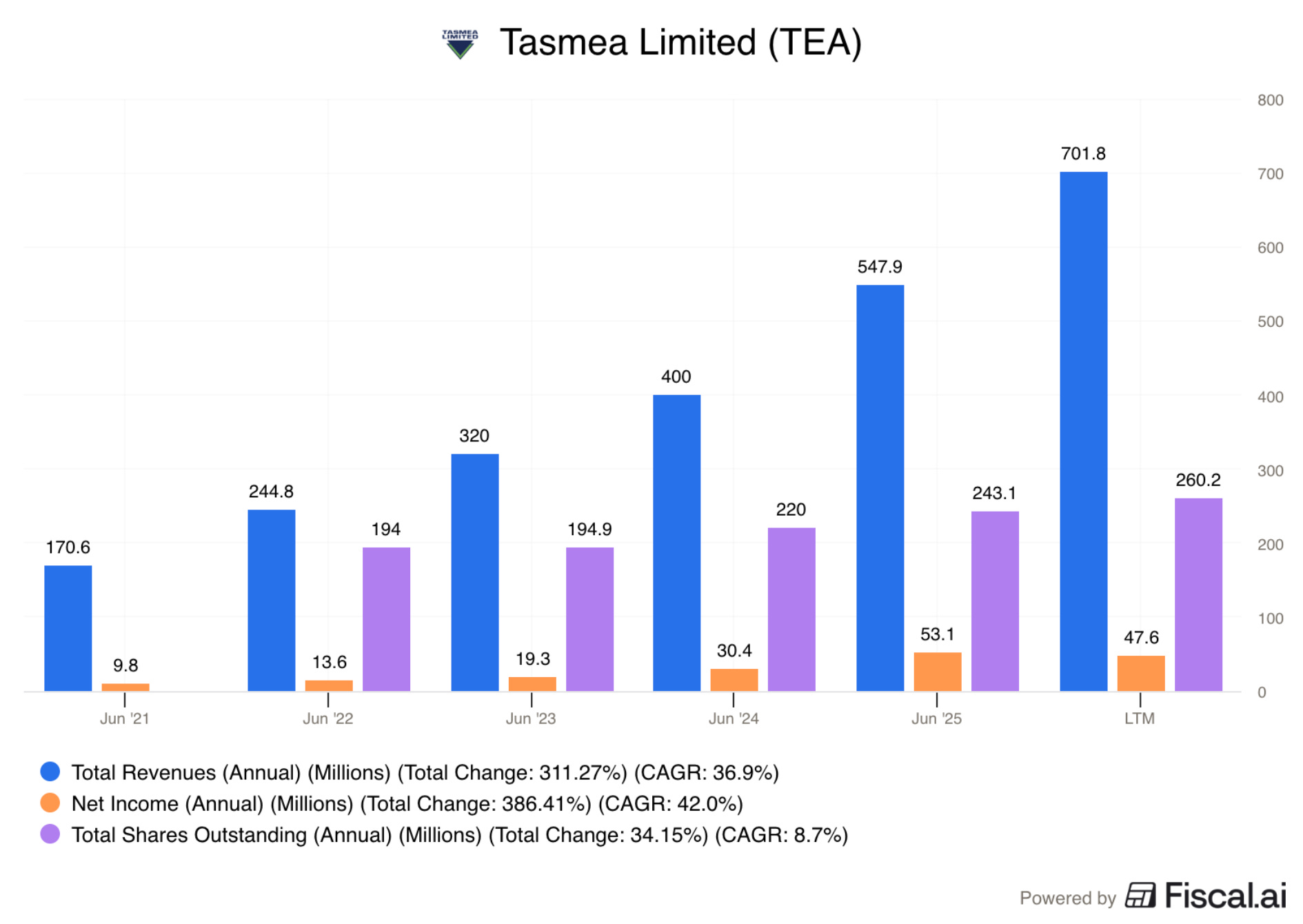
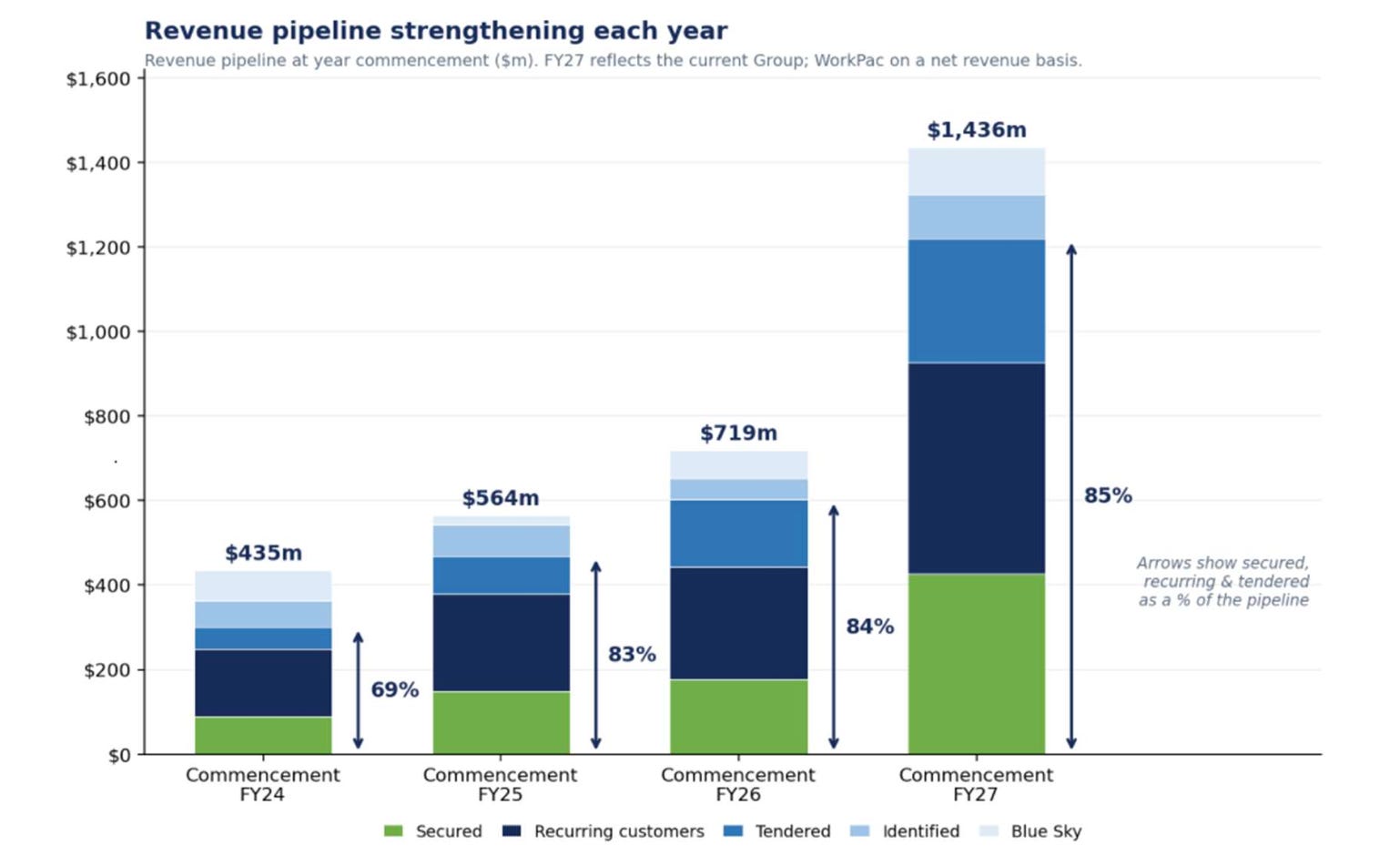
The company also recently released its guidance, and it’s mind-blowing.
They aim to double in FY 2027.
Note that this is not all per-share value growth. Tasmea regularly issues shares to fund acquisitions (see chart above).
But it remains impressive nonetheless.
3. Lindbergh ($LDB)
Europe just had one of its hottest summers ever.
If you live in Europe, I bet during the summer you thought at least once: “I wish I had an airco.”
And Europe still has a lot of catching up to do when it comes to air conditioning.
According to The Times, only 20% of European homes have air conditioning. In the US, that number is roughly 90%.
That leaves a huge runway for growth.
The European HVAC market is expected to grow at 7.3% per year until 2035.
This creates big opportunities for companies like Lindbergh.
In 2023, Lindbergh transitioned into an Italian HVAC serial acquirer.
Since then, HVAC has become more important for Lindbergh year after year:
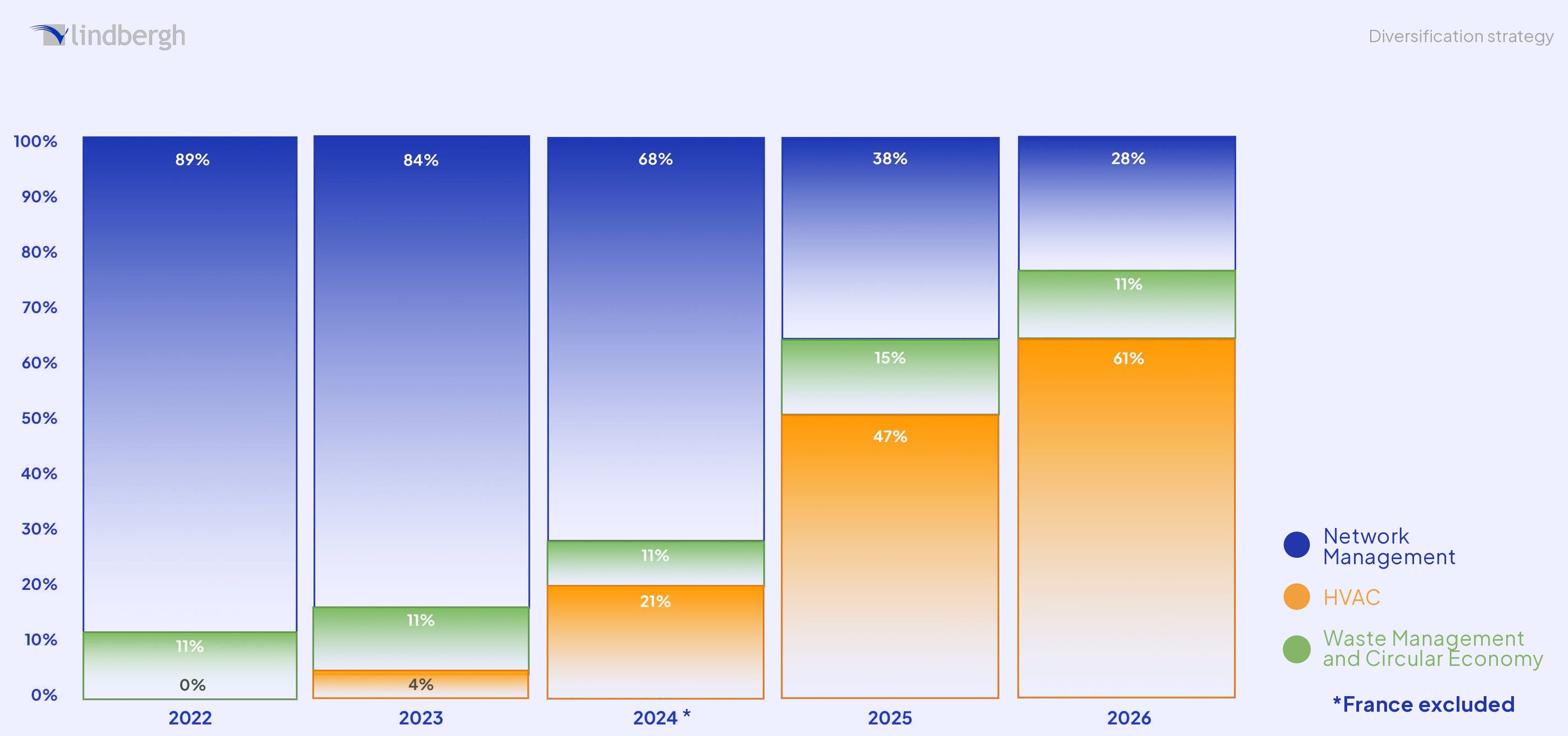
It now operates 13 HVAC subsidiaries, but this only looks like the tip of the iceberg.
Lindbergh has identified more than 13,000 small HVAC companies that could become potential acquisitions.
And it has some impressive shareholders backing the strategy, including Abdiel Capital and Will Thorndike’s Sun Mountain Partners.
Special Serial Acquirers
Last but not least, we identified several interesting serial acquirers that are difficult to fit into a single bucket.
We therefore placed them in a catch-all category we call “Special Serial Acquirers.”
The names are: