

Quality investing works in the long term.
But what about the psychological aspect of investing?
How do you keep your head cool and make sound investment decisions?
Let’s dive in right away.
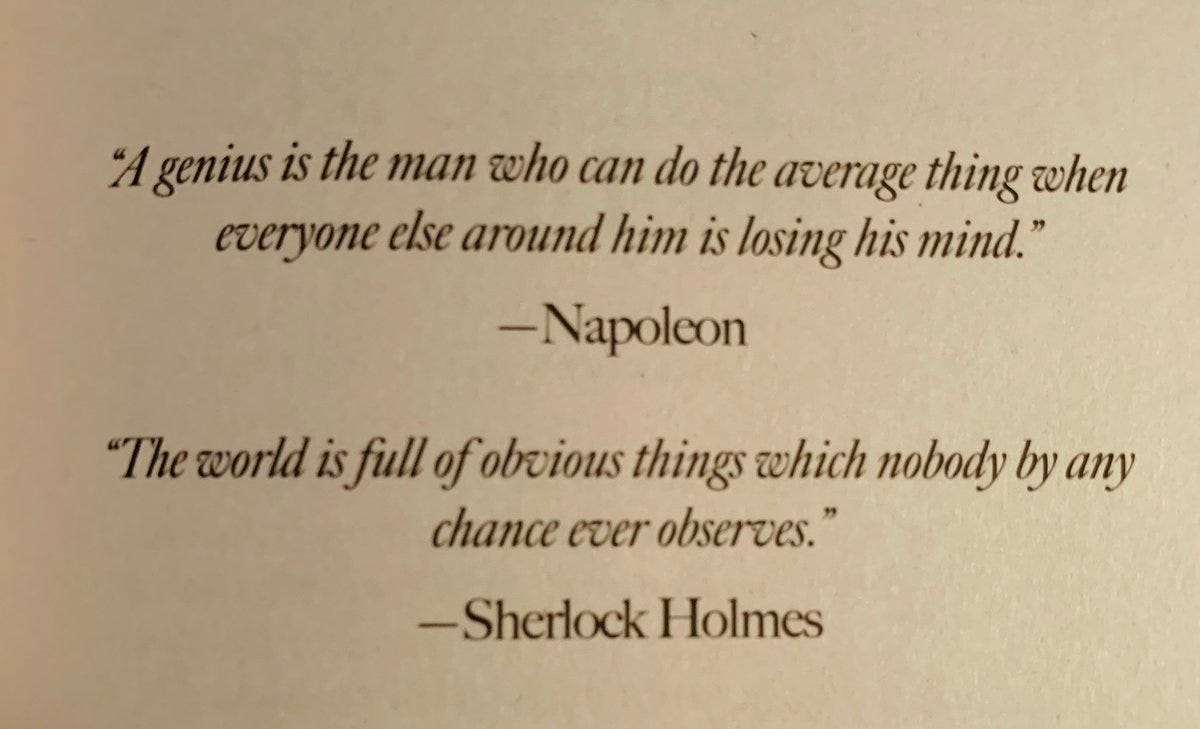
Humans = Emotional
We as humans are way less rational than we would dare to admit to ourselves.
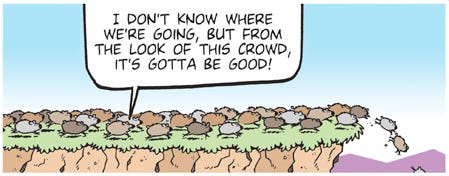
That’s exactly where the term herd behavior comes from.
It’s very hard to go against the crowd.
As an investor, you should be aware of the many biases you suffer from:
Recency bias: Assuming recent trends will continue in the future
Loss aversion: A loss of $100 feels twice as painful as the satisfaction of a $100 gain
Confirmation bias: Only looking at information that supports your current opinion
Overconfidence bias: Believing you are better at picking stocks or timing the market than you really are
Sunk cost fallacy: Continuing to hold or invest in a losing position because of prior time or money spent
Mental accounting: Treating money differently based on where it came from or how it’s labeled, rather than overall value.
The list goes on and on.
We even dedicated a full article to it called ‘9 Investing truths to remember’.
But we didn’t talk about the biggest risk for you as an investor yet…
… Fear and greed.
Both fear and greed makes you take irrational investment decisions.
That’s also why the best investors in the world are usually seen as ‘cold’.
They seem to be able to turn off their emotions.
Everyone knows this statement from Warren Buffett:
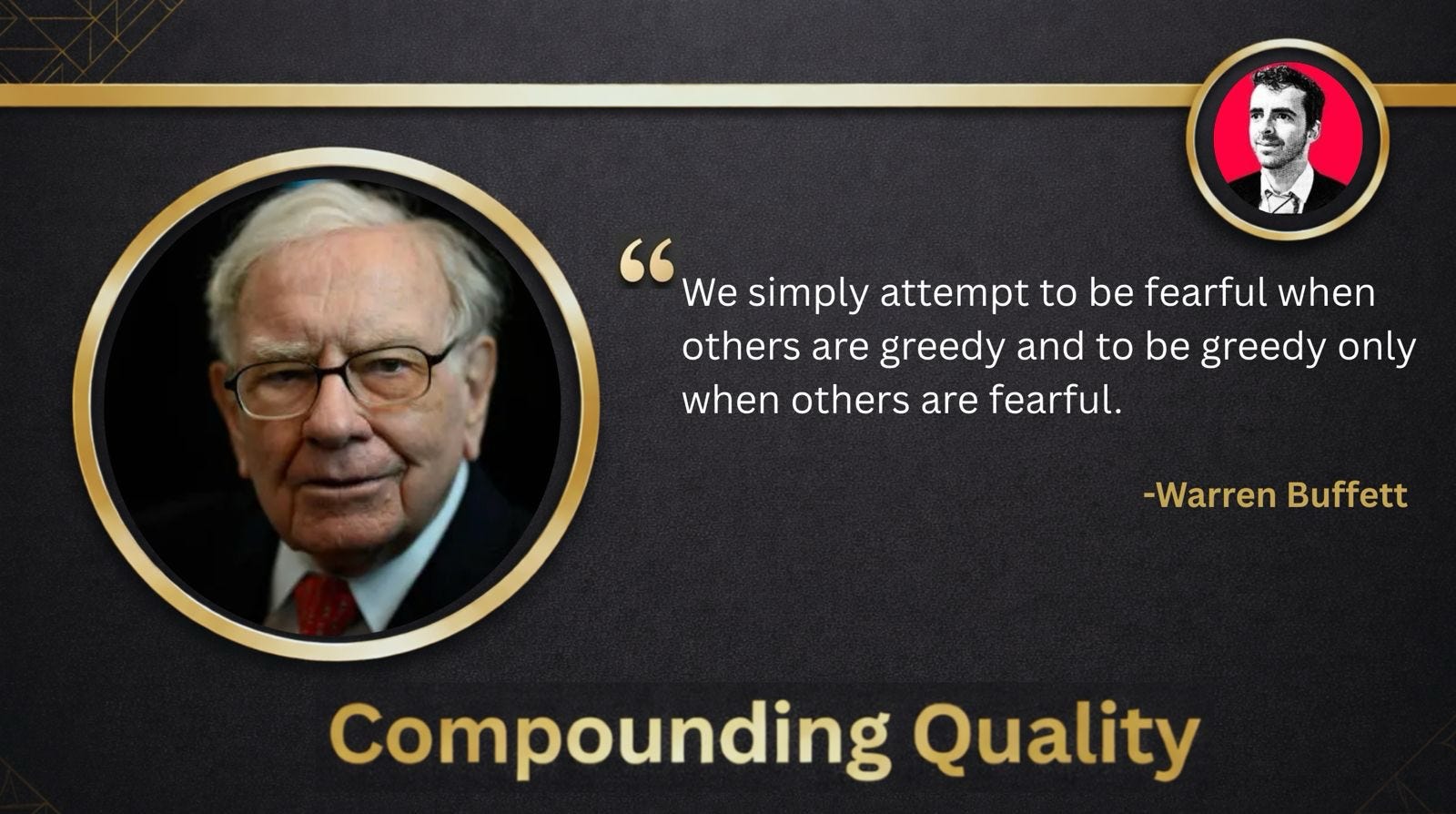
But it also means the following…
As an investor you tend to become overconfident when your stocks are doing well.
And you tend to doubt yourself when things aren’t going your way.
You should mentally wire yourself to do exactly the opposite.
So how do you not lose your mind when times are hard?
Or even better: swing heavily so you set the foundation for phenomenal returns in the future?
Ownership Thinking
You know it already, but it’s still worth repeating:
If you invest in a company, you are the (co-)owner of the business.
This also means that if you buy a single stock of a company, you should be willing to buy the entire business.
You buy 10 shares of Apple?
This means you think the company is worth more than $3.7 trillion.
You would like to buy the entire company for this amount if you had the money*.
If you have $3.7 trillion available, please send me an email :)
Let’s give another example.
Imagine you are the owner of the local grocery store around the corner.

It’s a family business.
Your grandfather ran the company for over 40 years and passed it to your parents.
Recently, your parents passed the company to you. You want to do exactly the same thing with your kids one day.
What would be the most important thing to you in this case?
How much the company is worth today according to investors
How much you’re making every single year with the business
The future growth prospects of the company
If you have no intention of selling the company, the only thing that should matter to you are points 2 and 3.
You should think exactly the same about your stocks.
If you’re focusing too much on point 1 (what the company is worth today), you are focusing on The Greater Fool Theory.
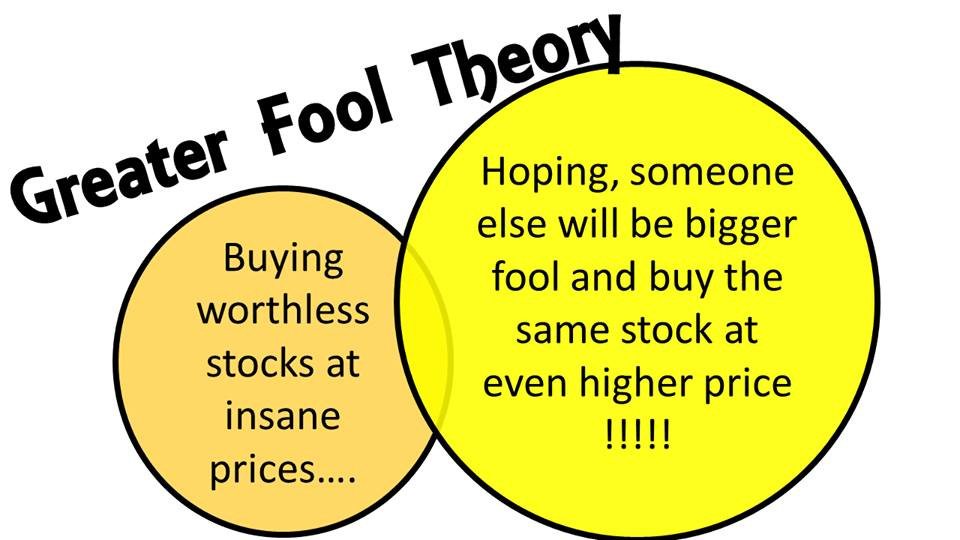
You buy an asset at a high price. Not because you think it's actually worth that much…
… But because you're betting that someone else will pay even more for it later.
That "someone else" is the greater fool.
Owners 🆚 Speculators
There is an important distinction between Owners and Speculators:
Owners:
Don’t care much about fluctuations in the stock price
Care about the cash flow and future growth prospects
Speculators:
Care a lot about fluctuations in the stock price
Doesn’t care much about the cash flow and future growth prospects
As a successful investor, you should think and act like an Owner.
Owner’s Earnings
Focus on how much profit your companies are making for you.
Not the price you could sell them for today.
For stocks, this means you look at the Owner’s Earnings.
It’s very easy to calculate this metric:
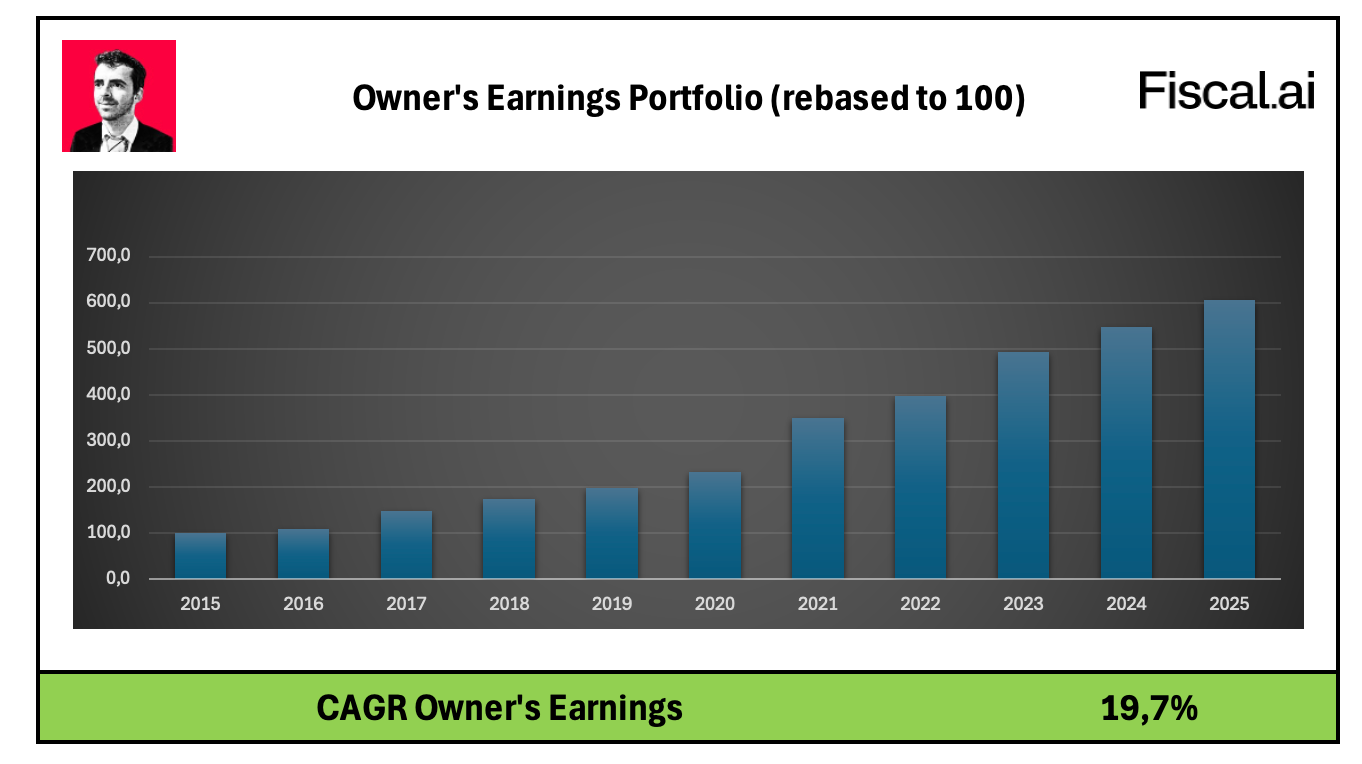
Owner’s Earnings (Change in %) = EPS Growth + Dividend Yield
Over the past 10 years, Our Portfolio has grown its Owner’s Earnings by 19.7% per year:
Know What You Own
Just knowing that your companies are making more and more money for you isn’t enough.
You have to understand what you own and why you own it.
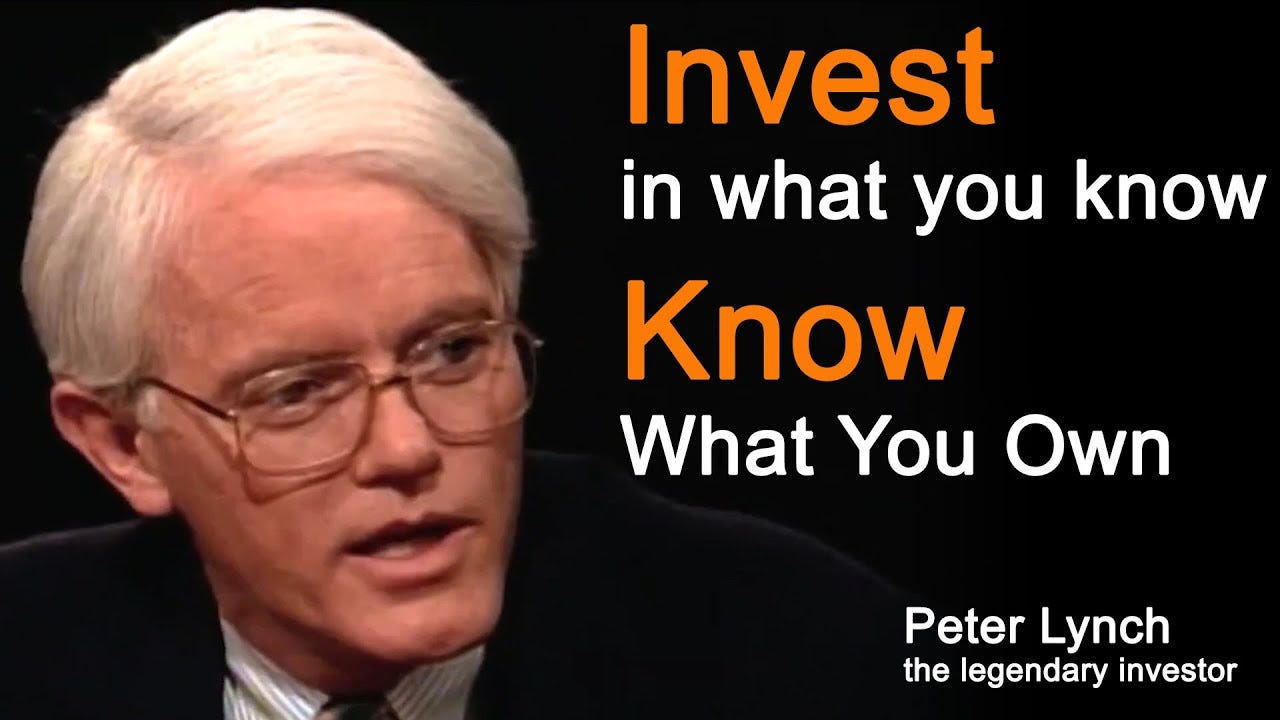
Just listen to Peter Lynch.
When you don’t understand a business, a falling stock price looks like a warning.
It makes you think something is broken.
In that case it’s easy to start panicking.
But if you think like a store owner, a falling price is just a sale.
The Speculator sees the stock price drop and panics. They think they’ve lost money.
The Owner checks the shelves. Customers are still buying milk. The business is just as healthy as yesterday.
It’s the same as when you own a house.
You don’t wonder every single day whether the value of your house has gone up or down.
You want to own your house for the long term.
Decision-Making
The worst investment decisions are made on emotions.
Whether you are feeling euphoric because a stock is going up…
… or panicking because a stock is going down…
… You need to stop doing that right away.
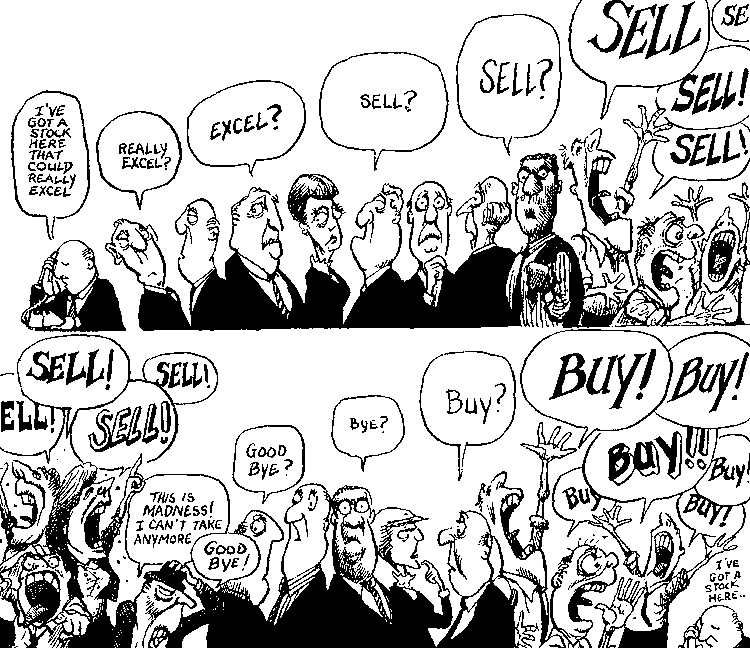
Emotional decisions are almost always expensive mistakes.
Let’s talk about three ways to avoid them:
Write down your investment thesis
Decide in advance when you want to sell
Is it a price drop or a fundamental problem?
1. Write down your investment thesis
The best investors keep an investment journal.
Before you buy a single share, write down exactly why you are buying the company.
What does the company do?
Why do I think the company is undervalued?
Which growth rate do I expect in the years ahead?
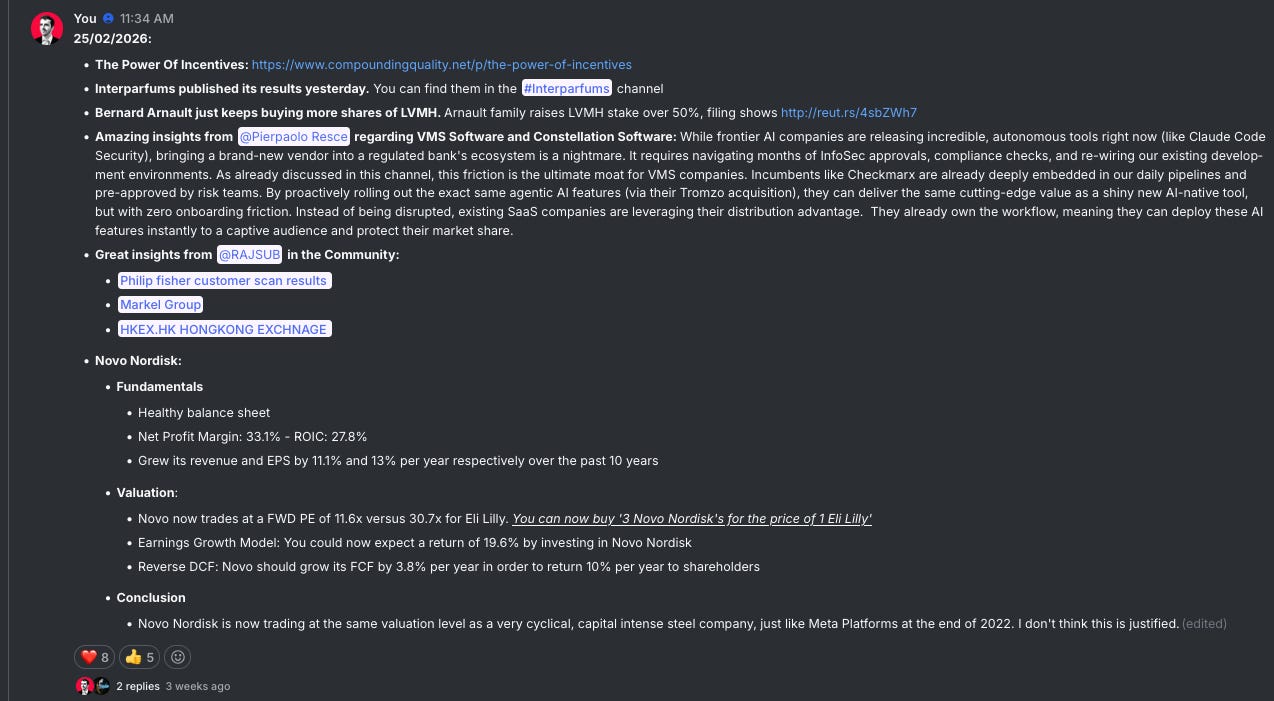
Keeping an investment journal helps you structuring your thoughts and do the rational thing.
That’s exactly why we have a daily investment journal in the Community:
2. Decide in advance when you want to sell
You should decide when you want to sell a company before you buy it.
This keeps you from making up excuses in the heat of the moment.
An owner usually only sells for three reasons:
The business fundamentals have permanently shifted (the grocery store is losing customers to a new competitor)
The stock has become so overvalued it defies all logic
You found a significantly better place to invest your capital
Read this article if you want to learn more: 👑 Reasons to sell a stock.
3. Is it a price drop or a fundamental problem?
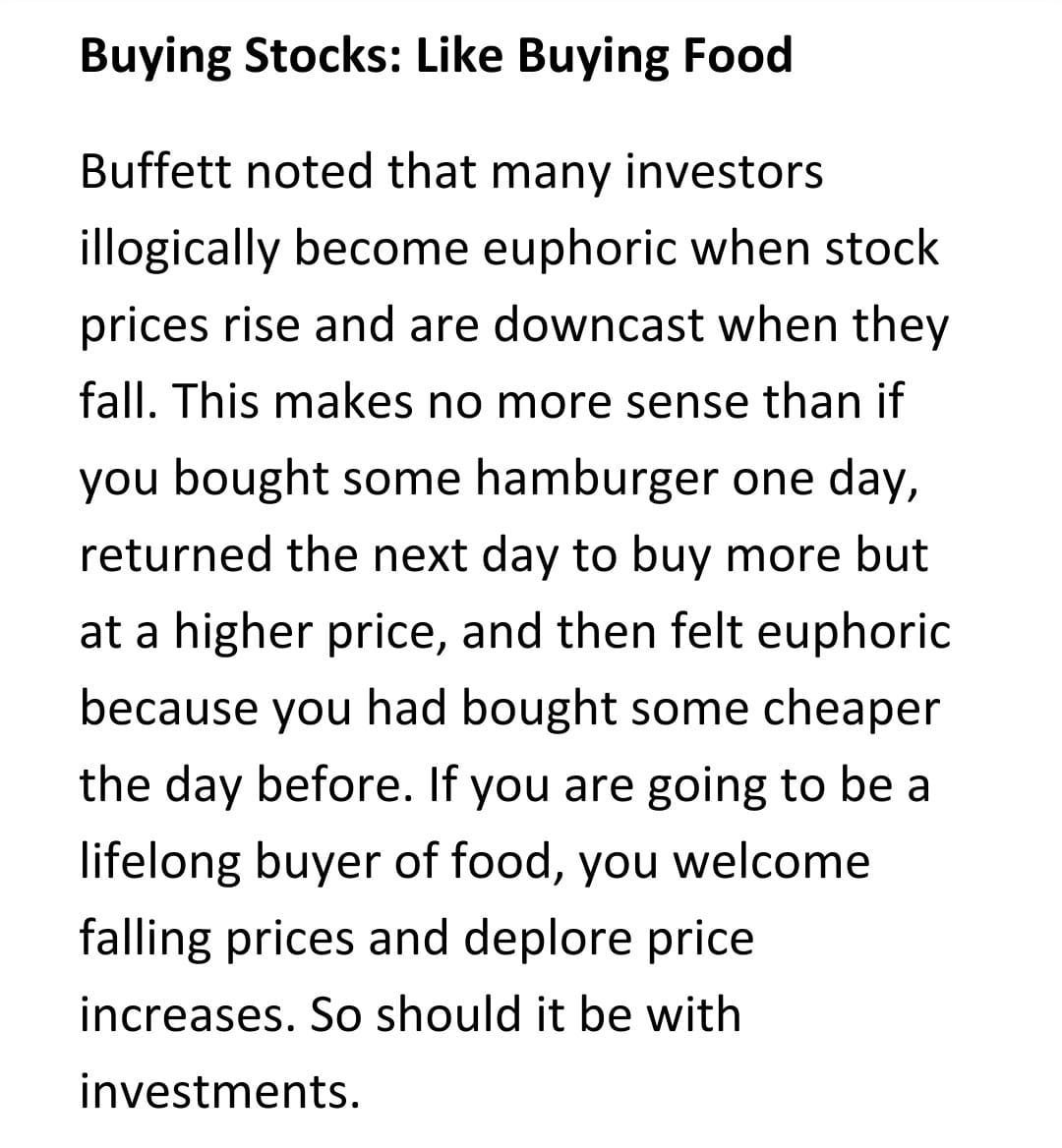
Mr. Market is manic-depressive. This means that a falling stock price is just market noise most of the time.
If you can buy a good business at a cheaper price, it’s an opportunity.
If something fundamentally changed, it’s a business problem.
As Warren Buffett said, stocks are like hamburgers:
It’s a long term game
Always remember that we’re investing for the long-term.
Here are a few things to help you to keep a long term perspective.
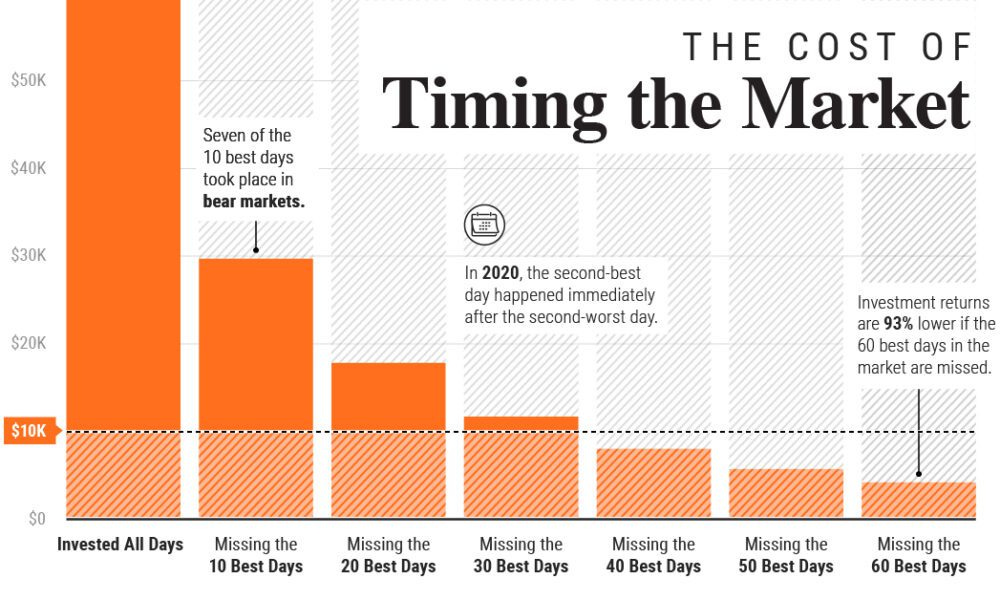
1. Time in the market beats timing the market
On the stock market, the best days usually take place just after the worst days.
Missing just a few of them can have a huge impact on your returns.
2. Doing nothing is a strategy
In investing, effort doesn’t equal results.
When you own a business that grows its earnings 20% every year, the best move is to do nothing.
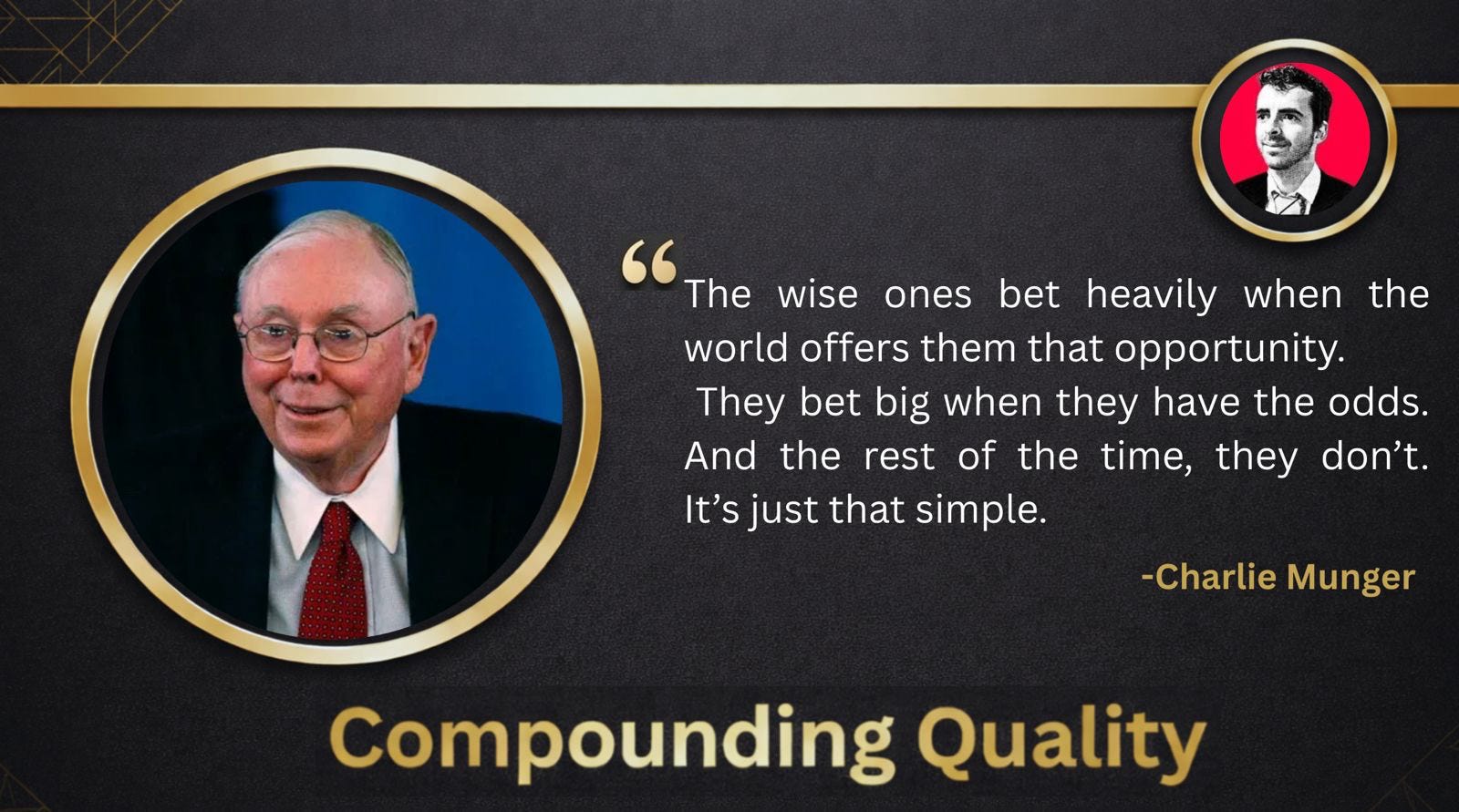
Charlie Munger said it best:
![Charlie Munger: "[In investing] the big money isn't in the buying or ...](https://substackcdn.com/image/fetch/$s_!k-8B!,f_auto,q_auto:good,fl_progressive:steep/https%3A%2F%2Fsubstack-post-media.s3.amazonaws.com%2Fpublic%2Fimages%2F9a678039-e601-417e-a73c-1b423a554609_816x924.jpeg "Charlie Munger: \"[In investing] the big money isn't in the buying or ...")
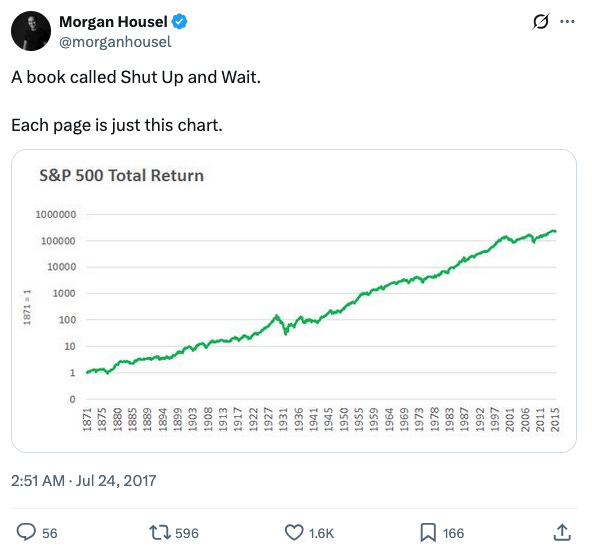
3. Think in years and decades
Wall Street thinks in quarters.
The best investors think in decades.
One of my favorite tweets from Morgan Housel shows you why:
4. Volatility is your friend
Remember that volatility is very normal. As an investor, it’s your friend.
But it can be hard to sit through.
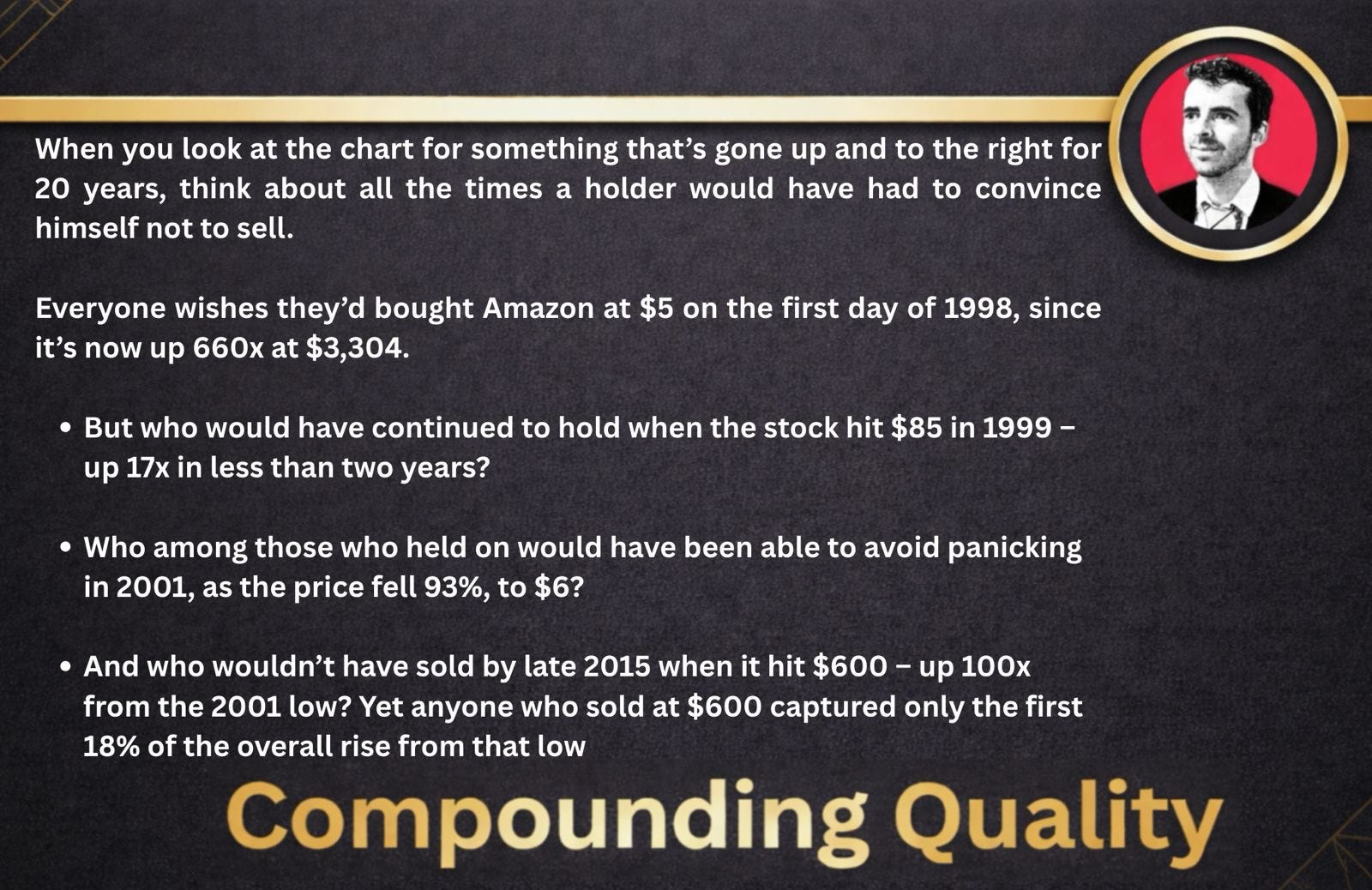
Here’s a section from Howard Marks’ memo ‘Selling Out’ that illustrates this perfectly.
How to Stay Rational
The basics of investing are simple.
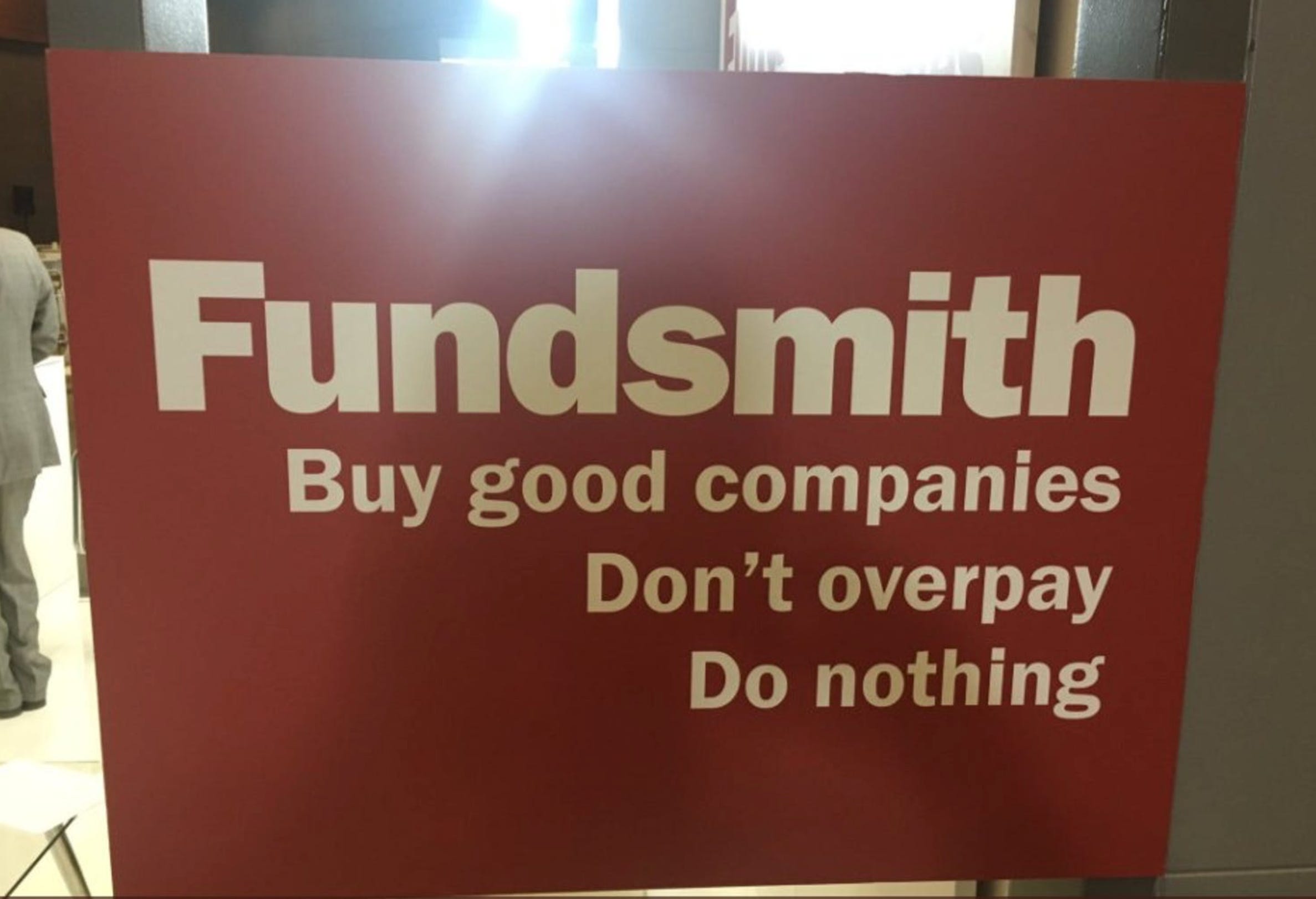
Terry Smith summarized it in just three rules:
But investing isn’t easy.
Your emotions usually try to make you do the wrong thing.
Here are a few tips you can use to stay rational.
Check the business, not the ticker: Don’t check stock prices daily. Price fluctuations are just noise. Watch the Owner’s Earnings instead.
The 48-hour rule: Never buy or sell in a hurry. If you feel the urge to act, wait 48 hours before making a decision.
Position sizing: Even a great company can fail. Never let one stock become so large that daily price movements keep you awake at night.
Focus on the long term: Compounding happens over years and decades.
Turn off the news: Financial news is designed to make you act (and earn ad revenue). If you want to be a better investor, read less news and more annual reports.
Keep a decision journal: Write down why you bought a stock and how you felt. Reviewing your past mistakes will help you avoid making the same ones in the future.
Conclusion
At the end of the day, investing isn’t about being the smartest person in the room.
It’s about being the most rational and disciplined.
The stock market is the only place in the world where people run out of the store when there is a 30% off sale.
By training yourself to see a stock as a piece of a business instead of a ticker on a screen, you give yourself a massive advantage.
Remember:
Speculators focus on what a stock might be worth tomorrow.
Owners focus on what the business will earn over the next decade.
Keep your head cool, watch the Owner’s Earnings, and let time do the heavy lifting for you.
Everything In Life Compounds
Team Compounding Quality
PS You are not a Partner of Compounding Quality yet? Discover everything you need to know here.
Book
Order your copy of The Art of Quality Investing here
Used sources
Interactive Brokers: Portfolio data and executing all transactions
Finchat: Financial data
This is a fantastic breakdown of the 'human software' bugs that plague investors. In engineering, we rely on redundancy and fail-safes to prevent catastrophe; an investment journal is essentially a fail-safe for the mind. I particularly appreciate the distinction between Owners and Speculators. From a physics perspective, speculators are focused on the 'velocity' (price movement), while owners are focused on the 'mass' (the underlying business value). If the mass is growing at 20% a year, the short-term velocity is just noise. Excellent roadmap for staying rational.
Millions of people think so. And I really don’t see that there is any other answer to that.
Sure, art isn’t a popularity contest. At its heart, it is about giving an audience an aesthetical experience or emotional reaction. It doesn’t need to be positive. If it’s intended to be ugly and revolting, and makes you go “Ew”, it achieved its purpose. If it’s intended to be beautiful and you find it ugly and revolting, it still achieved its purpose, because you still had an aesthetical reaction.
Banksy’s art uses a comparatively simple technique, and is quite stylised. It draws on poster art, it’s intended to be spray painted on walls, and it’s intended to evoke emotions using rather basic graphical elements. It’s more about juxtaposition – as he’s said himself, his art is designed to be quick to make, and can be as basic as “I plonk a traffic cone on the head of someone else’s statue and I’m done”.
I say it’s hugely successful at what it tries to do. It’s much more political than most art; the intended emotional reaction can arguably be described, in brief, as “fury that the world is a much worse place than it ought to be”. The artwork is extremely good at evoking that feeling. From that perspective alone, it’s a smash hit.
Personally, I also find it very aesthetically pleasing. I like to look at it. It might be stylised and basic, but another word for that is refined. If it were poetry, it’s like the collective corpus was made up of pastiches of The Iliad, tomes you’d not want to drop on your toes, or elaborate sonnets where you need to drag around a few reference works to just understand the allusions, and then there’s this one guy spray painting haikus everywhere.